Schools
Election 2022: Rita Rafalovsky For Princeton Board Of Education
Candidate Rita Rafalovsky shares why she is running for a seat on the Princeton Board of Education in 2022.


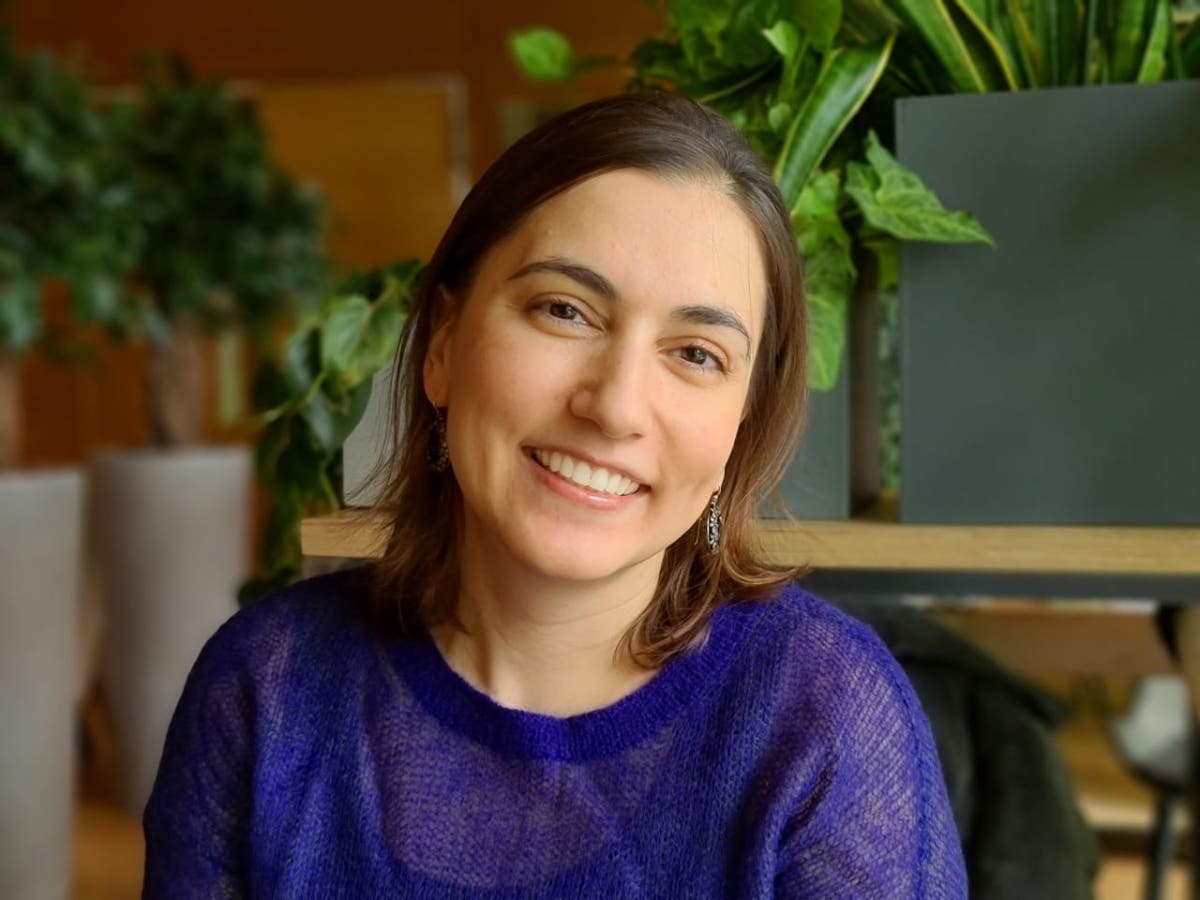
PRINCETON, NJ — Five candidates are looking to fill three open seats on the Princeton Board of Education.
Margarita "Rita" Rafalovsky hopes to apply a data-driven approach to "maintain the excellence" of Princeton Schools. a mother to two, Rafalovsky has a Bachelors degree in Computer Information Systems from Rutgers, and a Masters in Information Systems from NJIT.
Below is Rafalovsky's candidate profile.
Find out what's happening in Princetonfor free with the latest updates from Patch.
(All candidates were given the same questions)
Editor's Note: Patch sent out emails to all candidates to the email addresses provided by the County clerk's office. All responses received will be published between now and Nov. 8 general election. Local candidates who did not receive the questionnaire from Patch can contact sarah.salvadore@patch.com.
Find out what's happening in Princetonfor free with the latest updates from Patch.
Name: Margarita "Rita" Rafalovsky
Age: 42
Town of residence: Princeton
Position sought: Princeton Board of Education
Family: Husband and two children, ages 8 and 11
Education: B.A, Computer Information Systems from Rutgers University, and M.S., Information Systems from NJIT
Previous or current elected appointed office: None
Campaign website: www.rita4boe.com
Why are you seeking to run for School Board?
I believe that excellent public education has the potential to be the greatest equalizer. My passion for maintaining top-notch education at PPS and my concerns about where our district is headed are the reasons I chose to run for the school board. In 2009, Princeton High School (PHS) was nationally ranked by U.S. News in 94th place; in 2022 we were 490th. Additionally, PHS math proficiency score is just 51 percent, and has been about the same since 2015. Meanwhile, Montgomery High School is at 70 percent and West Windsor North is at 67, see www.publicschoolreview.com. While rankings and scores are not the “final grade”, they are indicative of overall perceived quality. This decline occurred despite the fact that our town’s spend per student remains above most school systems in NJ. This is not a fair return on our community’s generous investment. I believe that we can do much better with the talents and resources that we already have, if only we are more creative and efficient. The BOE represents the interests of the community. All the candidates say they will maintain the excellence of our schools, but neglect to mention the declining rankings and PHS math scores.
COVID-19 resulted in learning loss for many students. What will you do to ensure students bounce back?
We know from the media that learning loss impacted economically disadvantaged kids the hardest. Does the district know who these kids are at PPS? Does each child have a learning plan and supports in place to help them recover? Do we have enough support staff in each school to meet the learning goals for each child? Is what we’re doing working? I would like to see PPS and BOE have this level of data and to track it. I have not seen it, and if we don’t have it, I would push to gather it. To protect student privacy, there is no need to reveal student names, we can use unique identifiers like numbers, but we need to track each student, and the data should be publicly available, at least in summary form. There are districts that claim they recovered learning loss. If we haven’t reached out to them to find out how they did it, we should.
During the last school year, students and parents expressed concern over equity in the school district. What will you do to address the issue?
As we discovered during the last school year, equity has more than one definition. The district has not articulated the meaning of equity at PPS and how we will measure it, making it difficult to identify the exact issues and solutions. I am of the strong opinion that the Board plays an instrumental role in defining what equity means for our community and has a responsibility to verify that their position reflects our community’s definition. This was not done, and it should be corrected. I personally don’t believe that equal outcomes for all students is a reasonable goal. I am bringing this up because Performance Fact, a company hired by PPS and the BOE to facilitate our district’s Strategic Planning, had stated in their written material, that equal outcomes is the objective, “for every student, without exception”. In my opinion, this is an impossible and dangerous goal. I believe in providing a rigorous education, making it accessible to all students, and in providing extra tutoring and other forms of encouragement and support to all children that need it. I don’t believe in taking away from gifted kids or those who want to achieve more. Public schools are a place where all students, of all backgrounds and abilities, should thrive and be encouraged to meet their maximum potential. It’s the Board’s responsibility to ensure that the district establishes a definition for equity, with community input and that: (1) reliable data is used to conduct the current state equity assessment, (2) that measurable goals are articulated using best practice benchmarks from other districts, with input from our community, and (3) PPS identifies specific initiatives to help our district achieve our community’s definition of equity. I would love to see a publicly available, quarterly “equity dashboard” at BOE meetings. As a former economically disadvantaged student, I would like to see the Board advocate for specific student support initiatives. For example: (a) setup a multilingual community mentorship programs and alumni network to guide students about career paths, research programs and internships, (b) assign students to school champions, making these champions accountable for guiding students - especially talented economically disadvantaged students - to apply to research programs and university-sponsored programs, whose purpose is to raise up economically disadvantage students. I would like our district to set aspirational goals for getting even more students into such programs.
What according to you is the biggest issue facing the school district currently? How do you plan to tackle it?
The biggest issues facing our district is declining academic performance. The BOE and current candidates say that they want to continue Princeton’s legacy of academic excellence. Simply saying that academic excellence is a priority isn’t enough, and not acknowledging the declining PPS rankings (in U.S. News and Niche) and the low PHS math proficiency score is ignoring the problem (see www.publicschoolreview.com). What we need is reliable data, benchmarks and to set measurable goals. We need to speak with our teachers to find out what we can do to improve, consult with neighboring districts to learn from them and other districts outperforming ours. In order to achieve and sustain academic excellence at PPS, we must also attract and retain outstanding educators in all staffing areas. There are national teacher shortages, which is even more reason to define what we will do to retain and recruit the best staff. We must make it a point to recognize and reward teachers who are investing the most in our students. Let’s ask our top staff to mentor and recruit others, help them build bridges with local academic institutions and industries such that they can create even more opportunities for our students. Finally, some of our best teachers should be an integral source of ideas and can help in the recruitment process. Mental health of students is yet another important issue. The district has just hired an external vendor, ESS, to help us better support students in need. While this is a step in the right direction, it is coming at a time when similar services have been offered in other school districts in the country for many years. Partnering with vendors may be correct, but we also have a responsibility to make the services ours. To that end, I would like to see a multi-tiered mental health support system worked out in collaboration and with guidance from mental health experts (e.g. Board of Health, psychiatrists) and the Corner House, which is a municipally-funded agency that provides drug, addiction and other services. In my definition, a good mental health service is responsive, multilingual, easily discoverable and accessible to people seeking the help. Finally, I believe in establishing accountability, measurable goals and metrics to monitor the effectiveness of our solution.
What is your view on the sex education curriculum that Gov. Murphy put forth earlier this year?
In short, I believe the home is the primary influence in the development of the individual and an integral partner in public education. It’s been widely reported that the state-mandated sex education curriculum has met local opposition in many school districts. I wonder what makes our BOE think that PPS parents will have no issue with the sex education curriculum. If elected, I would take anticipatory actions to learn how PPS parents will react to potentially controversial curriculum mandates and tailor the curriculum in a way that reflects the wishes and concerns of the local community. To answer the question more completely, allow me to share my personal experience. The NJ state came up with revised sex education guidelines in 2020. I received a letter from PPS about the revised state guidelines via email this September, while I was attending back-to-school night for my son at JP. The letter contained a link to our PPS curriculum, where there was no further information about sex education. There was also a link to a Google form for opting out of certain aspects of sex education and repurposing statements from the state guidelines. I wondered: how does a parent know what they’re opting out of without seeing the curriculum? For example, it says in the state guidelines that by the end of 5th grade, kids will be “explained human sexual development and the role of hormones (e.g., romantic and sexual feelings, masturbation, mood swings, timing of puberty onset). Those in parenthesis are suggestions and are not mandated topics.” For the eighth grade, anal sex is another such topic listed in parenthesis. All of this may be ok for some parents and not ok for others, but parents have not been told what will be in the PPS curriculum, so what are we opting in and out of? This lack of district transparency and preparedness is problematic. Other districts spent time educating their community about these state guidelines way earlier in the year. They also asked the community for input on what should/not be in the local curriculum while still meeting state rules, and what topics will be eligible for opt-out. Tangentially related to this topic is the gender identity/belonging survey that PPS conducted last year. My daughter, who was in the 5th grade at the time, along with the rest of her class, was asked to indicate her gender identity on an online survey. Like other parents, I was not aware of this survey until after the fact. The survey was used to inform the district about how our students feel at PPS. Personally, these questions asked without explicit parental permission, is a violation of parental rights. Some districts set up advisory boards composed of various stakeholders to find out what residents want in the school curriculum. Our local policies should be reflecting the values and needs of our collective Princeton community. Residents should demand that the BOE, which writes the local policies, utilizes reliable democratic constructs to solicit regular input from the community to inform themselves about community wants and bases their decision on this data. An advisory board would help. Based on personal experiences and the feedback I heard from the community, these constructs are lacking, people aren’t being heard, and there is an insufficient appetite from the BOE to correct the problem.
What sets you apart from the other candidates?
My personal immigration story, my priorities for our district, and my professional background are what set me apart. I’m a first-generation immigrant who learned English at age 8. My family and I were economically disadvantaged for many years. I didn’t know what a vacation was, and had not seen the inside of a movie theater until high school. I understand the struggles and have practical ideas about programs that can help such children. I believe that excellent public education has the potential to be the greatest equalizer. For this reason, my number one priority is to restore the district’s focus on academic excellence for all students. We must understand why rankings and scores have fallen. I am a parent of two young children and a professional who has worked in banking and consulting for over 16 years. I have the passion, skill set, and tenacity to advocate on behalf of Princeton’s community and to work with PPS leaders to define measurable district goals to evaluate performance and establish accountability.
What else would you like to share about yourself or your campaign?
Being on the BOE means working for about 25 hours a week, and the job is unpaid. I would like to believe that for each member, this job is a labor of love. I would like to thank the current BOE members for their public service. Two of the BOE incumbent candidates that have served on the BOE for six years like to say that the BOE as a group works very well and that for continuity it’s critical to maintain the status quo. It’s nice that they work well together, but I disagree that the status quo is acceptable. Our students, parents, educators and tax payers deserve district transparency, deeper and responsive community engagement, increased focus on academic excellence and improved governance. Additionally, PPS has a $90+ million-dollar budget. The Board should move toward a more goal-oriented relationship with the school administration, make data-driven, evidence-based decisions and set measurable goals to track the performance of major strategic initiatives. We need to run PPS more like a business. I deeply believe in democracy. It is up to the Princeton residents to decide whether the status quo is what you want. Vote for change.
Have a correction or news tip? Email sarah.salvadore@patch.com
Get more local news delivered straight to your inbox. Sign up for free Patch newsletters and alerts.