Neighbor News
Get your amateur radio license, January 11
Become a ham radio operator at Delaware Valley Radio Association license testing
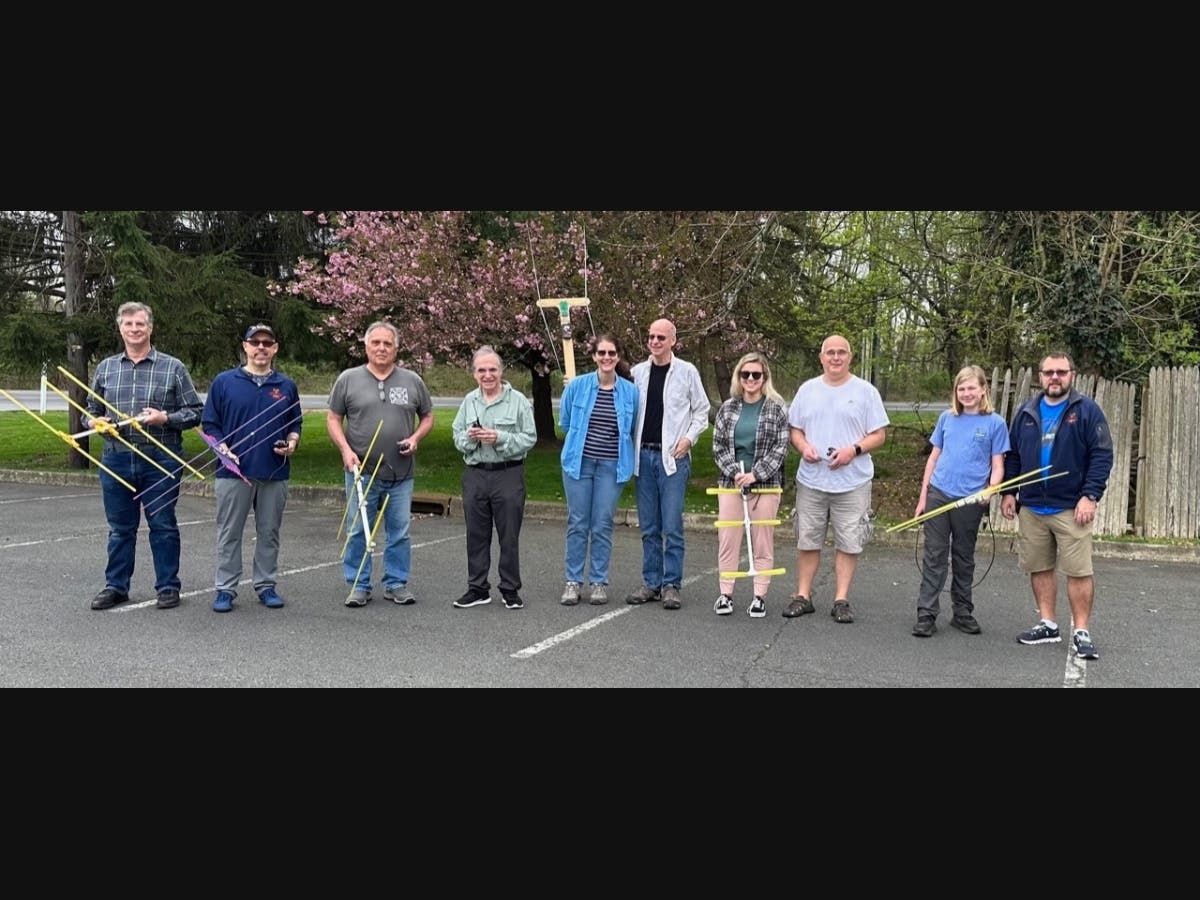
The Delaware Valley Radio Association (DVRA) holds regular Amateur Radio FCC examination sessions throughout the year. The next will be offered:
- Saturday, January 11
- 9:45 a.m.
- Our Lady of Good Counsel R/C Church
- 137 West Upper Ferry Rd., West Trenton, N.J.
The exam fee is $15. Successful candidates will also pay an additional $35 license fee to the Federal Communications Commission (FCC), renewable every 10 years. Exam results are submitted digitally so licenses are issued within just a few days within passing the exam.
Ham Radio: technology bringing people togetherAmateur Radio, also known as ham radio, brings people, electronics and communication together. People use it to talk across town, around the world or even into space, all without the Internet, cell phones or even regular electricity. Hams don’t need the Internet, they build their own. They operate from mountain tops, homes, parks, cars, boats and airplanes. Ham radio goes wherever they do.
Find out what's happening in Princetonfor free with the latest updates from Patch.
As a ham, you can communicate with other hams with your voice and a microphone, with Morse code or you can link a radio to a computer or other device to send data, text or images.
Some hams like to build and experiment with electronics. Others compete in on-the-air contests, to see how many hams they can contact in a given time period. They even talk to astronauts aboard the International Space Station, communicate through satellites in space and bounce signals off the moon and back to Earth!
Ham Radio is fun, social, educational – and can be a lifeline during times of need.
In times of disaster, when regular communications channels fail, hams swing into action. Amateur Radio operators kept New York City emergency response teams in touch after their command center was destroyed on 9/11. Ham radio came to the rescue after all other communications failed during Hurricane Katrina, during devastating 2013 Colorado flooding and when Superstorm Sandy knocked out cell phones and fire, police and emergency radio. When hurricanes decimated Puerto Rico and other Caribbean islands, ham radio operators helped residents communicate to the outside world.
Amateur Radio operators come from all walks of life -- doctors, students, kids, politicians, truck drivers, movie stars, Rock ‘n’ Rollers, missionaries and your neighbor next door. They are of all ages, sexes, income levels and nationalities. The common thread is using radio to communicate in an endless variety of ways.
All have a basic knowledge of radio technology and operating principles. And each has passed an examination for a government-issued license.
In the US, the FCC issues three license classes—Technician, General and Extra.
Technician
The Technician class license is the entry-level license of choice for most new ham radio operators. To earn the Technician license requires passing one examination totaling 35 questions on radio theory, FCC regulations and operating practices. The license gives access to all Amateur Radio frequencies above 30 MHz, enabling communication locally, most often within North America. It also allows for limited privileges on the HF (shortwave) bands used for international communications.
General
The General class license grants some operating privileges on all Amateur Radio bands and all operating modes. This license opens the door to worldwide communications. Earning the General class license requires passing a 35-question examination. General class licensees must also have passed the Technician written examination.
Amateur Extra
The Amateur Extra class license conveys all available U.S. Amateur Radio operating privileges on all bands and all modes. Earning this license is more difficult; it requires passing a 50-question examination. Extra class licensees must also have passed all previous license class written examinations.
Taking the license exam is the first step and it’s inexpensive, at $15. Once you have passed the exam, the license fee is just $35, renewable every 10 years. Pre-registration is required for each exam session.
To learn more, see the schedule of upcoming local exam sessions or register, visit w2zq.com.
Founded in 1930, The Delaware Valley Radio Association (DVRA) is one of the nation’s oldest radio clubs. It is a non-profit 501(c)(3) organization devoted to the promotion and preservation of the Amateur Radio hobby. The DVRA has nearly 150 members throughout New Jersey, Pennsylvania and beyond. They maintain and operate the club’s historic, fully-equipped radio station in West Trenton, N.J.