Arts & Entertainment
Japanese Artist's 'Genpei' Series Debuts At Princeton U. Art Museum
The exhibition reimagines a 12th-century war epic and runs through Jan. 3, 2027.


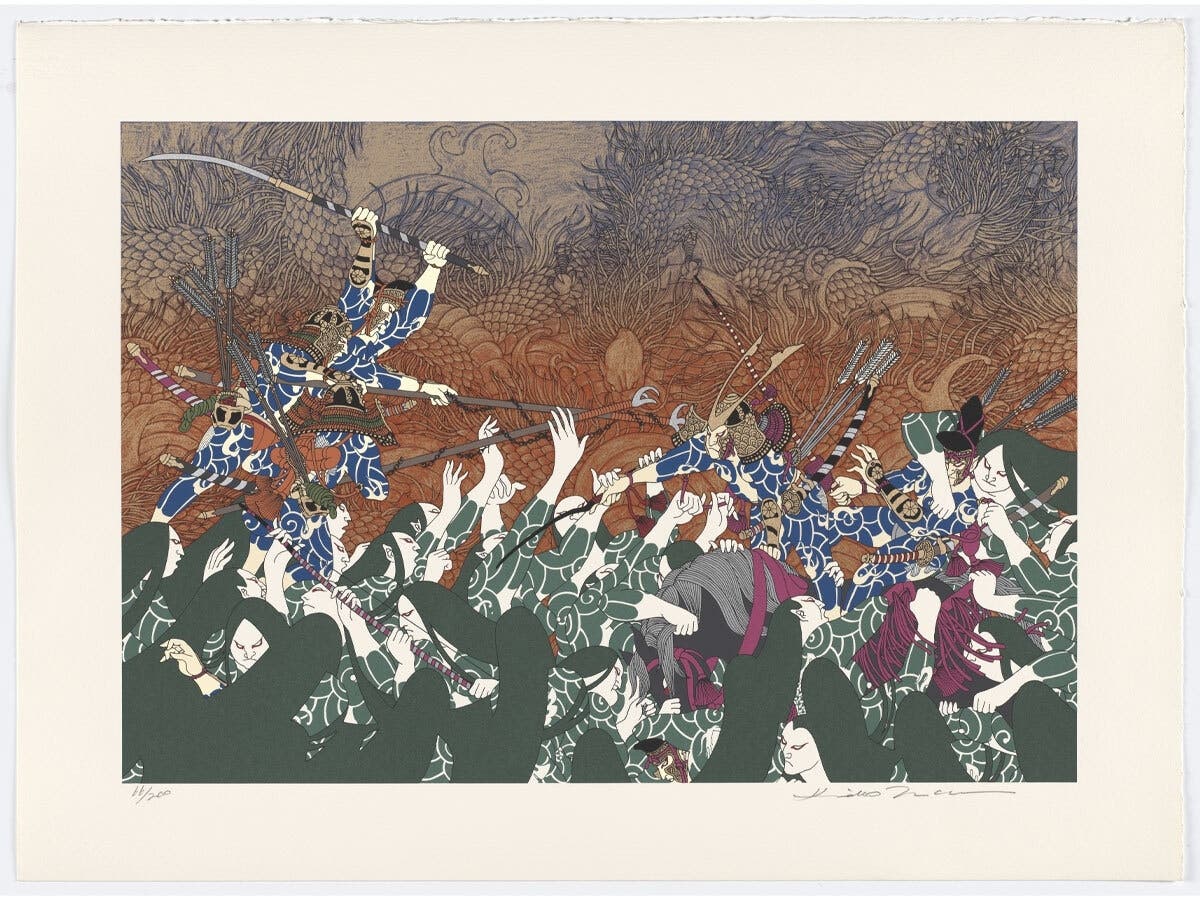
PRINCETON, NJ — The Princeton University Art Museum will present "Takeda Hideo's Genpei: Defying Authority," an exhibition of 22 screenprints by Japanese artist Takeda Hideo, from Aug. 30, 2026, through Jan. 3, 2027.
The exhibition focuses on Takeda's Genpei series, produced between 1985 and 1999, which reinterprets "The Tale of the Heike," a medieval epic recounting the 12th-century Genpei War between the Minamoto and Taira clans. The tale's romanticized depiction of warfare and masculinity has endured in Japan's national imagination for centuries.
This marks the first time all 22 prints from the series will be shown together in the United States, alongside additional works and contextual materials. The exhibition repositions Takeda's work within the cultural, political and artistic landscape of late 20th-century Japan, challenging traditional ideas about the samurai and heroic masculinity.
Find out what's happening in Princetonfor free with the latest updates from Patch.
Rather than illustrating the epic conventionally, Takeda's prints offer a cynical and often humorous reinterpretation, using bold graphic style, stylized patterning, and the red and white colors associated with the rival clans. The figures are rendered with exaggerated, anachronistic tattoos that disrupt the war's typical portrayal.
"Takeda's work is visually arresting, provocative, and deeply engaged with the social and political currents of our time, offering a powerful lens through which to reconsider both history and its representation," said James Steward, Nancy A. Nasher–David J. Haemisegger, Class of 1976, Director of the Princeton University Art Museum.
Find out what's happening in Princetonfor free with the latest updates from Patch.
Kit Brooks, curator of Asian art at the museum, said Takeda's work challenges long-held assumptions about how Japanese history is presented. "Takeda recasts this romanticized war epic as something far more unstable and human, exposing the absurdity, violence, and self-absorbed motives at its core," Brooks said.
In works such as "The Mark of the Fan," Takeda transforms a celebrated moment of martial skill into an unsettling scene of a lone warrior advancing through submerged, tattooed bodies. Other pieces depict the general Yoshitsune with grotesque, satirical imagery that undercuts idealized samurai masculinity, and the warlord Taira no Kiyomori tormented by demonic forces. Takeda's use of full-body tattoo motifs — associated with Japan's modern criminal underworld — recasts the war as a conflict between rival gangs rather than noble warrior elites.
Takeda trained at Tama Art University in the early 1970s, a period shaped by student protest movements, and worked as a political cartoonist and poster designer, influences reflected in the Genpei series' formal clarity and subversive humor.
The exhibition is curated by Brooks and accompanied by a book featuring a new essay by Brooks, an interview with the artist, and an essay by Elizabeth Oyler, a specialist in "The Tale of the Heike" and noh performance. It is the first English-language book on Takeda published in several decades.
Have a correction or news tip? Email sarah.salvadore@patch.com
Get more local news delivered straight to your inbox. Sign up for free Patch newsletters and alerts.