Schools
New Portraits To Reflect Princeton University's Diversity
A total of 10 portraits have been commissioned, including eight that were announced on Thursday.


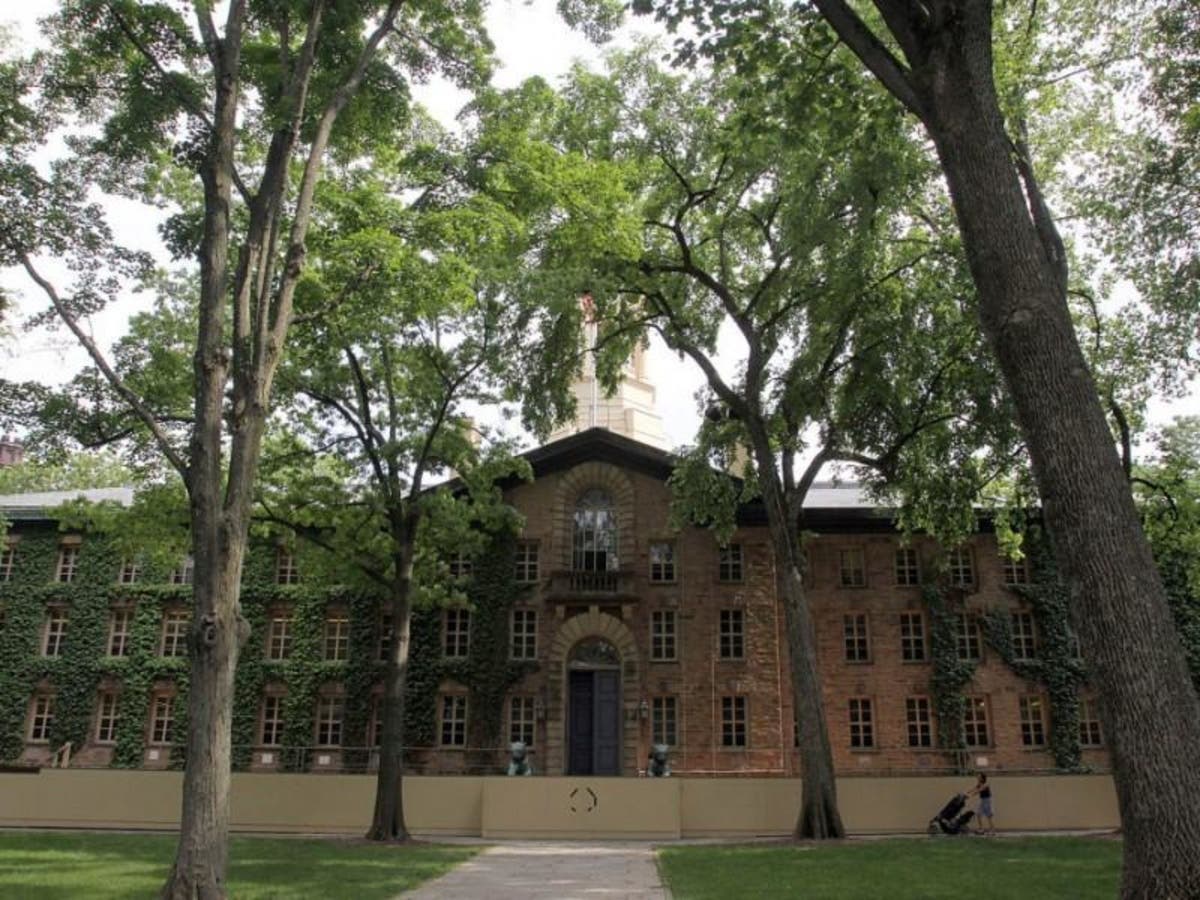
PRINCETON, NJ — Princeton University will commission eight new portraits of alumni and former faculty and administrators to reflect the diversity of the University community, the university announced on Thursday.
- William W. Bradley, Class of 1965;
- Denny Chin, Class of 1975;
- Carl A. Fields;
- Elaine Fuchs, a Class of 1977 graduate alumna;
- Robert J. Rivers, Class of 1953;
- Ruth Simmons;
- Sonia Sotomayor, Class of 1976; and
- Alan M. Turing, a Class of 1938 graduate alumnus.
Last year, the university commissioned portraits of Toni Morrison in Morrison Hall and of Sir Arthur Lewis in Robertson Hall. These 10 portraits are the first portraits, outside of University presidents and deans of the graduate school and the engineering school, that have been added to Princeton’s portrait collection since the mid-19th century, according to the university.
“I’m delighted to honor these extraordinary individuals who have excelled in a range of fields and served the University, our nation, and humanity in powerful and lasting ways,” Princeton University President Christopher L. Eisgruber said. “By reflecting our shared values and illuminating our history more fully, the new portraits will serve as an important expression of the welcoming community that we are today as we aspire to become even more diverse and inclusive in the future.”
Find out what's happening in Princetonfor free with the latest updates from Patch.
The next step is to select artists for each of the eight new portraits. The portraits should be completed over the next two years, according to the university. The location of each portrait is to be determined and will be informed by the portrait subject. The Campus Art Steering Committee will lead this process.
Once the portraits are done, a web-based mobile walking tour of the portrait locations will be created.
The university formed the Portraiture Nominations Committee (PNC) in fall 2017 to solicit and review suggestions for new university portraits. The PNC is part of the Campus Iconography Committee (CIC), which is overseeing a number of efforts to update and diversify campus art and iconography.
Find out what's happening in Princetonfor free with the latest updates from Patch.
“Princeton today is a place that is increasingly rich in its diversity,” said PNC member Laurence Morse, who earned his Ph.D. from Princeton in 1980. “Yet, as one makes one’s way around the campus, in and out of academic buildings, residence halls, under arches and through various passageways, the current iconography and representations of the University’s ‘family,’ and those who have contributed to making it the great institution that it is, are decidedly singular.”
Morse said he hopes new portraits, photographs and other art will “represent both a more inclusive, fulsome embrace of Princeton’s rich past, but also its increasingly rich and diverse present in ways that make all who live, breathe and toil there feel that they are indeed welcome, and at home.”
A brief biography of each portrait subject, provided by the university, can be found below. More information also is available on the portraiture website.
- William W. Bradley, a Class of 1965 graduate, is a former U.S. Senator from New Jersey and former star player for the New York Knicks. He is Princeton’s all-time leading scorer in basketball and he won an Olympic gold medal in 1964. As a senator, he championed numerous causes relating to tax reform, the environment, energy, foreign policy and health care. He is a former member of the University’s Board of Trustees and was the 1987 winner of the Woodrow Wilson Award.
- Denny Chin, a Class of 1975 graduate, has been a federal judge since 1994. Born in Hong Kong, Chin was the first Asian American appointed as a United States District Judge outside of California and Hawaii. He is now a United States circuit judge for the Second Circuit. He is a former University trustee and was the 2011 winner of the Wilson Award.
- Carl A. Fields became the first black dean at any Ivy League school when he was promoted to Princeton’s assistant dean of the college in 1968. He implemented policies and practices that increased enrollment, retention and a sense of belonging for students of color, and was instrumental in establishing supportive student organizations and programs, as well as the Third World Center, now known as the Carl A. Fields Center for Equality and Cultural Understanding.
- Elaine Fuchs, who earned her Ph.D. in biochemical sciences at Princeton in 1977, is a world-renowned leader in cell biology and molecular genetics. She is the Rebecca C. Lancefield Professor of Mammalian Cell Biology and Development at Rockefeller University and an investigator at the Howard Hughes Medical Institute. She was awarded the 2009 National Medal of Science and the University’s James Madison Medal.
- Sir Arthur Lewis taught courses in economic development and economic history at Princeton from 1963 to 1983, and was the University’s first black full professor. He received the Nobel Prize in Economic Sciences in 1979, the only person of African descent ever to win a Nobel Prize in a field other than literature or peace.
- Toni Morrison is the Robert F. Goheen Professor in the Humanities, Emeritus, the founder of the Princeton Atelier and the recipient of the 1993 Nobel Prize in Literature. She was the first African American woman to be awarded the prize. She played a transformative role in expanding Princeton’s commitments to the creative and performing arts, American studies and African American studies.
- Robert J. Rivers, a Class of 1953 graduate, was among the first black students admitted to Princeton and was the first African American elected by the Board of Trustees to serve as a trustee. He is a retired professor of clinical surgery and associate dean for minority affairs at the University of Rochester School of Medicine and Dentistry. He lives in Princeton in the same house in which he lived as a child.
- Ruth Simmons is president of Prairie View A&M University, and previously served as president of Smith College and Brown University. She was the first woman president of Brown and first black president of an Ivy League institution. As an administrator at Princeton, Simmons served in a number of pioneering roles, including first director of studies at Butler College and acting director of the Program in African American Studies, and issued a major report on campus race relations in 1993. She is a former University trustee.
- Sonia Sotomayor, a Class of 1976 graduate, is an associate justice of the U.S. Supreme Court. She is the first justice of Hispanic heritage and the third woman justice in Supreme Court history. Sotomayor is a former University trustee. Her Alumni Day speech when she won the Woodrow Wilson Award in 2014 inspired the University to modify its informal motto to “Princeton in the Nation’s Service and the Service of Humanity.” As a student she received the University’s highest undergraduate award, the Moses Taylor Pyne Honor Prize.
- Alan M. Turing earned his Ph.D. in mathematics from Princeton in 1938. Turing is widely recognized as the father of computer science and is also an icon in the history of lesbian, gay, bisexual and transgender (LGBT) rights. A native of England, Turing was central to the British government’s successful effort to decode the German Enigma codes, a crucial development in the Allied victory in World War II. He ranked second in a “Princeton Alumni Weekly” article about the University’s most influential alumni of all time.
The campus portrait collection is maintained by the University Art Museum. The collection was established by John Maclean when he was vice president of Princeton in the mid-19th century.
“As University archivist, I know that Princeton’s history, especially in the last 50 years, is more diverse than the campus portraits depict,” PNC member Daniel Linke said. “I was glad to be part of this effort to better reflect our heritage.”
“Campus portraiture will now more accurately reflect the evolution and ever-growing diversity of the student body and alumni community, in much the same way as the P-rade does,” PNC member Ryan Ruskin, a Class of 1990 graduate, said. “More current students will recognize aspects of themselves in campus portraiture. Presenting and including more diversity in this way, we hope, will offer additional inspiration and motivation for all Princeton students.”
Patch file photo
Get more local news delivered straight to your inbox. Sign up for free Patch newsletters and alerts.