Schools
Princeton High School Makes Leap in Washington Post's List of America's Most Challenging High Schools
The Washington Post provides its annual list of what it considers to be the most challenging average public schools.


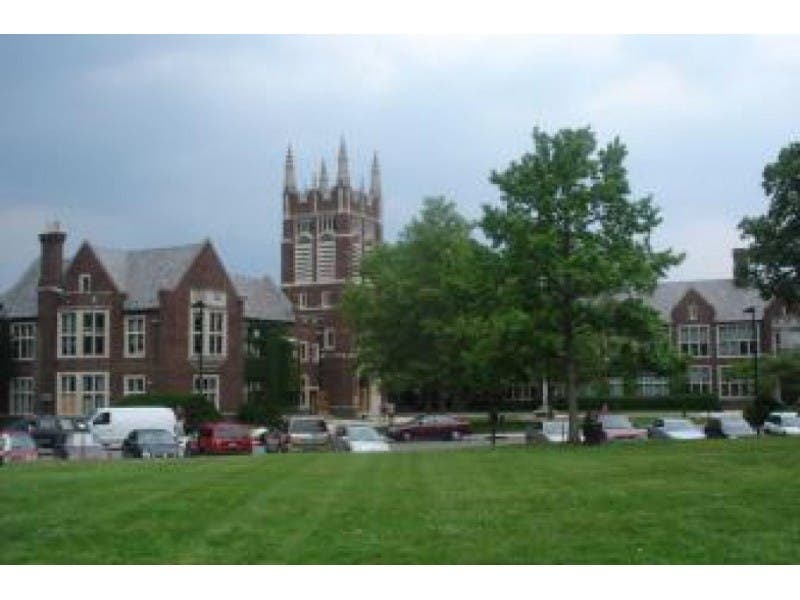
Princeton High School made a significant leap in the Washington Post’s rankings of “America’s Most Challenging High Schools” from last year to this year.
Princeton was ranked No. 289 on this year’s list of 2,300 high schools around the nation that it defined as challenging.
Last year, Princeton was ranked 467th. Before that, it had climbed from a ranking of 370 in 2011 to 322 in 2013.
Find out what's happening in Princetonfor free with the latest updates from Patch.
Its index is 4.056, compared to 3.157 last year and 3.467 the previous year.
But why all the movement in ranking and index? What does it all mean?
Find out what's happening in Princetonfor free with the latest updates from Patch.
The Washington Post’s list is based one metric: How many of a school’s students took an Advanced Placement or other college-level test last year, compared with the number of students who graduated from that high school last year.
The other tests considered are the International Baccalaureate and Advanced International Certificate of Education tests, according to the Washington Post article.
To make the list, a school had to have a score of 1.000 or better. To achieve that score, the school had to have as many college-level tests given last year as the number of students who graduated. Magnet schools were not included on the list.
So, if there were 300 graduates last year at a particular school, there would need to be 300 AP tests taken by students at that school to make the list.
The Post defends the rankings as ”a modest standard,” saying, “A school can reach that level if only half of its students take one AP, IB or AICE test in their junior year and one in their senior year.”
So students taking multiple AP tests helps a school’s ratio.
According to the 2014 U.S. News & World Report report on the Best High Schools in New Jersey, 68 percent of Princeton High School students took AP tests in 2012-13, with a passing rate of 90 percent. The average number of exams taken per taker was 4.5, with a passing rate of 91 percent.
However, years in which participation is low can have a negative impact on a school’s performance on this list, no matter its performance in other areas.
Students must pay to take an Advanced Placement test. The fee is $91 per test, though there are some fee reductions available for students who qualify based on financial need.
The benefit of taking an AP test is that students who do score 3 or better are able to receive college credit at many colleges and universities, allowing them to spend tuition dollars on other courses. A perfect score is 5.0.
The Post touts the importance of taking the test for everyone:
“AP, IB and AICE are important because they give average students a chance to experience the trauma of heavy college reading lists and long, analytical college examinations. Research has found that even low-performing students who got a 2 on an AP test did significantly better in college than similar students who did not take AP.”
What’s your opinion? Tell us in the comments below.
Get more local news delivered straight to your inbox. Sign up for free Patch newsletters and alerts.