Schools
Princeton School District Budget Gap Might Force Tax Hike
From rising health insurance costs to shrinking state aid, the Superintendent laid out the pressures driving a proposed tax levy increase.


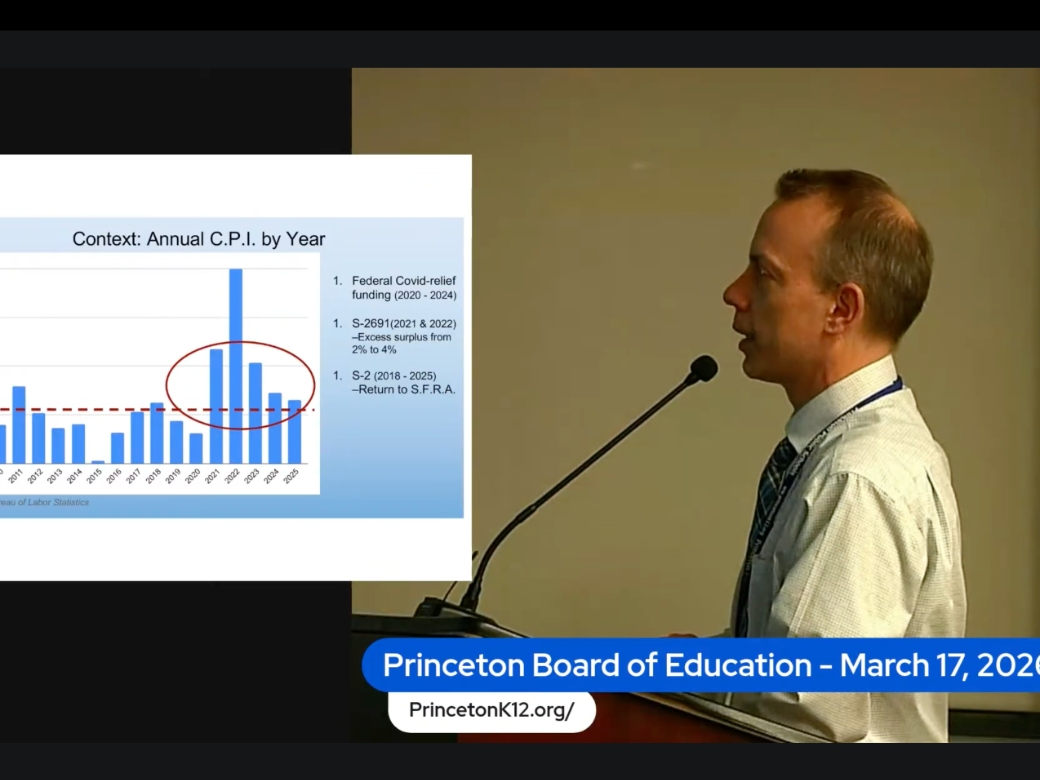
PRINCETON — Princeton Public Schools is facing a nearly $750,000 budget gap heading into the 2026-27 school year, and residents should expect a property tax increase. The final amount won't be set until the Board of Education adopts its final budget on April 28.
Superintendent Mike LaSusa presented a preliminary budget Tuesday night showing approximately $116 million in projected expenditures against a maximum revenue ceiling of roughly $115 million.
If the board exercises its full taxing authority, the local tax levy could rise up to 4.33 percent, translating to roughly $55 more per $100,000 of assessed property value annually.
Find out what's happening in Princetonfor free with the latest updates from Patch.
A home assessed at $500,000 would see roughly a $300 increase; a home assessed at $1 million, roughly $600.
That figure is significantly lower than last year's jump of more than $300 per $100,000, which included bond payments tied to the district's referendum construction projects.
Find out what's happening in Princetonfor free with the latest updates from Patch.
But LaSusa warned the board that while this year's budget can likely be balanced without significant cuts to student programs, the same may not hold in years ahead.
"Our expenses are going to continue to be greater than our revenue," he said. "Right now we'll be at a position where we can accomplish a budget that does not have significant cuts to students, but it's likely that next year or the year after that will not be the case."
The Cap Problem
LaSusa framed the district's challenges as the product of three intersecting forces: the end of federal pandemic relief funding, a 2 percent local tax levy cap in place since 2011, and health insurance premiums rising at rates that far outpace what the cap allows. More than 80 percent of Princeton's budget is funded through the local property tax levy, making the 2 percent ceiling an acute constraint.
"We're living in two worlds right now that are contradictory," LaSusa said, referring to the tension between the state's school funding formula — known as SFRA — which predates the levy cap, and the hard 2 percent limit. "SFRA is intended to let school districts fund as much of their budgets as they want, and then there's a 2 percent levy cap that has the exact opposite effect."
Health Insurance Diving Costs
The most significant budget pressure this year is health insurance. The state-run New Jersey School Employees' Health Benefits Program — used by roughly a third of New Jersey districts — saw premiums rise nearly 32 percent on Jan. 1, with prescription costs alone jumping nearly 59 percent.
Princeton is privately insured and fared better, with premiums forecast to rise about 15 percent. Even so, the district's health insurance budget is expected to climb from $15.5 million this year to nearly $18 million next year.
State law permits districts to pass health insurance increases through to the tax levy, up to the rate of the state plan's increase — a provision that accounts for the bulk of Princeton's proposed levy increase.
State Aid Rebound Doesn't Go Far
As Princeton Patch reported Monday, the district is set to receive $5,853,382 in state aid for 2026-27 — an increase of $202,349, or 3.58 percent, reversing a 3 percent cut absorbed last year. But over the past two years combined, Princeton's total state aid has risen only about half a percent, while general inflation has climbed 5 percent and the state's transportation inflation index has risen 7 percent, the Superintendent noted.
"We're not exactly swimming in it," LaSusa said.
Princeton receives no equalization aid — the primary component of the SFRA formula — because the district's property wealth and resident income are judged sufficient to fund an adequate education without state support.
New Costs, But Modest New Revenue
LaSusa said that several unexpected expenses emerged in recent weeks. The municipality notified the district that it had not been billing the schools for water management services and will now do so, adding roughly $100,000.
Charter school costs also came in higher than anticipated, with Princeton Charter School's state-calculated tuition rising $320,000 more than projected, and two out-of-district charter placements adding another $51,000. Combined, those surprise costs total about $525,000.
On the revenue side, the district will receive its first full year of payments under a PILOT-sharing agreement with the municipality, adding approximately $300,000, and the state aid increase adds just over $200,000. The new revenue roughly offsets the new costs — leaving the $743,000 structural gap largely unchanged.
LaSusa also cautioned that $900,000 of the district's current revenue reflects interest earned on referendum bond proceeds. As those funds are drawn down over the next three years to pay architects and contractors, that income will disappear, widening the gap further.
So What Comes Next?
To close the shortfall, the administration is examining gradual staff reduction, reorganization, and the elimination of certain memberships, subscriptions, and technology contracts, LaSusa said. The district is also exploring new revenue, including potential activity and facilities use fees.
LaSusa closed with a stark, longer-term warning. "The question is really going to become for the board and the community at large: do we reduce the programming to get in line with the revenue we have, or do we increase the revenue to try to match the programming that people are accustomed to? And that is a longer, you know, a much more involved conversation. It will take time," LaSusa said.
He added that he expects many other New Jersey districts to announce similar difficulties in the coming days, noting he spoke Tuesday with one superintendent facing a 6.5 percent tax levy increase driven almost entirely by health benefit costs.
The board adopted the preliminary budget on Tuesday and submitted it to Mercer County for review. A final budget must be adopted by April 28.
Have a correction or news tip? Email sarah.salvadore@patch.com
Get more local news delivered straight to your inbox. Sign up for free Patch newsletters and alerts.