Schools
Princeton U. Warns Of Budget Cuts Amid ‘Political Threats’
The University will shift from expansion to 'substitution' as endowment projection plunges, the university president said.


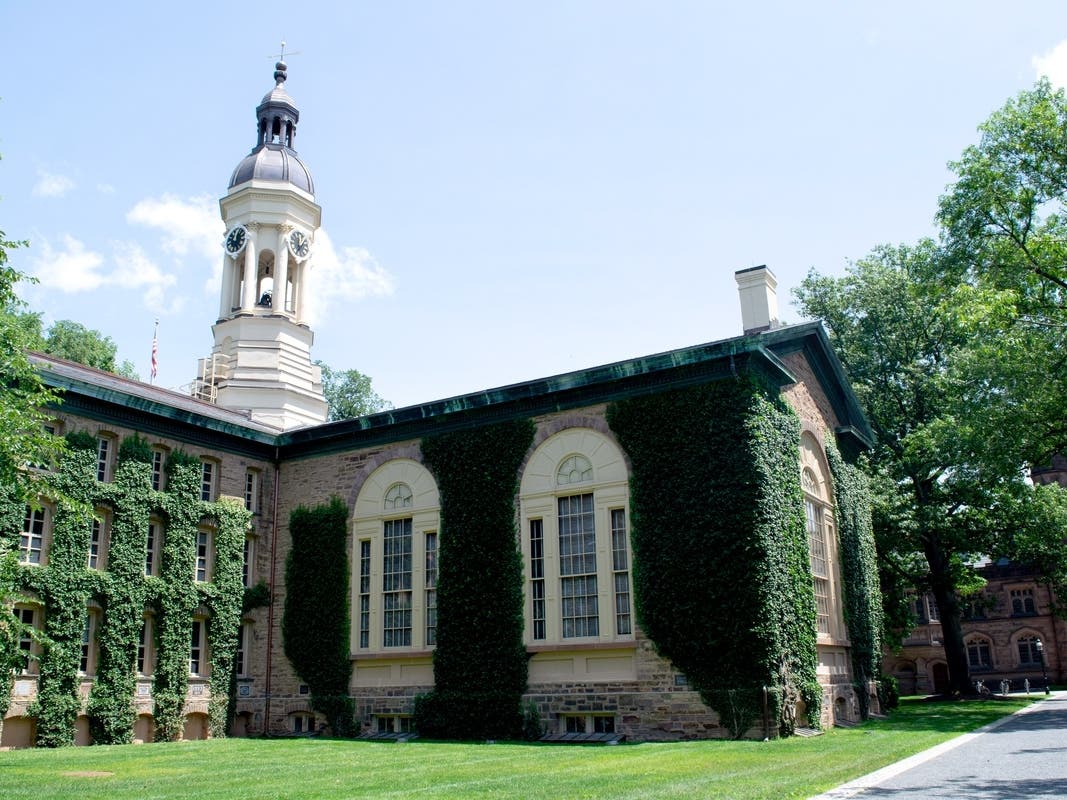
PRINCETON, NJ – In the coming months, Princeton University will see major changes to its budget due to "political threats" facing its financial model and endowment projections.
In his yearly “State of the University” letter to the campus community, President Christopher Eisgruber said the school will have a “steadfast focus on core priorities” and move away from growth.
“The University must evolve to meet new challenges and extend the frontiers of knowledge. Princeton will continue to build, but more slowly in the years to come,” Eisgruber said.
Find out what's happening in Princetonfor free with the latest updates from Patch.
The change that I am describing, however, goes beyond the pace of construction. It will affect everyone on campus. Princeton will continue to evolve, but in the future it will more often have to do so through efficiency and substitution rather than addition.”
The cause of the transition is mainly economic. Princeton's investment office has slashed its long-term endowment return expectations from 10.2 percent to 8 percent annually.
Find out what's happening in Princetonfor free with the latest updates from Patch.
This amounts to an $11 billion gap between what the university once expected to have and what it now projects, translating to $500 million less in annual spending capacity.
Last year, departments across campus absorbed 5-7 percent budget cuts, forcing administrators to make difficult choices about which programs to trim and which positions to leave unfilled. More reductions are coming, Eisgruber warned, and they will be "more targeted" and "in some cases deeper."
“Such choices will allow the University to evolve through substitution rather than addition; they will also add to Princeton’s capacity to deal with further policy challenges or economic headwinds that may arise,” Eisgruber said.
With Princeton’s economic model depending more heavily than ever on the endowment, if the spend rate becomes too high, “the University would have to make large budget cuts rapidly, which would involve (among other actions) large-scale layoffs,” Eisgruber said.
He noted that the University faces “political threats” to its financial model along with the economic ones.
Research depends heavily on federal funding, which makes up a crucial portion of Princeton's revenue alongside the endowment. Together, they account for 83 percent of the university's budget and both are under political threat—from potential endowment taxes to cuts in research grants.
In his letter Eisgruber also defended academic freedom against external threats, noting that universities face challenges to "research funding, the immigration status of community members, free speech, academic freedom, diversity and inclusion programs, and our endowments."
“I stepped up my work with the Association of American Universities, met more often with Washington policymakers, and sought out opportunities to communicate publicly about the principles that define this University and other great research institutions. We are in a crisis, and universities have an obligation to speak up,” he said.
“Free speech and academic freedom are complementary principles; both are essential to the life of a great university. It is academic freedom, however, that ultimately guarantees faculty members here and elsewhere the freedom to seek knowledge even when doing so may anger officials, disrupt industries, upset orthodoxies, or inflame controversies.”
You can read Eisgruber's full letter here.
Have a correction or news tip? Email sarah.salvadore@patch.com
Get more local news delivered straight to your inbox. Sign up for free Patch newsletters and alerts.