Schools
Princeton U. Will Disassociate From 90 Fossil Fuel Companies, Including Exxon, NRG
The Board of Trustees voted to disassociate from companies "active in the thermal coal or tar sands segments," the University said Thursday.


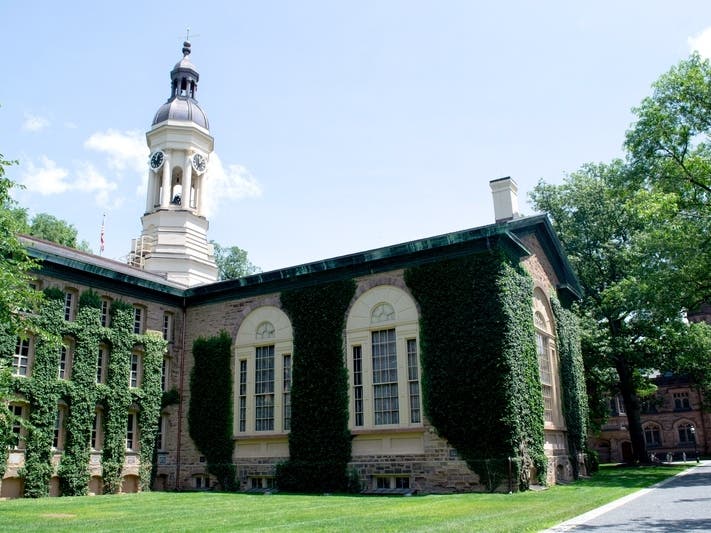
PRINCETON, NJ — Princeton University will be disassociating from 90 fossil fuel companies including Exxon Mobil, NRG Energy Inc., and Suncor Energy, the University announced Thursday.
The Board of Trustees voted earlier this month to disassociate from the companies “active in the thermal coal or tar sands segments of the fossil fuel industry.”
Princeton University Investment Company (PRINCO) will also “eliminate all holdings in publicly traded fossil fuel companies” and will “ensure that the endowment does not benefit from any future exposure to those companies,” the announcement said.
Find out what's happening in Princetonfor free with the latest updates from Patch.
The quantitative criteria used to determine the dissociation list were based on recommendations made by a panel of faculty experts in a report submitted in May, according to the announcement.
The board’s vote is the culmination of a community-initiated two-year process that included input from stakeholders across the campus community.
Find out what's happening in Princetonfor free with the latest updates from Patch.
The University said it will establish a new fund to support energy research at Princeton, to offset research funding no longer available because of dissociation.
“Princeton will have the most significant impact on the climate crisis through the scholarship we generate and the people we educate,” President Christopher L. Eisgruber said in statement. “The creation of this new fund is one of several ways that the University is helping to provide Princeton researchers with the resources they need to pursue this work.”
The announcement comes after years of activism from students and community members, especially Divest Princeton — a coalition of Princeton students, professors, and alumni.
“The actions taken by the University and the Board of Trustees are a huge step towards the full divestment and dissociation from fossil fuels. This decision is the result of nearly a decade of activism by Princeton students, faculty, staff, and alumni,” Divest Princeton co-coordinator and Princeton sophomore, Aaron Serianni said in a statement.
Karl Kusserow, Associated Faculty at Princeton’s High Meadows Environmental Institute and John Wilmerding Curator of American Art at the Princeton University Art Museum, spearheaded the faculty coalition of over 160 faculty and staff members fighting for divestment.
"These commitments, advocated by diverse faculty and staff, constitute an important step in bringing Princeton's actions into alignment with its moral aspirations and with all the important work it supports on climate," Kusserow said.
In March Princeton released a report related to its holdings in the fossil fuel industry. The report revealed a $1.7 billion exposure to the industry, and about $13 million is directly invested in fossil fuel corporations.
Over the past five years, Princeton University received $26.2 million in new funding from oil and gas companies in support of research, according to the report.
“We’re grateful to the Princeton faculty members who dedicated their time and expertise to addressing an important and challenging set of questions,” Board Chair Weezie Sams said in a statement.
“It is thanks to their work, and the engagement of many members of the University community, that we’re able to take these steps today.”
Have a correction or news tip? Email sarah.salvadore@patch.com
Get more local news delivered straight to your inbox. Sign up for free Patch newsletters and alerts.