Schools
Princeton's New COVID Testing Center To Support Campus Community
The university said opening the lab is an important step in safely bringing back students and staff to campus for spring.


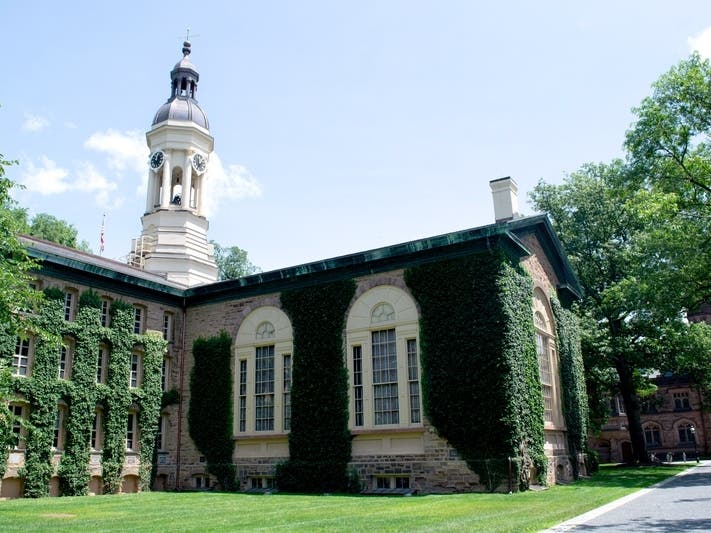
PRINCETON, NJ — Princeton University's on campus COVID-19 testing site will support students, staff and the researchers.
Princeton is one of the few universities in the country without a medical or veterinary school to build a federally certified COVID testing lab, the university said.
The opening of the lab, said the university, is an important step in safely bringing back students to campus in spring.
Find out what's happening in Princetonfor free with the latest updates from Patch.
“As the dire nature of the pandemic became clear last spring, President Eisgruber made the bold decision that the University would build and seek a license for its own testing laboratory,” Daniel Notterman, physician and University lecturer in the Department of Molecular Biology said in a statement.
“At the time, resources and testing capabilities were extraordinarily scarce, and he was determined that the University, as it worked to reopen the campus, would contribute to the testing capacity in New Jersey by creating resources to test its own students, faculty, staff and researchers.”
Find out what's happening in Princetonfor free with the latest updates from Patch.
The lab is housed in the Department of Molecular Biology and is designed to run at least 2,000 individual samples per day, or 10,000 per work week.
The University plans to increase capacity by testing a certain number of samples as a group. If the group tests negative, all specimens are known to be negative. If the combined sample tests positive, they individually re-tested.
According to Paul LaMarche, vice provost for space programming and planning, creating the lab was an all-hands-on-deck effort. “A lot of people dropped what they were doing to come to our aid to make this a successful enterprise,” he said.
The test looks for three SARS-CoV-2 genes; when none is detected, the test is negative. When only one gene is detected, the person will be told that their test was indeterminate, and they will need to submit another sample. If two or three genes show detectable levels, the test is labeled positive.
The lab will use saliva samples, as university experts feel the saliva test is as accurate as the deep nasal swab, and more accurate than the shallow self-swabbing tests common at drive-thru testing sites.
The saliva sample can also be self-collected, which not only protects healthcare workers but reduces the need for personal protective equipment. “It’s also much more comfortable than the nasal pharyngeal swab, the deep swab. We didn’t want to subject students to something uncomfortable on a regular basis,” said Notterman.
The university recently announced it was bringing back all undergraduate students to campus for the upcoming spring semester.
Read More Here: Princeton University To Bring Back Students For Spring Semester
University President Christopher Eisgruber said the decision was made after the university established the on-campus testing lab.
"In light of this work, we have concluded that, if we test the campus population regularly and if everyone on campus rigorously adheres to public health guidance about masking, social distancing and other practices, we can welcome a far greater number of students back to Princeton," Eisgruber said in his message to the community.
Thank you for reading. Have a correction or news tip? Email sarah.salvadore@patch.com
Get breaking news alerts on your phone with our app. Download here. Sign up to get Patch emails so you don't miss out on local and statewide news.
Get more local news delivered straight to your inbox. Sign up for free Patch newsletters and alerts.