Schools
Nobel Prize In Chemistry For Princeton Professor
David W.C. MacMillan won the 2021 Nobel Prize in Chemistry for creating an "ingenious" tool for building molecules.


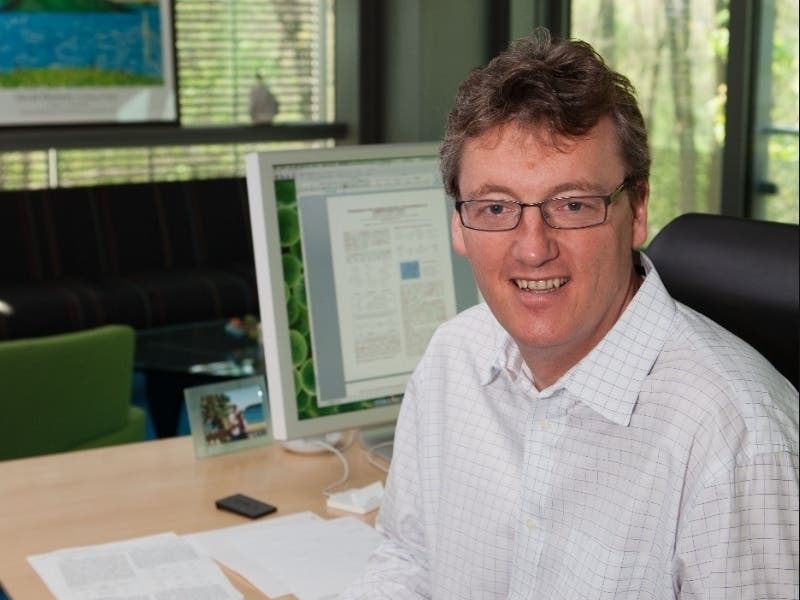
PRINCETON, NJ — A day after Princeton University scientist Syukuro Manabe shared the 2021 Nobel Prize in Physics, another Princeton Professor bagged a Nobel.
David W.C. MacMillan has been awarded the 2021 Nobel Prize in Chemistry for building a "simple" yet "ingenious" tool to build molecules that has made chemistry greener. MacMillan was awarded “for the development of asymmetric organocatalysis.” The announcement was made early Wednesday morning. McMillan will share the award with Benjamin List of the Max-Planck-Institut für Kohlenforschung, Mülheim an der Ruhr, Germany.
“Building molecules is a difficult art. Benjamin List and David MacMillan are awarded the Nobel Prize in Chemistry 2021 for their development of a precise new tool for molecular construction: organocatalysis. This has had a great impact on pharmaceutical research, and has made chemistry greener,” the Royal Swedish Academy of Sciences said while announcing the award.
Find out what's happening in Princetonfor free with the latest updates from Patch.
The prize amount is 10 million Swedish kroner, or about $1.14 million.
Johan Åqvist, chair of the Nobel Committee for Chemistry, said the concept for catalysis was "as simple as it is ingenious."
Find out what's happening in Princetonfor free with the latest updates from Patch.
McMillian found ways to design and build small organic molecules to drive chemical reactions. The University said he is also a leader in the field of photoredox catalysis, which uses light to break and rejoin atomic bonds, one electron at a time.
“I am shocked and stunned and overjoyed,” MacMillan said in a statement. “It was funny because I got some texts from people in Sweden really early this morning and I thought they were pranking me so I went back to sleep. Then my phone starting going crazy.”
MacMillan said he cares about trying to invent chemistry that has an impact on society and can do good, “Organocatalysis was a pretty simple idea that really sparked a lot of different research, and the part we’re just so proud of is that you don’t have to have huge amounts of equipment and huge amounts of money to do fine things in chemistry,” MacMillan said.
The professor joins Syukuro Manabe who won the 2021 Nobel Prize in Physics on Tuesday, for his groundbreaking work over the past 60 years in predicting climate change and decoding complex physical systems.
Read More Here: Princeton Scientist Wins Nobel Prize For Work On Climate Change
MacMillan was born in Bellshill, Scotland, in 1968. He received his B.Sc. from the University of Glasgow in 1991 and Ph.D. from the University of California-Irvine in 1996.
MacMillan came to Princeton in 2006 and served as chair of the chemistry department from 2010 to 2015.
Thank you for reading. Have a correction or news tip? Email sarah.salvadore@patch.com
Get breaking news alerts on your phone with our app. Download here. Sign up to get Patch emails so you don't miss out on local and statewide news.
Get more local news delivered straight to your inbox. Sign up for free Patch newsletters and alerts.