Schools
Therapist Helping Undocumented Immigrants In Princeton School District Cope With Changing Environment
Gloria Lopez-Henriquez is helping young minds cope with the rhetoric that has come with the political landscape recently.


PRINCETON, NJ — In the wake of the inauguration of Donald Trump as the 45th President of the United States, and some of the rhetoric that has come with his nomination and election over the last several months, the Princeton Public School District highlighted a recent group therapy session for students who are not U.S. citizens on Friday.
Gloria Lopez-Henriquez, a therapist with the Princeton Family Institute, led the session to help students who are feeling particularly vulnerable and help them process their feelings and emotions.
More than a dozen students participated in the group therapy session. Lopez-Henriquez began by asking the students to share stories about their life in their native countries and their experiences in the U.S.
Find out what's happening in Princetonfor free with the latest updates from Patch.
“There was a student who said, ‘I don’t remember how my house looked,’” Lopez-Henriquez said.
Another student said it took four months to make his way to Princeton from his native country, and he faced many difficult situations along the way.
Find out what's happening in Princetonfor free with the latest updates from Patch.
Each of the students in the group had experienced some level of trauma, and Lopez-Henriquez said it is important for teachers, administrators, and community members to not dismiss the hardships that these students and other immigrants in the community have faced.
“I often tell them that there are many adults who couldn’t have done what they’ve done,” Lopez-Henriquez said.
Lopez-Henriquez said when she works with patients who have been through hard times, she asks them to tell her more about their experiences. She suggests using some simple prompts, like the following:
Tell me what you did that allowed you to get through that experience.
What did you tell yourself during that time?
What kept you going?
“I want them to tell us their stories of their lives,” Lopez-Henriquez said.
Sometimes, finding the silver lining in a student’s story can do more harm than good because it can come across as downplaying the hardships someone has gone through, Lopez-Henriquez said.
She said it can be helpful to focus on what is positive about a student’s life in the present. For instance, a teacher could tell a student that they are proud of the student for diligently doing their homework or commend a student for their progress in learning English.
Some students in the group said they came to America alone, without any family network to support them.
Some are living with other young immigrants, working jobs at night or on the weekend to support themselves and attending classes at Princeton High School during the day.
Without parents or family members to support them, the political climate can be even more confusing or scary for the teens, Lopez-Henriquez said. She encouraged the students to trust in the goodness of people in their hearts, saying there are a lot of adults and peers around them who care and are willing to help them.
With young students, Lopez-Henriquez said that parents can decrease a child’s anxiety during uncertain times by limiting how much information they share with their children and how much news they see.
The younger the child, the less information they need, she said. Still, all children should know what to do in an emergency.
In undocumented families, for instance, students should know what to do if their parent unexpectedly does not pick them up from school or no one is there when they get home. Lopez-Henriquez said schools, too, need to know what to do if a student’s parents are deported or detained.
Lopez-Henriquez and other therapists from the Princeton Family Institute will continue working with immigrant students at Princeton High School periodically throughout the rest of the school year.
She said it’s important to help students process their feelings and also to receive tangible information.
She hopes different organizations will come talk with the students about practical scenarios they could encounter. For instance, what happens when someone is detained? What if ICE (Immigration and Customs Enforcement) agents arrive on their doorstep?
While it is a challenging time for many immigrant families, Lopez-Henriquez is hopeful about the strength and solidarity she sees in the Princeton community.
“We can take the burden, we can listen, we can hear some stories that might make us cry, but we can bounce back from it,” she concluded.
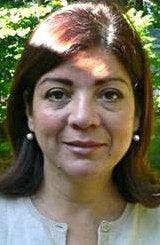
The attached image of Gloria Lopez-Henriquez was provided by the Princeton Public School District
Get more local news delivered straight to your inbox. Sign up for free Patch newsletters and alerts.