
Concussions have become a hot topic in sports today, especially with football. Rule changes have been implemented to reduce head trauma from the pee wee leagues to the NFL. Coaches are becoming more educated as far as what to look for as signs of a concussion. A secondary concussion occurring when an athlete has not fully recovered and healed from an initial concussion could have fatal consequences.
The problems here are that athletes don't want to be taken out of competition and coaches want to win. The result can be athletes not communicating concussive symptoms and coaches turning a blind eye to apparent concussions. They play a game of Russian roulette and sometimes come up short.
I remember a number of years ago, there was a game in which Brett Favre suffered a concussion then and ran back onto the playing field. No one on the sideline stopped him. He threw a touchdown pass and after the game, he never remembered throwing it. A situations like this, could have been fatal if Brett had a significant head trauma during that play.
Find out what's happening in Ramseyfor free with the latest updates from Patch.
These brain injuries cause serious short-term and long-term damage. An interesting fact is that after a player suffers his first concussion, he's 1-2 times more likely to receive a second one. On his second concussion, he's 2-3 times more likely to suffer a third. And after a third concussion, a player is 3-9 times more likely to sustain a fourth.
So how does an athlete or training staff know when a player has a concussion? Usually when players take a big hit to the head and are wobbly, a team of trainers will put them through a series of tests to determine whether there is a concussion.
Find out what's happening in Ramseyfor free with the latest updates from Patch.
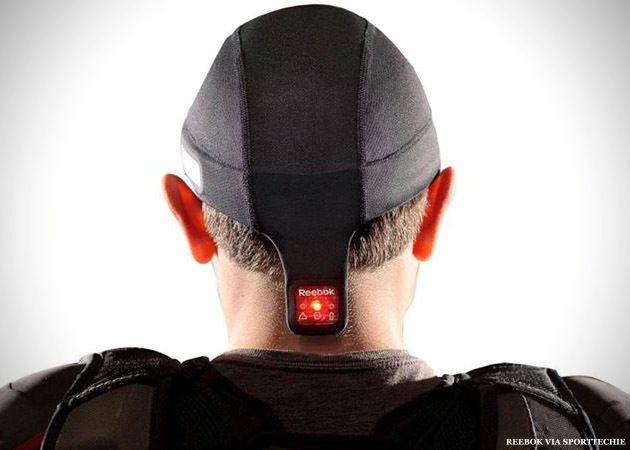
But most of the time, athletes say they are fine. They don't feel the effects right away so they continue to play, which risks injury to the brain even further. To address this problem, Reebok developed a skullcap that has a unique sensor to determine the amount of impact on a player's head. Named the "Checklight," this smart cap uses a light system that indicates the severity of the hit.
There is a light panel on the side as well as another that hangs in the back that flashes a yellow light for a moderate hit and a red light for a severe hit. The cap can fit inside the players' helmet and the light along the back is visual so that other players and athletic staff can see that it is on and possibly pull the player out of the game. It does this by measuring the G-force of a hit using an accelerometer. While the device does not diagnose or prevent a concussion, it does provide some indication on the amount of impact being taken on by an athlete and tracks each one.
Even though football seems to be the obvious sport for the Checklight, this type of product could be used in any sport where head trauma may occur. Some professional athletes like Indianapolis Colts quarterback Matt Hasselbeck use the product, but it could be particularly valuable for youth athletes because of different resources.
As concussions continue, you can expect technology like the Checklight to evolve. Being notified of a potential head injury is the first step to improving player safety and this device takes the reporting of a potential concussion out of the hands of the athlete. The Reebok Checklight is available for coaches, parents and players on Team Express for $149.99.
For More Information:
http://www.thepostgame.com/blog/futuresport/201310/introducing-smart-cap-concussion-testing