Health & Fitness
Are 'Kissing Bug' Spreading Chagas Disease in the U.S.?
Just when you thought things are getting more safe from unusual diseases, the "Kissing Bug" is the latest threat to the health of Americans.

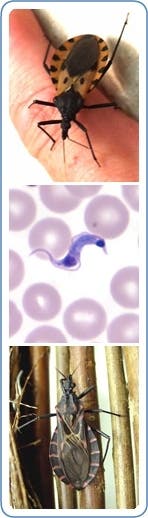
Just when you thought things are getting more safe from unusual diseases, the “Kissing Bug” is the latest threat to the health of Americans, especially in the southern United States. The parasitic infection transmitted by this insect, can lead to severe heart disease and death. There are three new studies that suggest this.
Chagas disease is the name of the disease that can be transmitted by “Kissing Bugs” . As if out of a Stephen King horror movie, the “Kissing Bugs” feed on animal and human blood, by sucking it from their faces at night. Chagas disease was once thought limited to Mexico, Central America and South America, but now it has moved north. How far north it will move is anyone’s guess.
“We are finding new evidence that locally acquired human transmission is occurring in Texas,” said Melissa Nolan Garcia, a research associate at Baylor College of Medicine in Houston and the lead author of two of the three studies.
Find out what's happening in Ramseyfor free with the latest updates from Patch.
Garcia is concerned that the number of infected people in the United States is growing and far exceeds the U.S. Centers for Disease Control and Prevention’s estimate of 300,000.
In one pilot study, her team looked at 17 blood donors in Texas who tested positive for the parasite that causes Chagas disease.
“We were surprised to find that 36% had evidence of being a locally acquired case,” she said. “Additionally, 41% of this presumably healthy blood donor population had heart abnormalities consistent with Chagas cardiac disease.”
The CDC still believes most people with the disease in the United States were infected in Mexico, Central and South America, said Dr. Susan Montgomery, of the agency’s parasitic diseases branch.
Find out what's happening in Ramseyfor free with the latest updates from Patch.
“There have been a few reports of people becoming infected with these bugs here in the United States,” she said. “We don’t know how often that is happening because there may be cases that are undiagnosed, since many doctors would not think to test their patients for this disease. However, we believe the risk of infection is very low.”
These blood-sucking insects are technically called triatomine bugs. They are found across the lower half of the United States, according to the CDC.
The feces of infected bugs contains the parasite Trypanosoma cruzi, which can enter the body through breaks in the skin. Chagas disease can also be transmitted through blood.
It’s a silent killer, Garcia said. People don’t feel sick, so they don’t seek care, but it causes heart disease in about 30% of those who get infected, she said.
In another study, Garcia’s team collected 40 insects in 11 Texas counties. They found that 73%carried the parasite and half of those had bitten humans as well as other animals, such as dogs, rabbits and raccoons.
A third study found that most people infected with Chagas aren’t treated.
For that project, Dr. Jennifer Manne-Goehler, a clinical fellow at Harvard Medical School and Beth Israel Deaconess Medical Center in Boston, collected data on nearly 2,000 people whose blood tested positive for Chagas.
Her team found that only 422 doses of medication for the infection were given by the CDC from 2007 to 2013. “This highlights an enormous treatment gap,” Manne-Goehler said in a news release.
The findings of all three studies, published recently in the American Journal of Tropical Medicine and Hygiene, were presented in New Orleans at the annual meeting of the American Society of Tropical Medicine and Hygiene.
Symptoms of Chagas can range from none to severe with fever, fatigue, body aches and serious cardiac and intestinal complications.
“Physicians should consider Chagas when patients have swelling and enlargement of the heart not caused by high blood pressure, diabetes or other causes, even if they do not have a history of travel,” Garcia said.
However, the two treatments for this disease are “only available in the United States via an investigative drug protocol regulated by the CDC,” Garcia said. They are not yet approved by the Food and Drug Administration.
Efforts are under way to develop other treatments for Chagas disease, Montgomery said.
“Several groups have made some exciting progress in drug development,” she said, “but none have reached the point where they can be used to treat patients in regular clinical practice.”
If you think that you might have been exposed to Chagas disease, or have the symptoms of Chagas disease, contact your medical doctor to get tested. If they are not familiar with Chagas disease, you can share with them the CDC Link for Diagnosis Tests and Treatment of Chagas Disease, which is:
CDC Link for Diagnosis Tests and Treatment of Chagas Disease