Health & Fitness
Are the Wrong Light Bulbs Ruining Your Sleep?
Bright lights, especially blue and green lights, can suppress the production of melatonin, a critical hormone for sleep.

Are you still tired after a full night’s sleep? Do you suffer from fatigue or excessive daytime drowsiness no matter how early you go to bed? The problem may be in your lights, not your rest. Bright lights suppress the production of melatonin, a critical hormone for sleep, and they also reset your suprachiasmatic nucleus (CLN). This means that blue or green flashing phones or blinking laptops can interrupt your REM sleep without even waking you up.
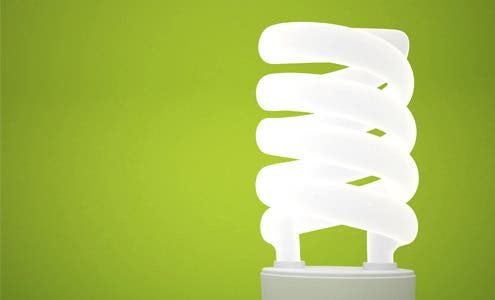
You should also be especially aware of blue lights and green lights, which are frequencies emitted by the energy-efficient or compact fluorescent bulbs. They’ve been shown to increase cognitive function in the brain, the exact opposite of what you want at bedtime.
If you can, use low-wattage incandescent lamps at your bedside. These are more ideal prior to sleep. A salt lamp is particularly helpful for this purpose, since it emits similar frequencies of light that a wood burning fire would. It is interesting that those color frequencies, produced by a salt lamp, are the main ones that primitive humans experienced at night was from fire! Those frequencies of light do not disrupt melatonin production as blue and green light does. Salt lamps also emit negative ions, which are promote quality sleep.
Find out what's happening in Ramseyfor free with the latest updates from Patch.
As far as nightlights go, the salt lamp with a dimmer can do the trick, without disrupting melatonin production.
When you buy a clock or clock radio, opt for one with a red light, bot blue or green. Even very low wattage output lights of the wrong frequencies, can significantly reduce melatonin production. For this reason, it is also ideal to sleep in a room that is a close to pitch black as possible.