Health & Fitness
Honey, A Natural Wound Healer
Western medicine has "forgotten" how good honey is to treat burns.

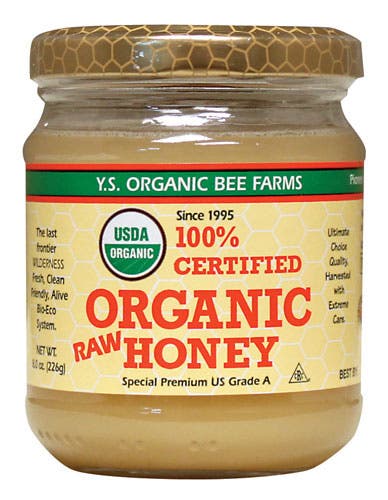
Honey has been used for hundreds of years to treat burns and a variety of other ailments. Western medicine has “forgotten” how good honey is medicinally. Why is that so? First of all, honey is a naturally occurring substance, which therefore cannot be patented. It is easy and inexpensive to obtain and honey only has a minimal profit margin. Drugs on the other hand can be patented and have a tremendous profit margin. Need I say more?
Today, you won’t find honey in any ambulance, fire truck, emergency room, hospital, or doctor’s office. It is a shame, since this natural healer can be used to treat wounds, burns and other ailments!
For the longest time it was taught that wounds heal better if they’re exposed to the air once they’ve been cleaned and the bleeding has stopped. New research shows differently. The latest finding supports the idea that keeping a wound moist and covered allows it to heal more quickly with less chance of infection. Apparently, the local blood vessels regenerate faster and the number of cells known to cause inflammation also decrease in number if wounds are not allowed to dry out. The research indicates that a wound should be kept moist for at least five days.
Find out what's happening in Ramseyfor free with the latest updates from Patch.
Use Honey To Treat Burns:
Burns are one of the most difficult problems to treat, because this type of wound provides the perfect breeding and feeding ground for many organisms. Burn wounds can easily become infected and the infection often spreads rapidly into the bloodstream, which can kill the victim. That’s why, if you have a burn wound, it’s important to act fast and do all you can to protect yourself.
Find out what's happening in Ramseyfor free with the latest updates from Patch.
Numerous studies have shown honey’s amazing bacteria-fighting powers when used in dressings to treat burns. One study evaluated the effects of using unheated raw honey on nine different pathogenic organisms found in burn wounds. When cultured, none of the organisms was able to survive a 30% concentration of the honey.
In another, somewhat similar study, doctors compared the effects of raw, unheated honey (which is the ideal form) to numerous antibiotics on 28 different strains of pathogenic, multi–drug resistant bacteria associated with burns. Only three of the strains were inhibited at all by any of the 11 antibiotics used in the study; every single one of the 28 strains was inhibited by a 25% concentration of honey. Plain, simple, raw honey worked.
Honey has to be one of the most underutilized therapeutic tools for treating burns, as well as ulcers and other wounds.
Research shows it has been used successfully to treat all types of wounds, including:
• Amputations
• Bedsores
• Leg ulcers (diabetic foot and leg ulcers, varicose ulcers, leprosy ulcers, sickle cell ulcers, et cetera.)
• Malignant ulcers
• Fistulas
• Cracked nipples
• Surgical wounds
• Gunshot and trauma-induced wounds, including those to the skull and abdomen
• Cuts, abrasions, and puncture wounds
Why Honey Is So Effective and Easy to Use?
There are a couple of things you need to know about the use of honey. Its antimicrobial activity is due to several factors. Honey is what’s called a super-saturated sugar solution. In chemistry terms, it has what is known as a very high osmolarity. When it comes into contact with microbes it “sucks” the water from their cells and destroys them. The same thing happens with sugar dressings on wounds. It draws the water from inside the bacteria cells and kills them through dehydration. Unlike sugar,honey has several other characteristics that are lethal to various microbes.
Honey is somewhat acidic. On the pH scale, with 0.0 being the most acidic, 7.0 being neutral, and 14.0 being the most alkaline, the pH of honey ranges from about 3.2 to 4.5. Honey’s acidic nature helps destroy certain microbes. Honey also has the unique ability to produce hydrogen peroxide (H2O2). Hydrogen peroxide can kill pathogens on contact. Honey doesn’t actually contain hydrogen peroxide but instead produces it through a chemical reaction when conditions are just right. First, the pH of the honey must rise to between 5.5 and 8.0. Second, a small amount of sodium (or salt) must be added to the mix. This is exactly what happens when honey comes into contact with human skin or a wound. The glucose or sugar molecule in honey starts to break down and produce hydrogen peroxide.
If you’ve ever tried to store hydrogen peroxide, you know how unstable it is and how easily it loses its effectiveness over time. Honey remains stable for long periods and retains its ability to produce bacteria-killing hydrogen peroxide upon demand. Honey also contains dozens of other antioxidants, minerals, enzymes, amino acids, fats and compounds that aren’t yet fully understood, but which aid in the elimination of microbes and increases the speed healing.
Best of all, honey is so easy to use. For deeper wounds and abscesses, honey is generally used to fill the cavity after it has been cleaned. On smaller wounds and on larger ones that have been filled with honey, a top dressing is applied. This is done using approximately 1 ounce of honey on a 4-inch square dressing pad. The pad is then applied directly to the wound. A second, dry dressing is placed on top of the first dressing and secured with adhesive tape.
Changing the dressing once daily is usually all that is required. If the wound initially produces a large amount of exudate (the fluid that can ooze out of wounds), then more frequent changes may be necessary. Once no exudate is being produced, the honey dressing may only need to be changed once every five days to a week.
Honey is inexpensive and readily available. As you probably realize by now, it is advisable to have a jar in your first-aid kit and medicine cabinet. The gauze dressing pads will probably cost you more than the honey!