Health & Fitness
The Microbead Problem
Being so tiny, you might assume that microbeads pose little environmental risk, but the opposite is actually true.

Have you ever seen photos of the Great Pacific Garbage Patch, which is also known as the Pacific Trash Vortex?
Because of how the earth’s sea currents travel, this area collects debris from the oceans of the world. It is about the size of Texas. Most people who know about it would not willingly toss plastics into our waterways. Those same people, who are environmentally conscious, may unknowingly be doing that exact thing on a more microscopic level. The problem is with microbeads, which may be just as detrimental to the ecosystem of our planet as The Pacific Trash Vortex.
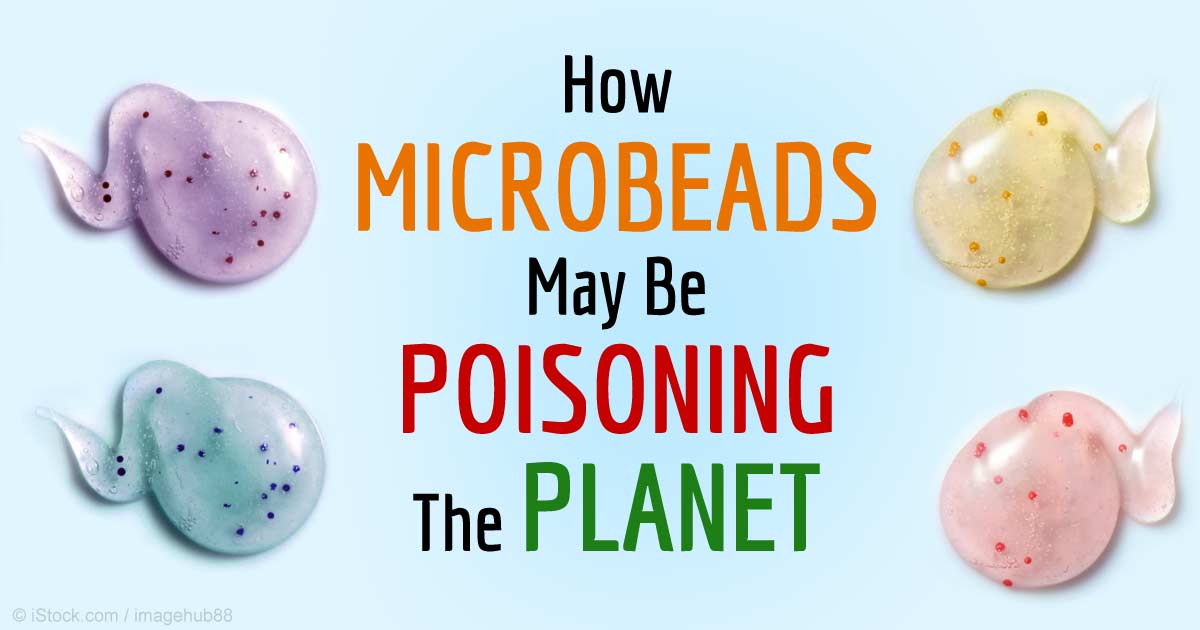
Microbeads are advertised as the perfect way to exfoliate your skin, stave off acne and even keep your teeth clean. These tiny beads, which are found in body washes, toothpastes, facial scrubs and many other personal care products, are nothing more than tiny bits of plastic.
Find out what's happening in Ramseyfor free with the latest updates from Patch.
Being so tiny, you might assume such plastics pose little environmental risk, but the opposite is actually true. Unlike a larger piece of plastic, which can hopefully be recycled, microbeads are so small that they get washed right down the bathroom drain.
“Once discharged, there are no known methods to effectively remove microplastics or microbeads from the environment,” stated a report from the New York State Attorney General’s office.
Find out what's happening in Ramseyfor free with the latest updates from Patch.
They travel right through wastewater treatment plants, because the openings in the filters used are too big to catch them. The result is our waterways are becoming increasingly clogged with plastic microbeads.
Microbeads Absorb Toxins and Are Eaten by Marine Life:
What makes matters worse is that once in the water, microbeads easily absorb endocrine-disrupting and cancer-causing chemicals like polychlorinated biphenyls (PCBs). Plastics may concentrate such toxins at levels 100,000 to 1 million times higher than the levels found in seawater.
The beads, which resemble fish eggs, are eaten by many forms of marine life, including fish, seabirds and whales.
According to the New York State Attorney General report:
The threat doesn’t stop with marine wildlife. If you eat seafood that has been ingesting microbeads, you’re at risk of a potentially high dose of environmental toxins as well.
Over 100 Personal Care Products Contain Microbeads:
Although microbeads have been around since the 1970s, they weren’t widely used by manufacturers until the 1990s. At that time, companies began replacing natural abrasives like ground almonds and sea salt, with the plastic microbeads.
It was a clever move profit-wise; because microbeads are smooth and gentler on your skin, they could be used every day, unlike products with rougher abrasive materials, which are meant to be used once every few days to once a week. This meant more product usage and greater profits.
Many products containing microbeads will advertise them on the label, although they may also be listed as:
1. Polyethylene
2. Polypropylene
It is estimated that Americans use 0.0309 ounces of microbeads per person per year. This sounds like a small amount, but it adds up to nearly 19 tons of microbeads potentially being discharged in New York State alone. In New York, the Microbead-Free Waters Act was passed last year to prohibit the sale of cosmetics or personal care products containing plastic particles less than 5 millimeters in size. Illinois,. California and Ohio have also been moving in that direction and a federal bill, Microbead-Free Waters Act of 2014, has also been introduced.
In the meantime, several large corporations, including Unilever, Procter & Gamble, Johnson & Johnson, Colgate-Palmolive and L’Oreal have pledged to phase out microbeads from their products.
What Can You Do?
1. Read your labels and avoid microbeads in your toothpaste and personal care products.