Neighbor News
Saturated Fat is Vindicated
Were you told sometime in your life that saturated fat leads to heart disease? You were probably told this or read this many times.

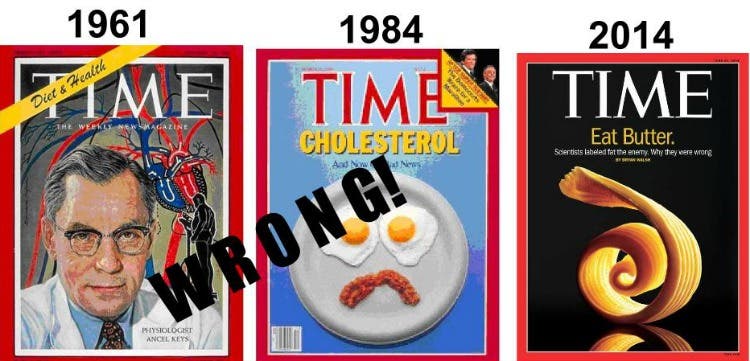
Physiologist Ancel Keys was the one that really started the ant-saturated fat movement back in the 1950s. Keys demonized saturated fat with his lipid hypothesis that linked saturated fat to heart disease and premature death. What this got him was a cover story with Time Magazine on January 16, 1961, but the irony is that he had an invalid hypothesis. On June 12, 2014, Time Magazine had a quite different cover story - "Eat Butter - Scientists labeled fat the enemy. Why they were wrong".
A 40 year-old study was unearthed by Christopher Ramsden, of the National Institutes of Health. He discovered the missing research data among the possessions of a deceased scientist. The study was designed to prove the lipid hypothesis, but it disproved it instead. No other than Ancel Keys is believed to be the one largely responsible for suppressing and not disclosing or publishing the data from this study.
The study was conducted from 1968 to 1973. It included 9,423 participants between the ages of 20 and 97, making it the largest trial of its kind. All the participants were residents of Minnesota state mental hospitals or nursing homes. All the meals were prepared for them, making it one of the most rigorously detailed studies, since there was complete control over what they ate. Many nutritional studies have the drawback of relying on self-reported consumption, based on food questionnaires, which can be unreliable.
Find out what's happening in Ramseyfor free with the latest updates from Patch.
On the average, each patient was followed for about 15 months. Participants were randomly assigned to one of two groups, receiving either:
1. A diet containing 18.5% saturated fat from animal fats, such as milk, cheese, beef and animal shortening and 5% unsaturated fat, based on total calories.
Find out what's happening in Ramseyfor free with the latest updates from Patch.
2. A diet in which 50% of the saturated fats were replaced with vegetable oil and corn oil margarine. They received 9% saturated fat and 13% unsaturated fat, based on total calories.
After analyzing the data, Ramsden and his team found that vegetable oils lowered the total cholesterol by an average of 14% after one year, but the lower cholesterol did not result in improved health and longevity. Instead, the research showed that the lower the cholesterol, the higher the risk of dying was.
For every 30 point drop in total cholesterol, there was a 22% increase in the chance of death. In the 65 and older category, those who received vegetable oil experienced about 15% more deaths compared to the saturated fat group.
The vegetable oil group also did not have fewer cases of hardening of the arteries or heart attacks. Autopsies revealed both groups had similar levels of arterial plaque, but 41% of the vegetable oil group showed signs of at least one heart attack compared to just 22% of those in the saturated fat group.
Other Studies Disproving The Lipid Hypothesis:
- The Oslo Study (1968): A study of 412 men between 30-64 years old, found that eating a diet low in saturated fats and high in polyunsaturated fats had no influence on rates of sudden death.
- L.A. Veterans Study (1969): A study of 850 elderly men that lasted for six years and is widely used to support the diet-heart hypothesis. No significant difference was found in rates of sudden death or heart attack among men eating a mostly animal-foods diet and those eating a high-vegetable-oil diet. However, more non-cardiac deaths, including from cancer, were seen in the vegetable-oil group.
- London Soybean Oil Trial (1968): A study of nearly 400 men that lasted for two to seven years. No difference in heart attack rate was found between men following a diet low in saturated fats and high in soybean oil and those following an ordinary diet.
- The U.S. Multiple Risk Factor Intervention Trial (MRFIT): Sponsored by the National Heart, Lung and Blood Institute, this is another study that is highly misleading. It compared mortality rates and eating habits of over 12,000 men, and the finding that was widely publicized was that people who ate a low saturated fat and low-cholesterol diet had a marginal reduction in coronary heart disease. However, their mortality from all causes was higher.
After all of this evidence, the 2015 USDA dietary guidelines clings onto this antiquated lipid hypothesis and advises limiting saturated fat intake to a maximum of 10% of your daily caloric intake. It is becoming increasingly more clear that such recommendations are based on an unproven hypothesis. A large number of studies that have reexamined the lipid hypothesis have shown that saturated fat do not increase your risk of heart disease.