Health & Fitness
Signs & Symptoms That You Could Have a Heart Attack Soon
The signs and symptoms of heart disease in women can be missed by doctors.

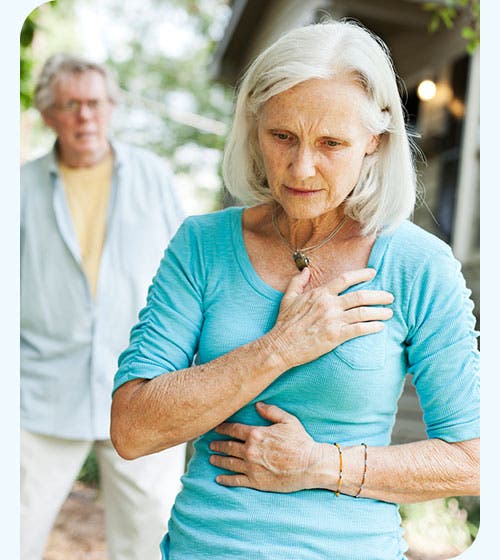
The signs and symptoms of heart disease in women can be missed by doctors. This may be because they can be different from men’s symptoms, or some doctors may be less aggressive in their evaluations.
So, what’s the answer?
Knowledge is power and with the proper knowledge, you can be your best healthcare advocate.
Find out what's happening in Ramseyfor free with the latest updates from Patch.
This information comes from a renowned cardiologist, Dr. Stephen Sinatra.
Make sure that you can recognize and describe the symptoms that you feel. Plus, you want to be persistent and not let a doctor or hospital emergency room send you home with a diagnosis of anxiety when it’s really your heart.
Find out what's happening in Ramseyfor free with the latest updates from Patch.
It’s also important to pay attention to how your body feels. And what may surprise you is that a study has found that the signs and symptoms of a heart attack can surface about a month before an actual heart attack occurs.
Signals that You Could Have a Heart Attack Soon:
A study published in the journal Circulation found that many women get early warning signs and symptoms of a heart attack about a month before an actual heart attack occurs. The researchers surveyed 515 women who were diagnosed with an acute myocardial infarction (heart attack) four to six months after they were discharged from the hospital.
What they found is that many of the women experienced specific symptoms about a month before the actual heart attack occurred, including:
• Unusual Fatigue (70.7%)
• Sleep Disturbances (47.8%)
• Shortness of Breath (42.1%)
• Indigestion (39.4%)
• Anxiety (35.5%)
• Arms Weak/Heavy (24.9%)
• Changes in Thinking/Remembering (23.9%)
• Loss of Appetite (21.9%)
They also confirmed something we’ve long-known, that the signs and symptoms of a heart attack are different for women, than men. While men tend to have classic, clear-cut symptoms such as chest discomfort and arm or jaw pain, women’s symptoms can be vague and rather deceiving.
For instance, the women in this study noted that they had:
• Shortness of Breath (57.9%)
• Weakness (54.8%)
• Unusual Fatigue (42.9%)
• Cold Sweat (39%)
• Dizziness (39%)
• Nausea (35.5%)
• Discomfort Centered High in the Chest (30.5%)
What’s the Bottom Line for You?
If you have any of these potential signs and symptoms of a heart attack, don’t shrug them off. Any woman who is concerned about unexplained symptoms should get a full cardiovascular workup, regardless of their age.
Don’t let your doctor shrug these symptoms off either. You need to take the bull by the horns. If you’re a woman of any age, and have significant risk factors or if you have any suspicious symptoms even in the absence of risk factors, get an evaluation and demand it! If you have a family history of heart disease, you want to be twice as aggressive.
Women who have a family history of early heart disease (occurring in immediate family members under age 50) have up to three times greater risk of developing arterial disease than someone without this genetic baggage. Make sure your doctor knows your family’s medical history and orders appropriate screening tests.
Which Cardiac Tests Should Women Request?
If you have any of the signs and symptoms of a heart attack, seek the advice of a doctor. But be aware that certain cardiac tests aren’t as accurate for women as they are for men, so again, you need to be your own best advocate. Here are some points to remember:
• Start with a baseline blood test, with an emphasis on inflammatory markers such as C-reactive protein, Lp(a), homocysteine, and fibrinogen.
• If the baseline blood test shows that your cholesterol numbers are high, don’t worry. Simply ask to follow up with a VAP (Vertical Auto Profile) or an LPP (Lipoprotein Particle Profile) test to identify whether your LDL cholesterol particles are the kind which contribute to inflammation.
• For further diagnosis, the most reliable screening tools for women include: exercise echocardiogram and the ultrafast CT scan. Thallium stress testing, which involves a nuclear scan, is not always helpful because women with denser breast tissue may have shadows that can literally “cloud” the interpretation.
• Should either imaging test reveal a problem, the next step would be a 64- or 128-slice ultrafast CT to clarify the presence of a blockage.
• Even with strong evidence of severe obstructive coronary artery disease, a surgeon will not operate without the gold standard of diagnostics, the angiogram (catheterization). This invasive procedure requires making a small incision threading a catheter into the heart to inject a contrast dye. The dye lights up the blood vessels on an x-ray to define the circulatory anatomy.
Also be sure to honor how your body feels and what it is telling you. If you sense something is wrong, get it checked out. If you don’t get the answers you’re looking for, visit another doctor.
One test not mentioned by Dr. Sinatra, which I recommend to predict the possibility of heart failure is a BNP blood test. BNP stands for B-type natriuretic peptide.
B-type natriuretic peptide (BNP) is secreted in response to changes in pressure that occur with heart failure. BNP and NT-pro-BNP levels in the blood increase when heart failure symptoms worsen, and decrease when the heart failure condition is stable. The test is able to detect heart failure over 80% of the time.