Health & Fitness
A Simple Sauerkraut Recipe
Sauerkraut along with spaghetti, are both said to have originated in China and later brought over to Europe.

If you want to be healthy, it is vital to have a proper balance of beneficial gut bacteria. Your gut health influences your mood, your weight, your immunity, your energy and your skin.
Sauerkraut along with spaghetti, are both said to have originated in China and later brought over to Europe.
Sauerkraut works wonders for your digestion, producing amazing amounts of probiotics. The fermentation also produces isothiocyanates, compounds shown to prevent disease. The cabbage itself contains anti-carcinogenic phytochemicals and is also a good source of vitamin C, K and folate. The natural bacteria on the cabbage does the job of fermentation. You don’t need a culture mix or starter bacteria, as you would with yogurt.
Find out what's happening in Ramseyfor free with the latest updates from Patch.
This recipe is simple and makes about 2 liters of sauerkraut.
INGREDIENTS:
Find out what's happening in Ramseyfor free with the latest updates from Patch.
• 2 medium cabbages, red or green, or one of each (approx. 2.5 - 3 pounds)
• 3 tablespoons unrefined sea salt, or even better, use Himalayan salt
• 2 tablespoons caraway seeds (optional)
TOOLS YOU’LL NEED:
• One 1.5 - 2 quart sized wide-mouth mason jar or ceramic pot, with lid
WHAT TO DO:
1. Remove cores from cabbages and thinly slice using a food processor or good knife. Place in a large bowl and add the salt and caraway seeds.
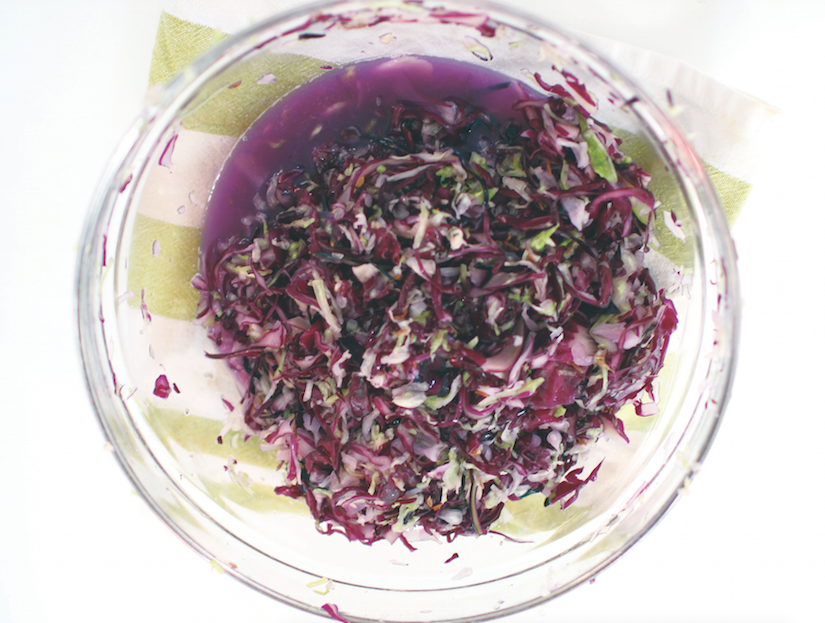
2. Mix with your clean hands, squeezing firmly and pushing down the cabbage with your fist to encourage the salt to draw the natural water out. Continue to do this for the next 15 minutes or so. You want to extract enough of the cabbages’ juices so that they will cover the cabbage when it goes in the jar or pot.
3. Transfer the cabbage to the jar, also pour in all the liquid. You want the cabbage to be submerged in its juices. (If there’s not enough juice, just add some water.)
4. Once the cabbage is completely submerged by the brine, cover with a lid or tea towel and leave at room temperature in a dark corner of your kitchen, for 1 - 3 weeks (less time in summer, longer in winter).
5. It’s ready when it tastes sour and tangy and the cabbage has become soft. Skim off any white material that may appear on the surface. This is a harmless natural yeast, called ‘kahm’ and is not an indication of spoilage.
6. Once sufficiently fermented, seal and store in the refrigerator. It will last 12 months unopened, and 2 months once opened.