Health & Fitness
Supplements for Heart Health
The correct nutrients can work wonders for the human body. Heart health is no exception.

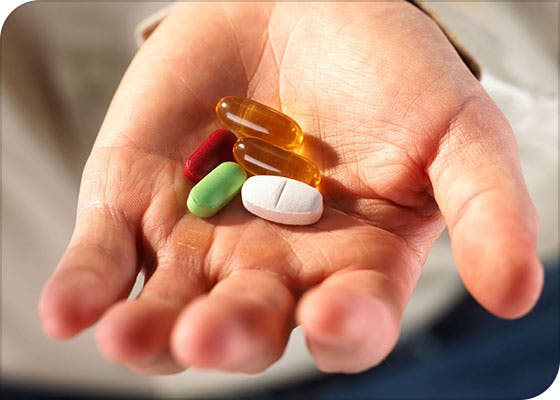
The correct nutrients can work wonders for the human body. Heart health is no exception.
Here’s what you need to know about taking your nutritional supplements for your heart, from the renowned cardiologist, Dr. Stephen Sinatra: The right nutrients have the power to help reverse heart failure, keep your heart beating as it should and more. Knowing which nutrients to take and how to take them can be tougher than it sounds.
Here are eight questions from Dr. Sinatra’s readers, along with his answers:
Find out what's happening in Ramseyfor free with the latest updates from Patch.
Question - Are there nutrients that can help to reverse heart failure?
Answer - Yes, absolutely. I have seen heart failure reversed many times with my metabolic approach, which includes a combination of nutrients I call the “Awesome Foursome.” They help to support energy substrates in the heart that supports left ventricular filling which we call diastole. Over time, an improvement in diastolic function helps to support systolic function which improves overall ejection fraction. Ejection fraction is the amount of blood ejected with each heartbeat. I generally recommend CoQ10 150-300 mg twice a day, magnesium 200-300 mg twice a day, D-Ribose 5 g three times a day, and L-Carnitine 1 g twice a day on an empty stomach. But talk to your doctor before adding any supplements to your routine.
Find out what's happening in Ramseyfor free with the latest updates from Patch.
Question - Can the “Awesome Foursome” help chronic fatigue caused by the Epstein-Barr virus?
Answer- Chronic fatigue syndrome due to Epstein-Barr is about faulty metabolism of adenosine triphosphate (ATP), the operative fuel produced by cells. The reason people with Epstein-Barr feel so good with the Awesome Foursome is that these nutrients boost the metabolism of ATP. While you’re not actually fighting the virus with these supplements, you are countering its effects by providing the raw material to create the energy to help your muscles and body working more efficiently. The Awesome Foursome can also help with fibromyalgia.
Question - Can I combine statins and niacin?
Answer - You never want to take long-acting niacin if you take statin-like drugs. A combination of the two could cause excessive metabolic stress to the liver. Remember, long-acting niacin in gram doses acts like a drug. Small doses of short-acting niacin are fine.
Question - Does taking vitamin K counteract the benefits of taking a daily baby aspirin?
Answer - Aspirin thins the blood and vitamin K1 causes blood to clot. So, yes, they do tend to counteract each other. However, vitamin K is more complex as there’s vitamin K1 and vitamin K2. In a hospital environment when we have a Coumadin overdose and the blood is too thin and we want to neutralize it quickly, we will administer a shot of vitamin K1 to get it into the blood quickly. However vitamin K2 can be administered with aspirin but not with Coumadin as it is a vitamin K2 antagonist.
Question - Is it important to take your supplements separate from your prescription drug?
Answer - Yes. Wait an hour or two after taking the medication and then take your supplements. If your medication needs to be taken with food, have a small snack (a handful of nuts, an apple or banana, etc.).
Question - I have a drug-eluting stent. My doctor says I have to take the blood-thinning drug Plavix for the long term. Could I just substitute nattokinase?
Answer - Unfortunately, no. Until there’s a new development, you will have to take Plavix for the rest of your life. Research has shown that if you go off Plavix, or substitute it with another drug, there is a small chance—about 3 percent—of a having a heart attack. For extra insurance against clot formation, you could add 50 mg of nattokinase a day—but do not substitute it for Plavix. Before adding nattokinase, however, please discuss it with your cardiologist. Nattokinase can interact with other blood thinners such as Coumadin.
Question - What supplements can, or can’t, I take while I’m on Coumadin?
Answer - That’s something you want to discuss with your doctor. But, in general, don’t take St. John’s wort, garlic, nattokinase, and vitamin K at all, and don’t take more than 200 IU of mixed tocopherols (vitamin E) or 2 g of fish oil. You’ll still want to eat green leafy vegetables for dietary vitamin K, but make sure that your INR (clotting factor) is checked routinely by your doctor, and that your Coumadin dosage is adjusted as needed.
Question - Are there any supplements that can help to lower Lp(a)?
Answer - Lp(a) is a devastating form of cholesterol that promotes inflammation and clotting. High Lp(a) is often genetic, so if you have a family history of coronary artery disease you want to have your Lp(a) level checked. While it’s difficult to lower Lp(a), you can help to neutralize it by avoiding foods with trans fatty acid and taking niacin 250-500 mg three to four times a day (it may cause flushing), vitamin C 500-1,000 mg a day, fish oil 1-2 grams daily, and nattokinase 100 mg a day (if nattokinase is not sufficient, you can try Boluoke from Canada; one capsule twice a day).