Health & Fitness
Telomeres & Cancer
This research could lead to a new biomarker that could predict cancer development with a blood test.

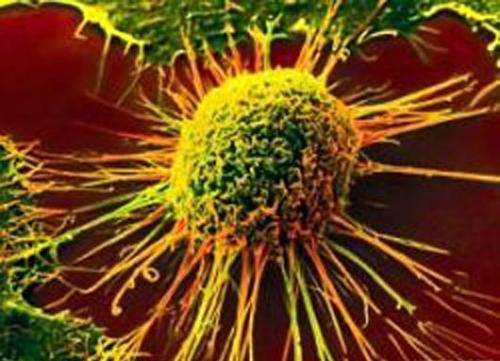
First of all, I would like to explain some basic information on human genetics.
Humans have 46 chromosomes, which are made up of 23 pairs of chromosomes. 23 come from the mother and 23 from the father. These chromosomes have tails called telomeres. These telomeres are made up of extra nucleotides, which are the building blocks of DNA. Initially, humans have telomeres that have about 15,000 of these extra nucleotides on them.
During every cell division after conception, these telomeres lose nucleotides. After we are born, each telomere loses about 50 to 200 nucleotides after each cell division. The important thing to remember here is that when the telomere gets down to about 5,000 nucleotides, it can’t replicate or divide any more. The result is that the person can die of “old age”.
Find out what's happening in Ramseyfor free with the latest updates from Patch.
I have written about intermittent fasting and high intensity interval training in the past. These strategies can actually help to lengthen your telomeres, through what is called an RNA reverse transcriptase. There are also certain supplements that can help in this department. If you would like further information on telomere lengthening strategies, please contact my office.
But What Do Telomeres Have To Do With Cancer?
Find out what's happening in Ramseyfor free with the latest updates from Patch.
A distinct pattern in the changing length of the telomeres of blood cells, can predict cancer many years before actual diagnosis, according to a new study from Northwestern Medicine in collaboration with Harvard University.
This could lead to a new biomarker to predict cancer development with a blood test.
The paper was published April 30 in EBioMedicine. In the study, scientists took multiple measurements of telomeres over a 13-year period in 792 persons, 135 of whom were eventually diagnosed with different types of cancer, including prostate, skin, lung, leukemia and others.
Initially, scientists discovered telomeres aged much faster (indicated by a more rapid loss of length) in individuals who were developing but not yet diagnosed with cancer. Telomeres in persons developing cancer looked as much as 15 years chronologically older than those of people who were not developing the disease.
But then scientists found the accelerated aging process stopped three to four years before the cancer diagnosis.
“Understanding this pattern of telomere growth may mean it can be a predictive biomarker for cancer,” said Dr. Lifang Hou, the lead study author and a professor of preventive medicine at Northwestern University Feinberg School of Medicine. “Because we saw a strong relationship in the pattern across a wide variety of cancers, with the right testing these procedures could be used to eventually diagnose a wide variety of cancers.”
The older you are, the more times each cell in your body has divided and the shorter your telomeres. Because cancer cells divide and grow rapidly, scientists would expect the cell would get so short it would self-destruct. But that’s not what happens, scientists discovered. Somehow, cancer finds a way to halt that process.
If scientists can identify how cancer hijacks the cell, Hou said, perhaps treatments could be developed to cause cancer cells to self-destruct without harming healthy cells.
I think that another possible avenue of interest would be to somehow figure out how cancer cells stop telomere shortening and to get our cells to do the same. But that may be easier said than done. Whenever we try to fool Mother Nature, there are consequences!