
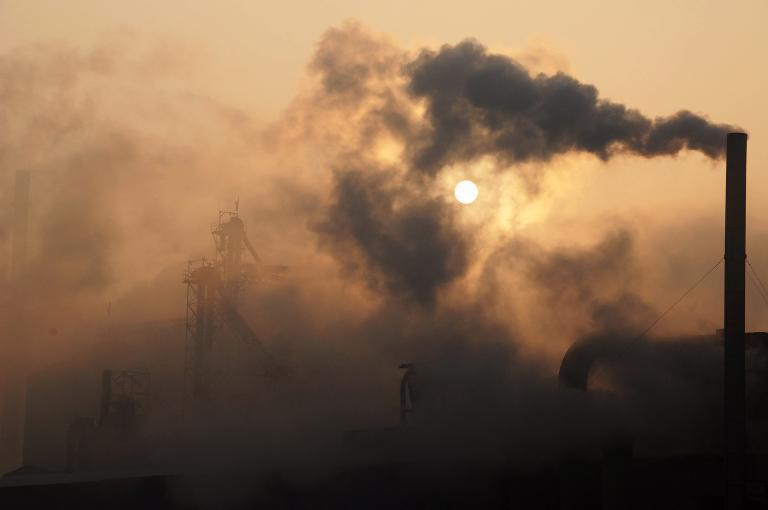
Choking smog caused the city of Harbin to almost shut down today. Harbin is one of northeastern China's largest cities.
An index measuring particulate matter with a diameter of 2.5 micrometers or greater, reached a reading of 1,000 in some parts of Harbin, the capital of northeastern Heilongjiang province and home to some 11 million people. A level above 300 is considered hazardous, while the World Health Organizationbrecommends a daily level of no more than 20.
We have a lot of control over what we eat and what we drink, as well as what comes into contact with our skin. What we have very little direct control over is the outside air that we breathe. It is essential to get the polluters to reduce emissions. The only other option to avoid air pollution, is to move to a remote region, which has cleaner air.
Find out what's happening in Ramseyfor free with the latest updates from Patch.
Getting an indoor air filtration system helps to improve the quality of indoor air, but you can't filter the great outdoors.
The World Health Organization has just classified outdoor air pollution as a leading cause of cancer in humans.
Find out what's happening in Ramseyfor free with the latest updates from Patch.
"The air we breathe has become polluted with a mixture of cancer-causing substances," said Kurt Straif of the WHO's International Agency for Research on Cancer (IARC).
The IARC underlined that a panel of top experts had found "sufficient evidence" that exposure to outdoor air pollution caused lung cancer and raised the risk of bladder cancer.
"We have well over a million lung cancer cases per year, the vast majority of which are actually due to tobacco, rather than I think around 10%, perhaps, which are to things like ambient air pollution," he told reporters.
The agency said its conclusions applied to all regions of the globe. Air pollution was already known to increase the risk of respiratory and heart diseases.
The most recent data, from 2010, showed that 223,000 lung cancer deaths worldwide were the result of air pollution, the agency said.
The latest findings were based on overall air quality, and based on an in-depth study of thousands of medical research projects conducted around the world over decades.
"Our task was to evaluate the air everyone breathes rather than focus on specific air pollutants," said the IARC's Dana Loomis.
"Nobody has private air. We can't do very much for the air we breathe. This really needs collective action to solve the problem," he said.
The predominant sources of outdoor air pollution were transport, power generation, emissions from factories and farms, and residential heating and cooking, the agency said.
The IARC said it was set to publish its in-depth conclusions on October 24, 2013, on the specialized website The Lancet Oncology.
Beyond cancer, known health effects include coughing or difficulty breathing, chronic bronchitis, and premature death in people with heart or lung disease.
For More Information:
http://news.yahoo.com/outdoor-air-pollution-leading-cause-cancer-110550297.html