Community Corner
Addiction Treatment for Randolph Families When Anxiety or Depression Is Part of the Picture
Learn how integrated addiction and mental health treatment can help Randolph residents find the right level of care and support.


This is a paid post contributed by a Patch Community Partner. The views expressed in this post are the author's own, and the information presented has not been verified by Patch.
Finding drug and alcohol rehab near Randolph can feel more complicated when someone you love is also struggling with anxiety, depression, or trauma. You may recognize that drinking or drug use is causing harm without knowing which concern needs attention first. For Randolph families comparing dual diagnosis treatment in New Jersey, the practical question is whether both concerns will be addressed through one coordinated treatment plan.
When substance use and mental health need attention together at Rolling Hills in Chester
Substance use and mental health symptoms can influence each other. Someone may drink to manage anxiety, use drugs while coping with depression, or experience worsening symptoms as substance use continues. Treating only one concern can leave important needs unaddressed.
The National Institute of Mental Health explains that mental health and substance use conditions can occur together and may benefit from integrated care. A comprehensive assessment can help identify both concerns and guide treatment decisions National Institute of Mental Health, 2025.
Rolling Hills Recovery Center in Chester provides outpatient treatment for adults experiencing substance use concerns, including those with co-occurring mental health needs. Its clinical team includes a board-certified addiction medicine physician and licensed therapists. Clinical leadership includes Laura Riley, LCADC, CCS.
Rolling Hills reports a 93.6% program completion rate. Its reported average depression scores on the PHQ-9 decreased from 8.4 to 3.4, while average anxiety scores on the GAD-7 decreased from 9.0 to 4.6 during treatment. These figures describe reported program outcomes and don’t guarantee individual results.
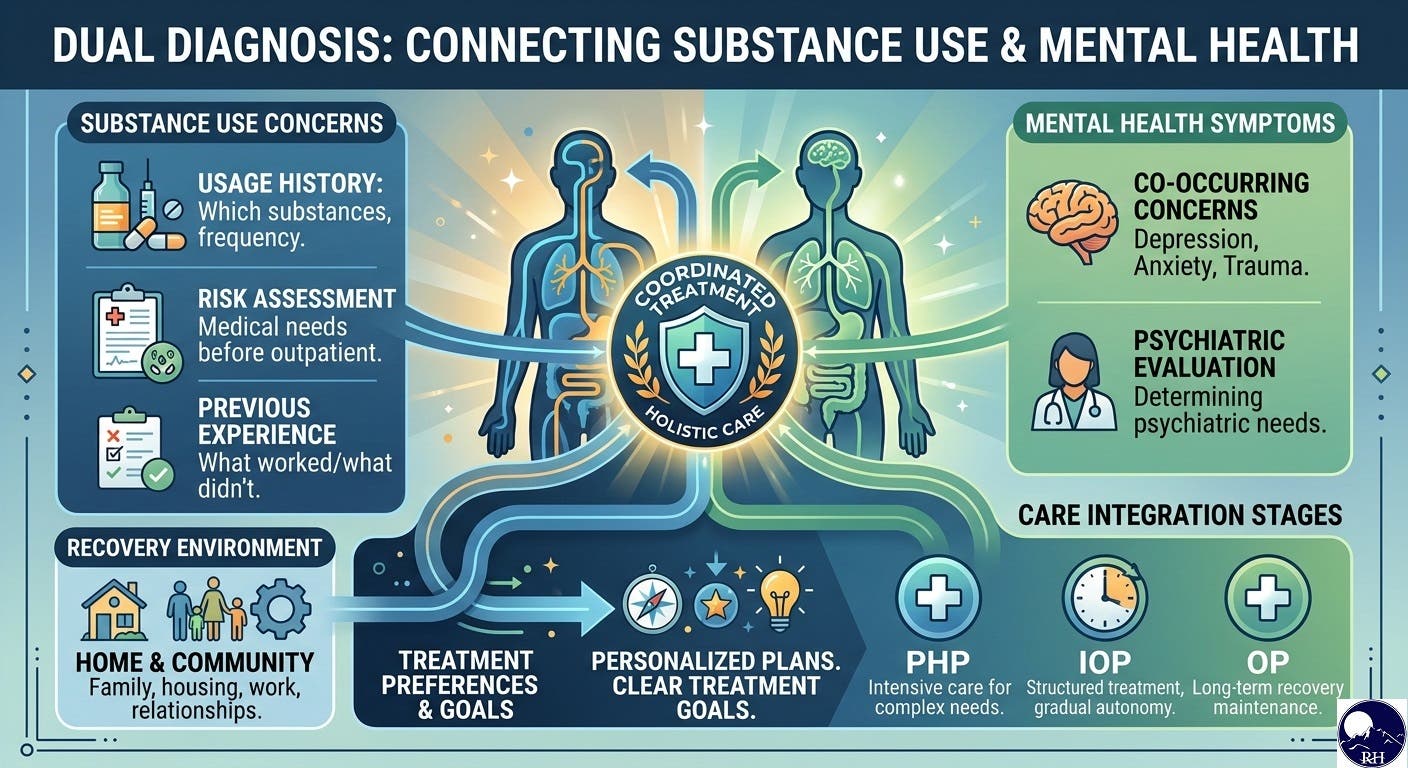
What the assessment at Rolling Hills Recovery Center actually asks
Treatment begins with understanding the person, not simply identifying a substance. An assessment may explore substance use patterns, previous treatment, mental health symptoms, medications, physical health, family concerns, and daily responsibilities.
Clinicians also consider whether symptoms occur before, during, or after substance use. This context helps inform recommendations and whether psychiatric evaluation or medication management may be appropriate.
Treatment approaches can include individual and group therapy, cognitive behavioral therapy (CBT), dialectical behavior therapy (DBT), trauma-focused therapy, and family counseling when appropriate. The plan depends on each person's clinical needs and progress.
How PHP, IOP, and outpatient treatment differ at Rolling Hills in Chester
Rolling Hills offers different outpatient levels of care based on clinical assessment and treatment needs.
- Partial Hospitalization Program (PHP): A structured, intensive daytime program with therapeutic support across multiple hours and days each week.
- Intensive Outpatient Program (IOP): A less intensive schedule that provides regular therapeutic support while allowing more time for work, family, and other responsibilities.
- Outpatient treatment: A lower-intensity option involving fewer scheduled treatment hours, with services guided by the person's needs and progress.
These programs aren’t interchangeable, and the most appropriate level depends on clinical recommendations. If someone needs medical detoxification or a higher level of care before outpatient treatment can safely begin, the next step must be arranged accordingly.
Rolling Hills doesn’t provide inpatient medical detox onsite or residential/inpatient treatment. When detox is clinically indicated, its admissions team can coordinate placement with an appropriate medical provider before continued treatment begins.
What Randolph families can clarify on the first call
Families can make the initial conversation more productive by preparing a few questions:
- Which level of outpatient care may fit the person's current needs?
- How are substance use and mental health symptoms assessed together?
- Are psychiatric services or medication management appropriate?
- How can family members participate when clinically recommended?
- What insurance benefits may cover the recommended services?
Rolling Hills offers confidential insurance verification. Families can verify insurance benefits before deciding how to proceed. Verification can clarify benefits, although coverage and final costs depend on the plan.
Why Randolph Families May Consider Rolling Hills in Chester
Located at 425 Main Street, Chester, NJ 07930, Rolling Hills Recovery Center serves adults across Morris County, including Randolph. The drive is approximately 15 to 20 minutes via Route 10 and Route 206, depending on traffic.
Families can call 973-606-9170 to discuss treatment options, assessment, and insurance verification. If inpatient medical detox or another higher level of care is needed first, the admissions team can explain the appropriate next step.
This post is an advertorial piece contributed by a Patch Community Partner, a local brand partner. To learn more, click here.