Community Corner
Dead Peanut Bunker Floating In Navesink River Gain Attention
Breaking: The state DEP says the fish, juvenile menhaden, likely died as a result of being chased by a predator fish.


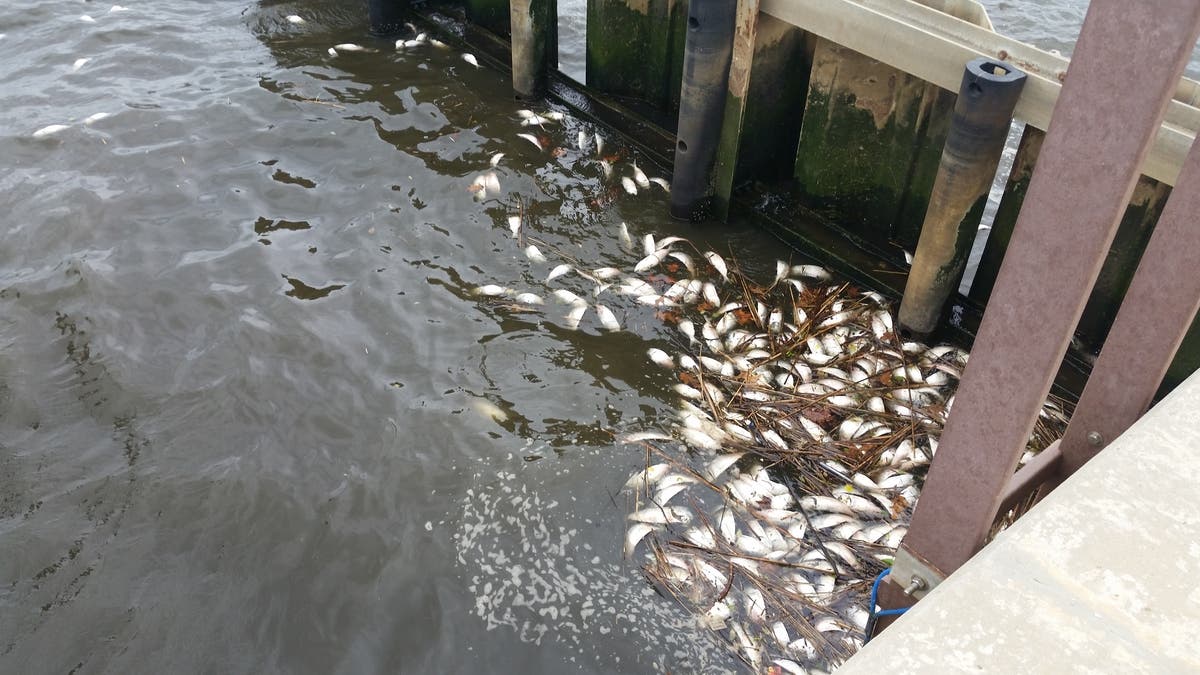
RED BANK, NJ — A number of floating dead menhaden have been found in the Navesink River near Marine Park, and state officials said they appear to be the result of predator fish chasing bait.
The dead juvenile menhaden, also known as peanut bunker, were found by Monmouth County Health Department employees late Monday while they were doing routine algae sampling, said Larry Hajna, a spokesman for the state Department of Environmental Protection.
"This appears to be the typical bunker mortality that occurs when school get pushed up river by predator fish into shallow, confined water that has low salinity and low oxygen," Hajna said. Menhaden — both the adult fish and the peanuts, which are typically 3 to 5 inches long — are a favorite meal of striped bass and bluefish, both of which are in the midst of their spring migration north for spawning. It's not uncommon to see a school of bluefish drive peanut bunker into the wash where waves are tumbling onto the beach as the bluefish try for an easy meal.
Find out what's happening in Red Bank-Shrewsburyfor free with the latest updates from Patch.
Marine Park is inland, about 5 miles from where the Navesink joins the Shrewsbury River and the two feed into the southern end of Sandy Hook Bay and beyond that, the saltier waters of the Raritan Bay. At that point the river's salinity is far lower than that of the bay. Hajna said the die-off appears to be relatively isolated, "just some scattered fish floating in the area, except for small clusters of dead fish pushed by the wind against bulkheads."
He said the DEP responded, but, "for the most part, the fish are not recoverable and will become part of the nutrient cycle in the river."
Find out what's happening in Red Bank-Shrewsburyfor free with the latest updates from Patch.
Last summer there was a massive die-off of peanut bunker that resulted in thousands of dead fish washing up on beaches all along Raritan Bay that in some cases took front-end loaders and Dumpsters to remove.
The Navesink River made headlines last summer as well, when test results indicating it had tested positive for fecal bacteria due to human sewage grabbed attention. Water testing of the Navesink by three different groups — the state DEP, Rutgers and Clean Ocean Action — all found fecal coliforms, which are bacteria that live in the intestinal tract and can cause stomach upset and other illnesses is a person swallows water containing them.
Bob Schuster, who was the interim chief of the DEP's Bureau of Marine Water Monitoring at the time, saidresearchers could not say what share comes from humans and what comes from wild animals, such as geese, or from horses or dogs whose owners aren't picking up after them.
Menhaden, also known as mossbunker or simply bunker, are a key piece of the ocean food chain. They are filter feeders, meaning they gain all of their nutrition by filtering it out of the water. They feed primarily on feed on both phytoplankton and zooplankton, and can filter 4 to 6 gallons of water per a minute.

Photos via NJ Department of Environmental Protection
Get more local news delivered straight to your inbox. Sign up for free Patch newsletters and alerts.