Politics & Government
Hey NJ, How Do You Feel About Paying For Plastic, Paper Bags?
The legislation, which is awaiting the NJ governor's signature, would impose a $0.05 fee on single-use plastic and paper bags.


New Jersey lawmakers approved legislation this week that would impose a 5-cent fee for single-use paper and plastic bags being used by supermarkets and other retailers. The Senate and Assembly Thursday approved the legislation (A-3267/S-2600) 41-32 and 23-16. The bill now heads to Gov. Phil Murphy may sign it into law or veto it.
If Murphy approves it, the legislation would become law Oct. 1. People who get government assistance to pay for their groceries would be exempt from the fee.
Find out what's happening in Ridgewood-Glen Rockfor free with the latest updates from Patch.
Any municipality or county rules already in place before Oct. 1 would be grandfathered into the new regulations.
Retailers would get to keep 1 cent of every 5-cent fee collected. The remaining 4 cents would be used to fund state efforts to remove and replace old lead pipes and water fountains containing lead in schools and community buildings and stripping lead-based paint from schools and residential housing.
Find out what's happening in Ridgewood-Glen Rockfor free with the latest updates from Patch.
However, lawmakers would allow for $23 million in fees collected in the 2019 fiscal year to be sent to the state for general spending, NorthJersey.com reported.
The bill would also require the state Department of Environmental Protection to establish a public information program addressing the harmful environmental effects of single-use carryout bags and encourage consumers to use reusable carryout bags when they shop.
Senator Joe Pennacchio (R-26) wants Murphy to veto the bill. Pennacchio said he would introduce legislation to repeal the bag tax if it is signed into law.
“Democrats will literally nickel and dime New Jerseyans through a new five-cent tax on each grocery bag you use,” Pennacchio said. "This overtaxing of everything we do in New Jersey needs to stop."
Banning plastic bags would help relieve some of the pollution that plagues waterways like the Passaic and Raritan rivers and Newark bays, Beth Ravit, co-director of the Center for Urban Environmental Sustainability at Rutgers University.
In a recent study, Rutgers researchers found high levels of tiny pieces of plastic — often fragments of bigger items — in the Raritan and Passaic rivers. They identified more than 300 organic chemical compounds that appeared to be associated with microplastics in the rivers.
"Until we get control of the ubiquitous use of plastics in everyday life, I don’t know how we reduce the particles we’re seeing,” Ravit said. “Single-use consumer products are a great place to start. Things like banning plastic bags and straws would be a great thing for New Jersey to do. It’s amazing when you start looking around you and think about how much plastic we all use every day.”
Longport Borough in Atlantic County was the first New Jersey town to impose a fee for plastic bags. Officials imposed the 10-cent fee in 2015 to encourage people to use reusable bags. Earlier this year, Long Beach Township and Point Pleasant Beach approved similar rules. Teaneck banned plastic bags in 2015.
Long Beach provided its residents and visitors with reusable bags. Point Pleasant officials said they enacted the change to "conserve resources, reduce greenhouse gas emissions, reduce waste and litter and to protect the public health, welfare, and safety."
The Senate Environmental Energy Committee approved a similar measure in 2012 that would have imposed a similar 5-cent tax. The bill would have also given shopper a a 5-cent rebate or credit for every reusable bag used. In addition, the bill would have required stores to only offer recyclable carryout bags by 2015. The 5-cent fee outlined in that legislation would have gone toward the DEP's Barnegat Bay Restoration Fund, which works to improve the water quality of polluted Barnegat Bay.
Email daniel.hubbard@patch.com
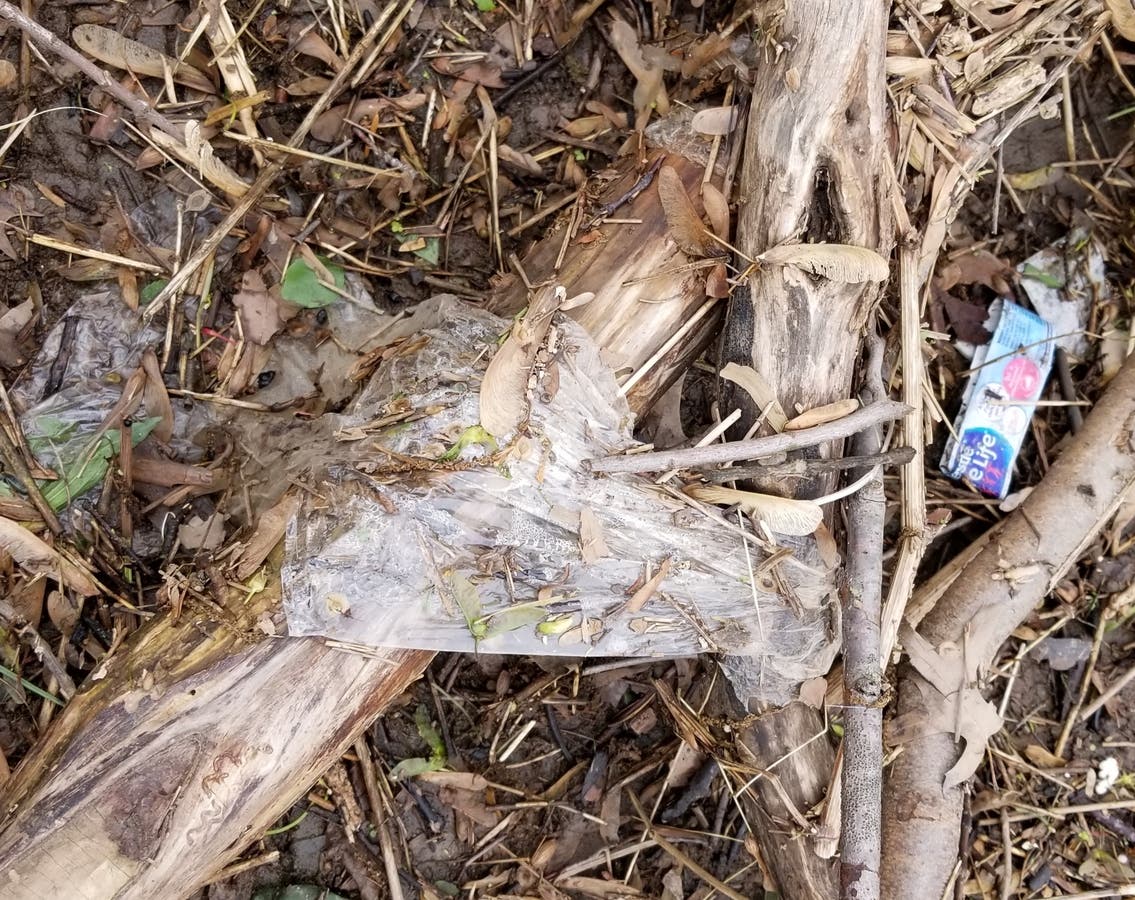
Photo: A plastic bag along the Raritan River in New Brunswick. (By Todd Bates of Rutgers University, used with permission)
Get more local news delivered straight to your inbox. Sign up for free Patch newsletters and alerts.