Community Corner
Noted Historian Presents Brief History of Bergen County and Slavery
The Unitarian Society of Ridgewood explores the history of African Americans in Northern New Jersey as part of Black History Month
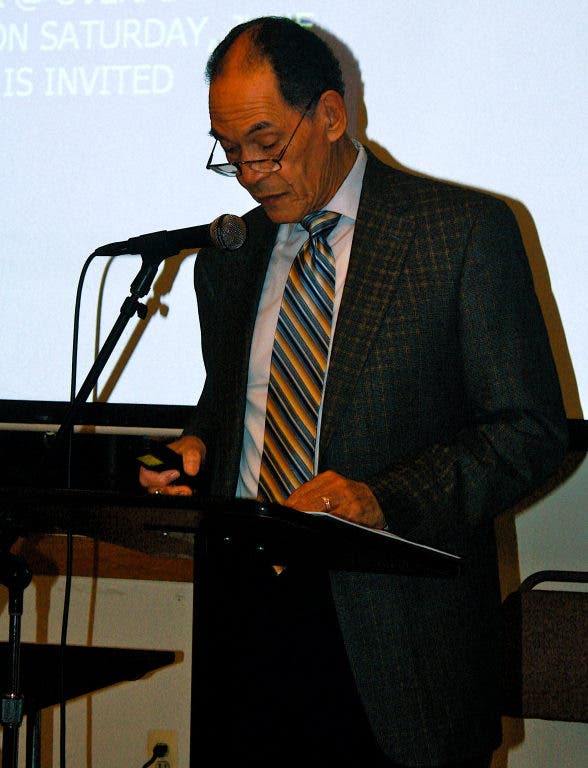

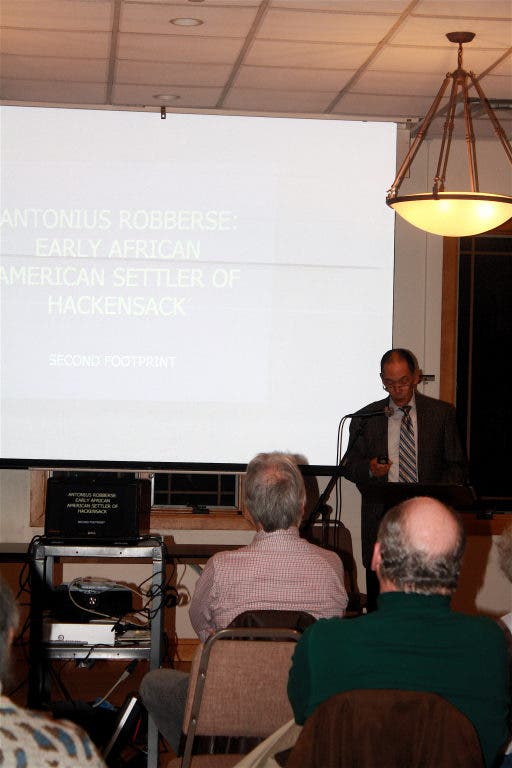
Bergen County may thank the Dutch settlers for the county's early start as an economic state, but historian Arnold Brown spoke Tuesday night about the African American role in the development of its profitability.
Brown took a unique look at the earliest days of African Americans in the county by not giving numbers of the county’s participation in the slave trade, but by sharing stories and historical “imprints” to an eager crowd at the Unitarian Society of Ridgewood.
Brown, an Englewood resident, said that learning about their history is a source of pride for many African Americans. During February — Black History Month — hearing how their ancestors had overcome obstacles gives many a sense that “they have roots here and they too can overcome any of their own issues.”
Find out what's happening in Ridgewood-Glen Rockfor free with the latest updates from Patch.
“African American Footprints in Bergen County From Colonial Times to the 19th Century” was a collective effort of the YWCA of Bergen County, the Anti-Racism Committee of the Unitarian Society of Ridgewood and the Bergen County branch of the People’s Organization for Progress.
Brown was the first African-American Assemblyman from Bergen County. He has been published as a contributing author of "The Revolutionary War in Bergen County,” "Englewood and Englewood Cliffs: Images of America," and "Past and Promise: New Jersey Women." He graduated from Bowling Green State University and holds a Juris Doctor Degree, from Rutgers University School of Law.
Find out what's happening in Ridgewood-Glen Rockfor free with the latest updates from Patch.
Brown will have another presentation on African American beginnings and heritage in March.
Historical African American Footprints
Brown said that his lecture allows people to grasp “where racism fears come from.”
Bergen County was part of New Netherland, a 17th century colonial province of the Dutch Republic, and slavery solved the problem of hired labor, said Brown, which was “less expensive than the hired laborers" in Holland. Unlike those workers, enslaved Africans were “slaves for life.”
They were brought from West Africa to the Americas and the Indies. Slaves grew and picked products like sugar, molasses and tobacco to be sold for profit in the European markets.
Brown's own great-great-great grandfather, James Oliver, was granted freedom in 1811 but wasn't legally classified as a free man until some thirty years later.
Throughout Bergen County, there were several slave markets — including the Pieter Van Buskirk Homestead in present Bayonne. By 1800, nearly 20 percent of the county’s population was African American.
Brown contends that New Jersey was “a northern state, but with a southern attitude.” It had a prosperous economy, which relied on slave labor to remain profitable.
In a colonial province of mostly European settlers, "Africans would be noticed if they tried to run away. Though that didn’t stop them from trying,” said Brown.
If Africans escaped descriptive advertisements would be given to the authorities and rewards offered for the capture of any "runaway slave."
In 1865 America abolished slavery with the 13th amendment, though New Jersey wouldn’t ratify it until January 1866, according to usconstitution.net.
Audience members agreed that Brown's tales helped make the history of enslaved and free African Americans more personal.
Learning From The Past
Brown said that these stories remind all people that “everyone has the same concerns” and understanding history — both the good and bad — helps people “appreciate one another.”
Clifton Arrington of the People’s Organization of Progress said the discussion was “very informative” and makes the history of African Americans in Bergen County more relatable.
He said Brown “put more life” into the lecture, giving stories and faces to the past.
Margaret White of the Unitarian Society of Ridgewood added that Brown’s delivery and passion is what “brings history alive” and “telling stories” is how it can be kept in people’s memory.
The lecture captured vignettes of African Americans in Bergen County and transformed a once silent topic into a discussion of the past, a hope for tolerance in the future, and a need for appreciation today.