Politics & Government
Gov. Murphy Takes Action As 150 Possible NJ Lead Water Sites ID'd
NJ Gov. Phil Murphy, appearing with US Rep. Josh Gottheimer, is making five big changes after reports show 5 million in NJ could be at risk.


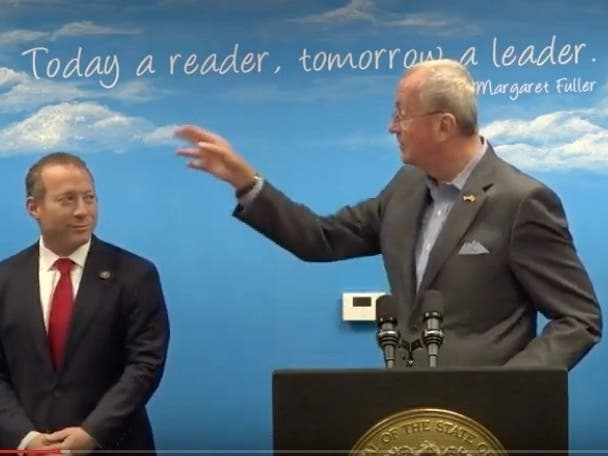
NEW JERSEY – Gov. Phil Murphy and U.S. Rep. Josh Gottheimer are taking action to deal with lead-contaminated water now that reports show more than 5 million New Jersey residents may be at risk of exposure. Murphy is taking five big steps to change the way lead contamination in drinking water is handled.
In total, two recently released reports say at least 150 drinking water sites and systems may be at risk of lead-contamination (see lists and map below).
Murphy and Gottheimer announced several initiatives on Monday to strengthen the state’s response to lead testing and remediate elevated lead levels in drinking water in New Jersey schools.
Find out what's happening in Ridgewood-Glen Rockfor free with the latest updates from Patch.
The Murphy administration will implement a three-pronged approach to enhance key lead testing and remediation regulations and policies. Here is what's happening:
- The New Jersey Department of Education will strengthen its "Safe Drinking Water" regulations to require schools to test for lead every three years, rather than every six years, in order to ensure timely detection of elevated lead levels.
- These regulations will also include enhanced enforcement measures against non-compliant school districts – such as public reporting of schools that are out of compliance – and additional follow-up investigation by the DOE's Office of Fiscal Accountability and Compliance.
- To enhance transparency of this new testing protocol, the New Jersey Department of Education will also create and host a centralized, state-managed database complete with lead testing results and information from all school districts.
- Additionally, the Murphy administration will prioritize remediation projects for districts using $100 million in voter-approved bond funding for school water infrastructure improvement projects.
“By mobilizing the state’s resources to incorporate rigorous testing standards, modernize reporting mechanisms, and repair critical water infrastructure, we are strengthening our efforts to overcome a statewide challenge that has been building over many decades," Murphy said.
Find out what's happening in Ridgewood-Glen Rockfor free with the latest updates from Patch.
Murphy appeared with Gottheimer after an advocacy group in New Jersey revealed that lead service lines – the suspected source of Newark's water woes – have been reported in 104 water systems across the state, potentially affecting 5 million residents, according to New Jersey Future.
The nonprofit New Jersey Future group also released a map of areas most at-risk as of August, which can be seen below. The report follows months of controversy and worry after lead contamination was discovered in various sites in Newark. Read more: Newark Isn't Only NJ City At Risk Of Lead Water, Map Shows
"Lead exposure is a serious health threat across the state," said Chris Sturm, New Jersey Future's managing director of water and policy. "These lead service lines have the potential to put everyone – particularly children and infants – at risk."
Here is the map provided by New Jersey Future:
.jpg)
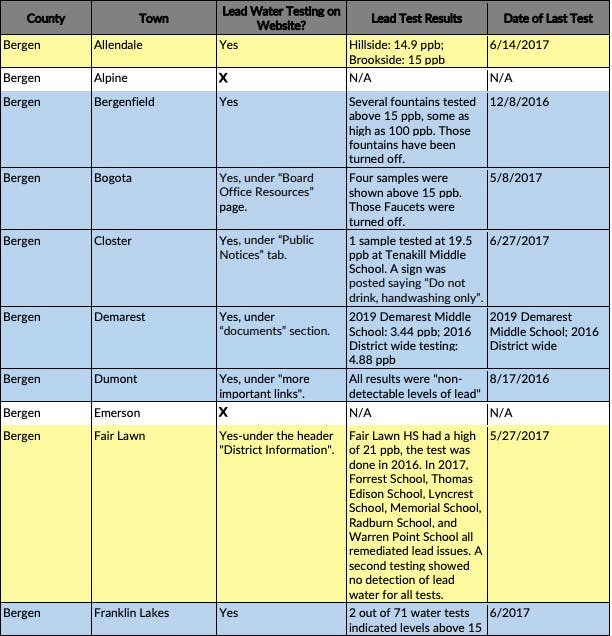
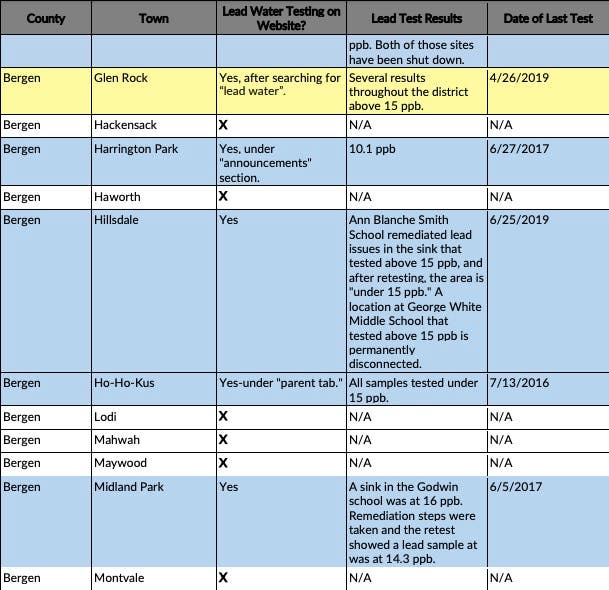
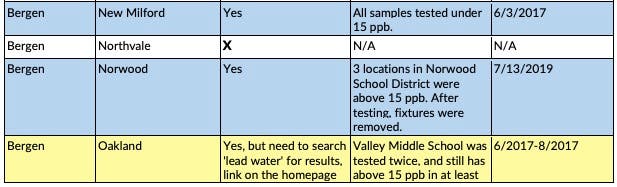
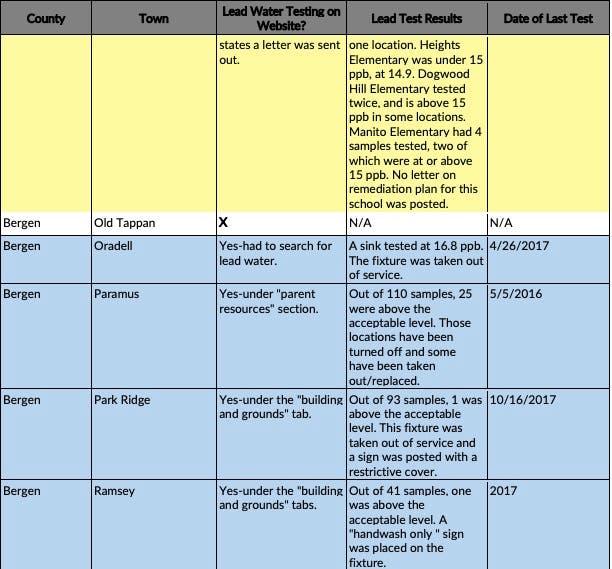
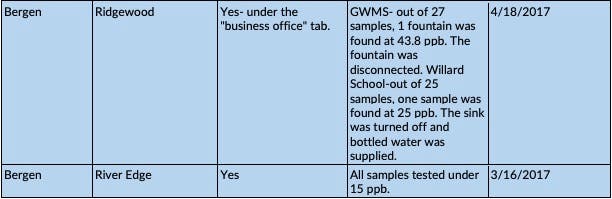
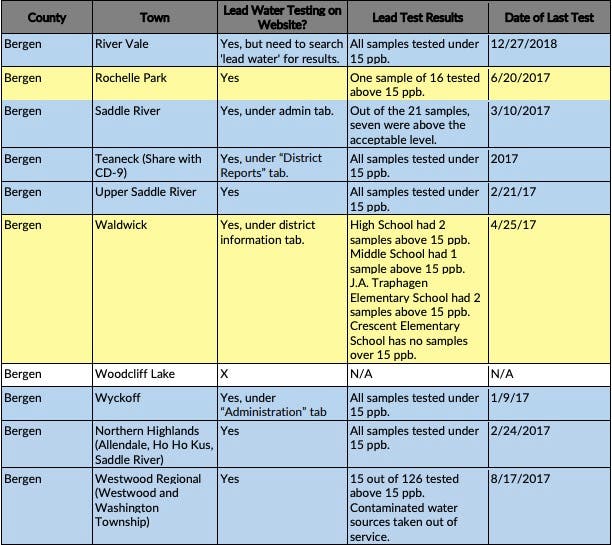
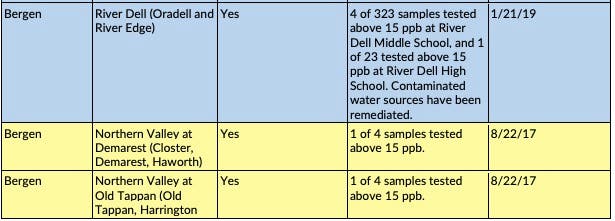
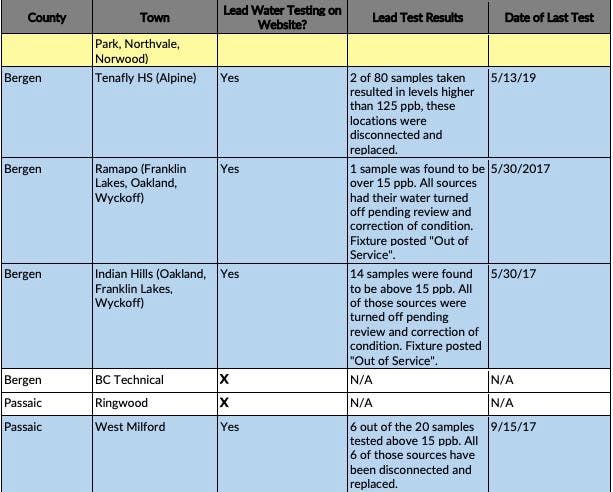
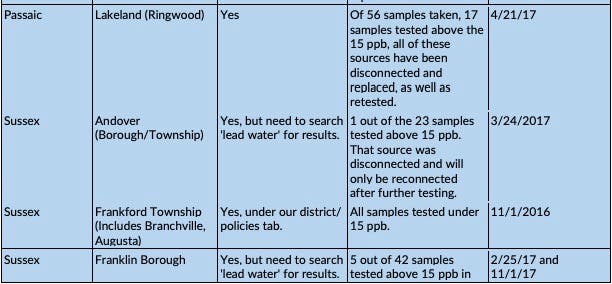
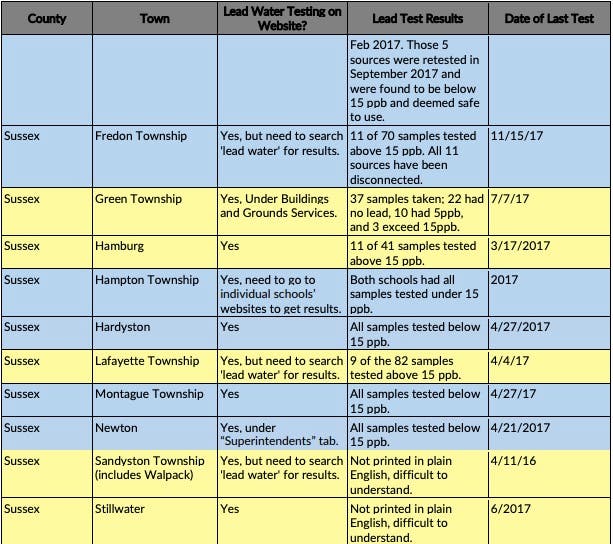
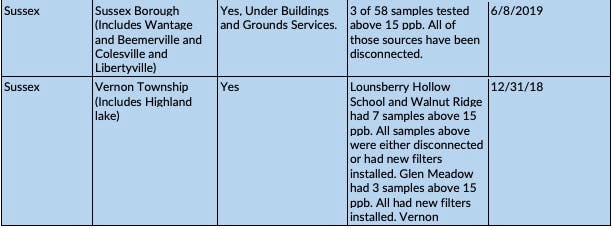
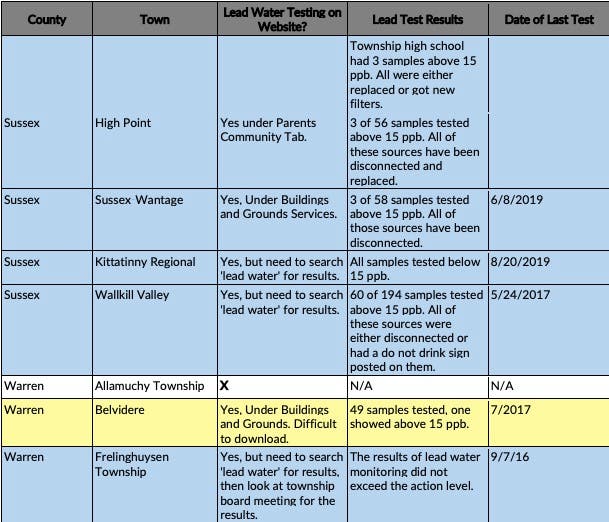
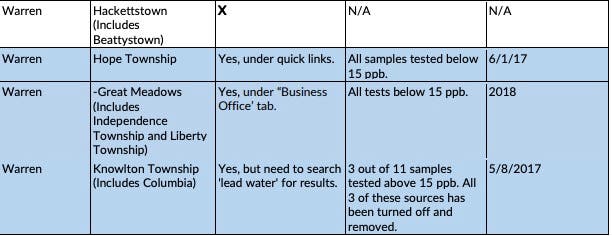
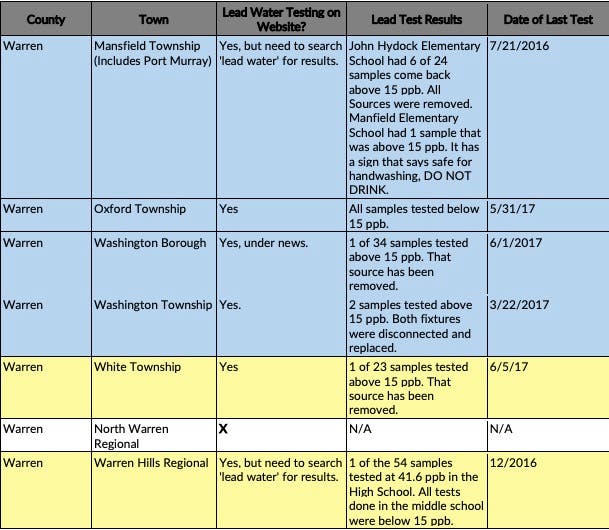
Murphy also appeared with Gottheimer just after the congressman released "The State of Lead Water in Schools in New Jersey’s Fifth Congressional District," which analyzes every school district within the Fifth District for their compliance with New Jersey’s lead water reporting law.
According to Gottheimer:
- The report’s findings are a result of an assessment of the websites of all 85 school districts throughout New Jersey’s Fifth Congressional District: 49 school districts in Bergen County, 19 in Sussex County, 14 in Warren County, and 3 in Passaic County.
- Of the 85 school districts, 19 percent did not report the results of lead testing on their district website.
- Of the 81 percent of school districts that posted lead testing results, 46 districts indicated at least one outlet within their system that had a problem with lead in their water (see list below).
- Water testing results were more accessible on some district websites than others. Of the 69 school districts that posted test results, according to our search, only 28 schools linked to the test results directly from the website’s home page.
- Of the 41 school districts that had less accessible tests, according to our search, lead was detected above the EPA standard in 26 districts, compared with 20 out of the 28 school districts that linked the tests directly to the home page.
“I believe it is essential that parents, teachers, and administrators have all of the information at their fingertips about lead levels in their schools, so they are well-informed about potential health issues their children may face, and communities can take necessary measures,” said Gottheimer said.
Here are the results from Gottheimer’s report:
Here is Murphy's press conference:
Get more local news delivered straight to your inbox. Sign up for free Patch newsletters and alerts.