Politics & Government
Mountain or Mole Hill?
Residents dispute construction at 109 West Ridgewood Ave.

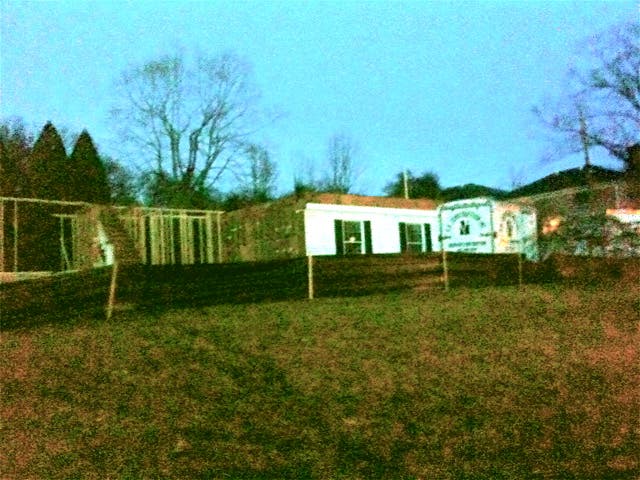


There is a house being built on West Ridgewood Avenue that some people like and some people do not like. Lots of aspects are in dispute—including the term "built." That word could mean "make something from nothing." But if something was already there, then the word choice is wrong. In that case, "updated" works better. But which case is right?
This is the story about a house being built, or rebuilt, or updated.
Joe and Gail Job live next door to Diane Vazza at 123 West Ridgewood Ave. Vazza owns the property at 109 West Ridgewood Ave. Both families own nice, sizable houses; both have lived alongside each other for several years before this recent dispute.
Find out what's happening in Ridgewood-Glen Rockfor free with the latest updates from Patch.
In May 2009, Vazza approached the Jobs about an addition to her home. The project needed zoning approval, so she was required to inform property owners within 200 feet. According to the Jobs, she told them she'd live there during construction. She got the Jobs support.
Following that conversation, Joe attended a Zoning Board of Adjustment Hearing June 9 where Vazza was granted four variances on height, side-yard setback, lot coverage, and gross building. Vazza said under oath that she "spoke personally to her neighbors, and everyone was fine with it." She singled Joe out as being in attendance and in favor of the project. Joe did not speak against it—or at all, for that matter.
Find out what's happening in Ridgewood-Glen Rockfor free with the latest updates from Patch.
Looking at project architect Roger Schlict's testimony later, Job points out what he now believes as false statements. In the 43-page (attached) testimony, Schlict says things like "[W]e're retaining, I would say, a majority of the house…" and "We're not going to tear it down, we're going to work with the existing footprint and expand and alter it." In every instance on the applications, Vazza checked "alternation" or "addition." She never checked "demolition."
Flash forward to late February 2010. One sleepy week, the Jobs began receiving phone calls and e-mails from neighbors, residents and passersby. They wanted to know what was going on next door.
Photos provided by the Jobs indicate a construction project where only framing along the Jobs' property stood (click on the photo gallery, at right).
The Jobs maintain they were victims of "a bait and switch." They said a "massive demolition" occurred. When the walls came down, "the studs were picked clean. All the insulation, all the floor, all the pipes were gone," Job said.
Making inquiries with the village's Building Department, Joe requested construction to cease. After several meetings over the course of a week with Building Inspector Tony Merlino, he said that because utility functions were not disconnected, the project is legally classified as an addition and did not violate variances.
The Jobs approached the Zoning Board at its March 23 meeting, and shared their concerns. Vazza and her attorney David Rutherford also attended the meeting and said Joe forfeited the right to protest, because he attended the initial meeting. Zoning Board attorney Bruce Whitaker cited Izenberg v. Board of Adjustment of City of Paterson to justify the claim.
In the subsequent months, the Jobs acquired all documentation going into the project. They have site plans, meeting minutes, letters, applications—all the paper trail provided by a good bureaucracy. They personally and formally approached Village Council members. Joe spoke at the April 14 and May 12 meeting beseeching council to stop the project.
On their own merit, the Jobs are considering legal action against Vazza. But why are the Jobs so upset? Did Vazza mislead them, or did the Jobs simply miss out on their chance to protest?
Vazza's Perspective
In a phone interview, Vazza denied misleading anyone and said she properly notified all neighbors. In her meeting with the Jobs, she said, she laid out the entire project. She said she never told anyone she'd live there during construction.
"These are my neighbors. Of course, I wanted to share this with them. I went above and beyond what I have to do… I met with them in their living room for two hours. [Joe] reviewed plans. He sat through the meeting. I pointed him out," she said.
So why do the Jobs have a problem?
"They're bitter. No one has a problem but them. They got denied for variances twice, and they're lashing out."
An open public records request to the Building Department indicated that the Jobs applied for a height variance on their garage in 2001. They were granted it, but never applied for a building permit, necessary to complete the project.
Joe said they decided against the addition due to financial concerns. He denied a vendetta against Vazza and questioned the relevance of that permit.
Whatever bad blood exists between Vazza and the Jobs, the project affects more than the two parties.
The Other Neighbors
The Jobs are not the only residents to raise concerns. Jane and Jay Remis live behind Vazza on Madison Place. They e-mailed the Zoning Board, and said they "didn't receive any notice of any kind." Like the Jobs, they feel Vazza has committed perjury.
Vazza said neighbors continually give her accolades on her reworked home. People interviewed around the area tended to agree.
One neighbor, who said she received notification, said the house looks beautiful and she has no complaints. Another didn't want to comment specifically, but said she wished everyone would get along. A third person, breaking from his or her spouse who strongly detests the structure, said it's of no concern. No, the couple didn't receive proper notification, the person said, but what's the big deal?
Beatrice Saron lives down the street, and said she was notified.
"As far as I'm concerned she should have the right to build a skyscraper there if she wants to," she said. "Sure, it looks big, but they all look big."
She's afraid if the town tells Vazza to tear down the structure, it will set a dangerous precedent.
Demolition Verse Addition
To Merlino, the difference between a demolition and an addition is some paperwork. In an e-mail to Village Manger Dr. Kenneth Gabbert April 7, Merlino said, "the applicant would have supplied me with letters from any utility having service connections to the structure, stating their connections and metering devices were removed." Inspecting the structure, Merlino found water, gas, and sanitary connections undisturbed, and phone or cable lines still attached. "Everything is being constructed to plan," he said.
Merlino's primary concern is the end game.
"It doesn't really matter to the Zoning Board. Some exterior walls were slated to remain. They came down and that happens," he said in an interview, pointing to potential water or termite damage. "If it matches variances, that's the end result I want."
Vazza's team compiled an as-built survey—something Merlino said they weren't required to complete—and came in under all variance requests. The height is 10 inches lower, the setback is 2 7/8 inches farther back, and the lot coverage is 0.06 percent lower.
Construction so far, Merlino said, is "right on the money."
Who's Accountable?
Throughout the proceedings, in public and private, the Jobs have questioned why they—not the village—have had to put their time and money into ensuring compliance with code. They've appealed to the Zoning Board, Planning Board, Building Department, Village Manger and Council. No one's given them the answer they're seeking—stop construction.
The Zoning Board said it's not an enforcement body, just a "quasi-judicial" one. With no relevance to the master plan, the Planning Board can't take up the issue. Although Village Council has final say, it often defers to its experts on technical matters like this.
And that brings it back to the Building Department and Merlino. The inspector explained that he can only release stop construction notices when aspects violate code. After he receives reports, notarized affidavits or sworn testimony, he can't refute it.
"Once [the architect's] state license seal goes on it, it's expected to be correct. After the attorney notarized [the notifications], I can't scrutinize it. [The Jobs] have to deal with it… I've explained they need to go to court. [Vazza] said people were notified, and we have to accept it."
Whitaker said Vazza completed an "Affidavit of Service," and the Zoning Board has to take that "at face value."
As the project continues, Merlino says he'll rigorously perform his subsequent framing, plumbing and electrical inspections—as always.
Looking Forward
The Jobs' attorney, Jeffery Lehrer, sent Whitaker a letter April 23 rebutting his claim that Joe had forfeited his right to appeal as there is an "allegation of misrepresentation and fraud" against Vazza. Lehrer referred to a case (Zoning Board of Adjustment of Green Brook vs. Datchko) where a Zoning Board approved a retail location, which would sell radio supplies and stereo equipment. When an adult gift store opened instead, the board felt misled and called in applicants to determine if testimony was false. He says Ridgewood's Zoning Board has the right to do the same.
Lehrer requested three things: rescind the variance approval (causing Merlino to issue a stop order) based on fraud; hold a rehearing on the issue; and forward all case materials to the Bergen County Prosecutor's Office to evaluate a perjury allegation.
For the Jobs, they'll wait for the village to respond to their claims while simultaneously pursuing legal action.
Joe doesn't think the house will come down, but he believes there are certain principles involved in this dispute.
"This wouldn't have been permitted if she had honestly presented this project," Joe said.
"We were lied to, and we have to live with it. It's upsetting to look at it now. Every time I look at it, I think about her lying to us," Gail said.
Get more local news delivered straight to your inbox. Sign up for free Patch newsletters and alerts.