Community Corner
The 'Bear' Necessities: Facts at Community Center
NJDEP teaches youth about black bears.
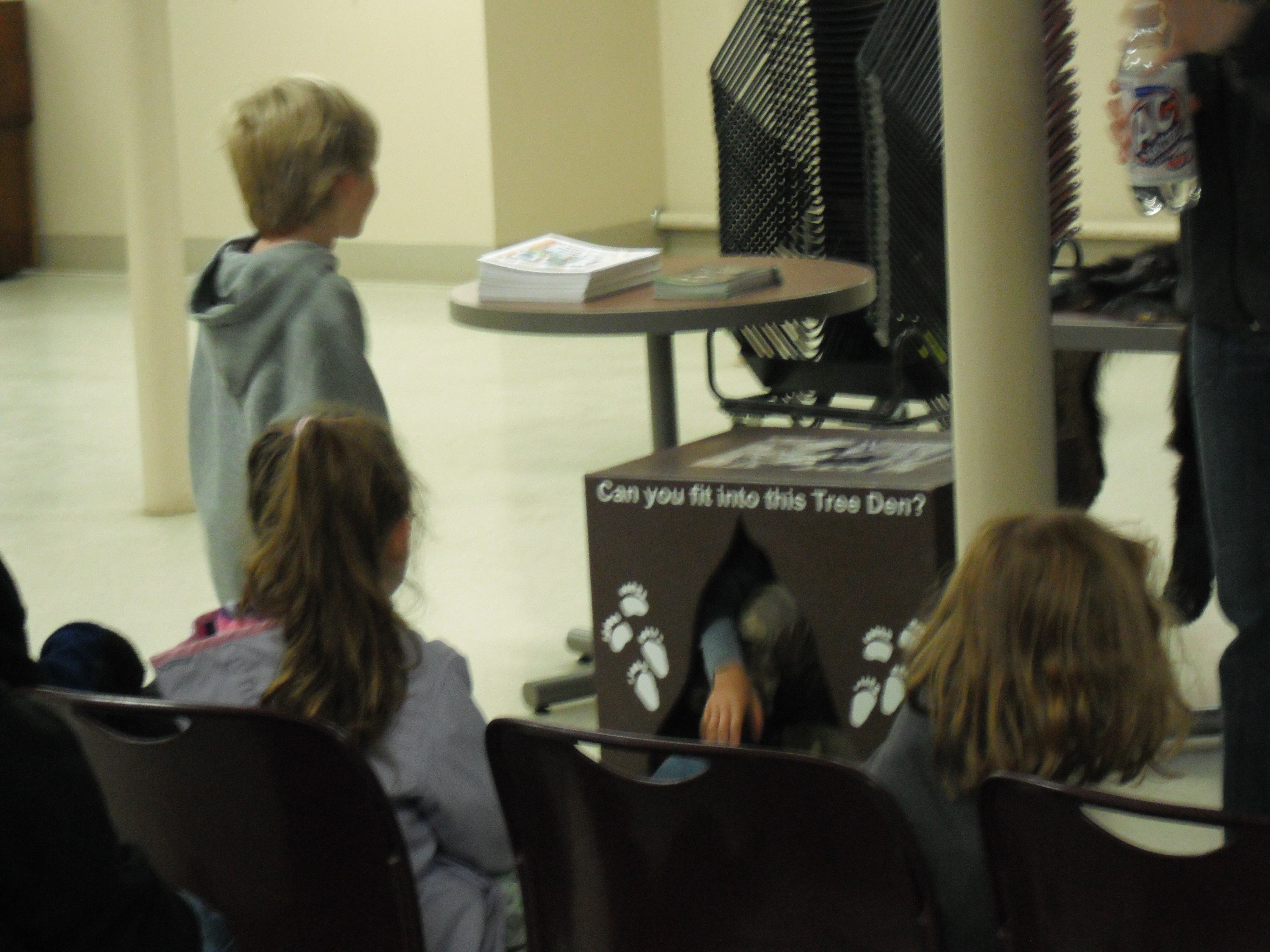


The Ridgewood Department of Parks & Recreation hosted “Know the Bear Facts” yesterday at the Community Center in Village Hall.
Michelle Ruggiero, of the New Jersey Department of Environmental Protection's Division of Fish and Wildlife, was the attendant lecturer to a small crowd of children and their parents about the state's largest land mammal: the black bear.
Even with a small turnout, Nora Muzio, the Community Center director, declared the event a success.
Find out what's happening in Ridgewood-Glen Rockfor free with the latest updates from Patch.
“Even when you have a small crowd, when you see the enjoyment that they get out of it, it’s still worthwhile," she said. "Those who came wanted to learn something new and interesting and the young kids really love all the visuals that these folks bring.”
Ruggiero’s presentation included a colorful slideshow, a stuffed and mounted bear cub, makeshift dens, a rubber model of bear “scat,” and other show-and-tell props, which had the spectators enthused and interested for the duration.
Find out what's happening in Ridgewood-Glen Rockfor free with the latest updates from Patch.
The topics covered were the bear’s history and biology, the institute’s research practices, and, most importantly, practical information on coexisting (survival tips)—why you should not attempt to befriend Yogi, though he is delectable while wrapped in your arms at night.
Those attending learned that the black bear is the only bear on the East Coast. In New Jersey, if you spot a bear that is not black in color, it is still a black bear. Do not expect to encounter a grizzly around Ridgewood, but do not be surprised if you have a run-in with a black bear. It may even be hiding under your deck.
Ruggiero related that in recent history the bear’s existence was threatened by territorial destruction, and that Native Americans used the bears for food and clothing. Today, though, with the help of the NJDEP, the bear is thriving again. The NJDEP uses radio collars and ear tags to track its range and habitat use. Such attention is a commendable means to protect the animal from being hunted or halting the traffic on Ridgewood Avenue. Ruggiero and fellow researchers are also testing the bears for diseases.
Now, pay closest attention: Here comes the most important message of the talk.
After those summer afternoon barbecues that smell of sizzling Italian sausage, though one often wishes its memory-inducing magnificence lingered on—clean up. The black bear can smell its greasy goodness three miles away, and many encounters occur because this giant, sometimes eclipsing 700 pounds, will eat and eat and eat anything and everything. Fortunately, the bear is now hibernating and will stay in its den for the winter. So without a fear you can fire up that Sunday tailgate, and clean tomorrow.
Another good tip: Never approach a bear, or try to feed it. That’s illegal.
Also, clean up after your pets. As stated before, black bears will eat anything.
However, if you should encounter a bear, do not run or climb a tree. It will catch you. Instead, walk slowly away, divert your eyes so it does not feel challenged, and by speaking assertively, banging pots, and standing tall you may find that it has anxieties all its own. It will retreat, as long as you are not blocking its path.
For the 15 or so attendees, “Know the Bear Facts” was a fun and educational experience, especially for the children who were able to experience a model bear’s den.
Although “Know the Bear Facts” was not part of a lecture series, “It could end up being,” Muzio said. “I see how much they enjoy this.”