Health & Fitness
Centennial of the Orange Pennant
The Evening Record says, "Probably never in the history of the State House have such scenes been enacted in the Legislature halls." Women storm the State House in March 1912!



By Kevin Wright©2012
What was the world coming to? Sophia Loebinger, editor of The Suffragette, went right to the heart of the matter when she addressed an astonished crowd of fun-seekers at Palisades Amusement Park on August 14, 1909, exclaiming, “We are criticized and jeered because we go out on the street to preach for that which we think belongs to us. Some say our place is in the home and that we are loosing our femininity. This is not so. We love our husbands as much as do the women who do not belong to our movement, and our girls love their sweethearts as fondly as other girls, and we all love to be fondled and petted, just as much as you all do. By denying us votes you have placed us in the same class with the lunatic, the criminal, and the minor from whom that privilege is withheld. But we are fast reaching the point where we shall receive at least the same opportunity as the men. There are 6,000,000 women wage earners in this country who are seeking protection and representation in Government.”
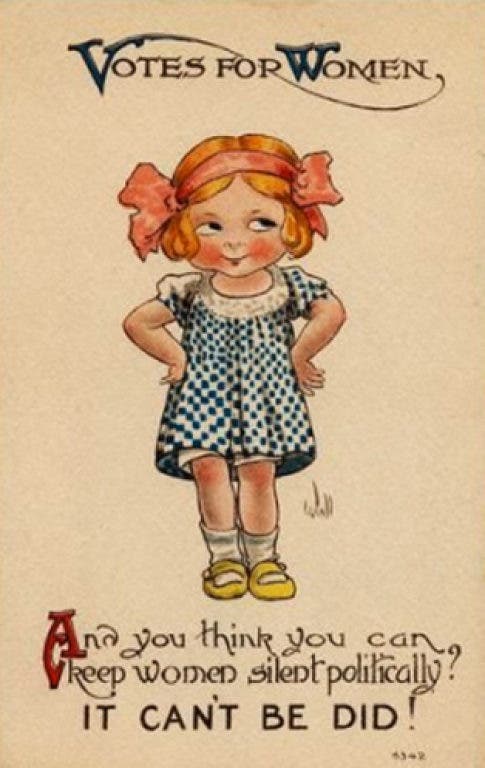
Turn now to March 13, 1912. The Joint Judiciary Committee is conducting a public hearing on a resolution to amend the State Constitution to give the ballot to women. Never before have so many women entered the Assembly Chamber of the State House at one time! Hours before the hearing is scheduled to begin, women who stayed overnight in Trenton quickly fill the gallery seats, so that a delegation arriving on the Jersey City special that morning will have to make out as best they can. Snow-covered streets thwarted a planned parade from the station, so the women crowd onto five special trolley cars for the trip to the State House. Once all gallery seats are taken, they squat on the steps of the lower floor and quickly appropriate chairs normally used for the pages in front of the Speaker’s table. Soon, even the floor of the Assembly Chamber is filled to capacity. They come carrying orange pennants bearing the motto, “Votes for Women.” The Assembly Chamber rings with cheers as Senator James F. Fielder, of Jersey City, fastens one of the Suffragist pennants to the Speaker’s chair.
Find out what's happening in River Dellfor free with the latest updates from Patch.
One hour and thirty minutes was divided between proponents and opponents of the measure. Once the hearing got underway, shouts of “louder” were frequently hurled at the speakers. In response, Senator Walter E. Edge, of Atlantic City, arose to explain that testimony was primarily for the legislators and it could not be helped if all were unable to hear. Unmollified, women in the gallery demanded that speakers address the committee from the steps where the Clerk of the General Assembly stands. Their request was quickly accommodated.
Senators Edge and Fielder and Assemblyman Albert R. McAllister, of Cumberland County, were the only committee members who went on the stand. According to press reports, “Many of the other legislators, however, stood around to witness the unique scene.” Mrs. Hugh F. Fox, of Plainfield, interrupted the proceedings, asking if it was right that men should crowd around the speakers so others could not hear them? Senator Edge responded that they were mostly legislators “who wished to be enlightened and the men held the fort.”
Find out what's happening in River Dellfor free with the latest updates from Patch.
As chairwoman of the State Suffrage Association, Mrs. George T. Vickers, of Duncan Avenue, Jersey City, spoke first. Mrs. Clara Schlee Laddey, President of the New Jersey Woman's Suffrage Association, representing the Joint Legislative Committee of all the women’s clubs, described the scope of their movement. The next speaker, Miss Melinda Scott, representing the hat trimmers of Newark, was an organizer for the American Federation of Labor. She said women needed the vote to improve their working conditions and to press the enactment of pure food laws. In the middle of Miss Scott’s speech, one of the anti-suffragists nearly broke up the meeting when she loudly demanded to be heard on a point of error. She thought it unfair that a partisan pennant was so prominently displayed on the Assembly dais during testimony. Chairman Edge said the point was well taken and removed the orange gonfalon to “general applause and laughter” Suffragists responded to the gesture “with vigorous waving of pennants.”
Fanny Garrison Villard, of Tarrytown, Westchester County, New York, wife of railroad baron and publisher, Henry Villard, promised political and social reforms, if women got the ballot. The noted woman writer, Charlotte Anna Perkins Stetson Gilman, of San Diego, California, was next called upon to testify. She enumerated the states and countries where women could vote, asserting, “We have not as yet a democracy” until equal suffrage was the law of the land. Women need votes just as much as men would, if women had been making laws for men, she declared. Society would benefit because of women’s ability to solve issues and challenges that might arise.
Assistant Prosecutor George T. Vickers, of Hudson County, was the first male speaker. He asserted, “It was a delightful experience to be trotted forth by his wife to speak for suffrage.” He noted “that women have the inherent right to vote in New Jersey,” believing “the Legislature exceeded its powers [in 1807] when it disenfranchised women in this state. We are [therefore] forced to ask the right to resubmit the question to the legal voters as now recognized.” He correctly claimed, “No state had ever taken from women the right to vote once it had been given them, excepting New Jersey.” “Equal suffrage,” he maintained, “is inevitable because it stands for the highest civilization, including worldwide arbitration of great questions.”
Opponents had a half-hour to respond. Mrs. Harriet Clark Fisher, of Trenton, expressed the negative opinion, attacking Suffragists “for coming there with pennants, which the antis did not have. Her remark was met with derisive laughter and generous waving of the pennants. She asserted she would introduce a speaker who would point out how the women are being deceived in the promises held out to them under the ballot.” The spokeswoman for those opposed to women’s suffrage was Miss Minnie Bronson, editor of the Woman Patriot, a weekly anti-suffrage newspaper, and a self-described “working woman” who had investigated child labor conditions for the government. She immediately posed the question, “What was the discrimination against women in New Jersey, which was not overbalanced by rights in their favor?” She pointed out that workingmen were obligated “to pay the debts of their extravagant wives.” She claimed laws protecting wage-earning women in the United States were better than those protecting wage-earning men and spoke of investigating strikes that involved women, where she asserted having the right to vote would not have aided their cause. Arguments to the contrary, she warned, were specious and easily advanced by Suffragists without having to substantiate them.
Minnie Bronson further asserted that the greatest changes ever made in English common law were for the benefit of women, even though they could not vote. Enumerating several beneficial laws that were so enacted, she concluded, “Votes for women are not needed to bring about better conditions for the females.” Her arguments were much the same as those she would enunciate a year later before a Congressional committee, held in January 1913, when as secretary of the National Association Opposed to Women’s Suffrage, she questioned ”whether women would vote for only good-looking men, [or] whether under some conditions women should have to support their husbands….”
Miss Florence Marion Howe Hall, of High Bridge, a noted authoress in her own write and daughter of Julia Ward Howe (who wrote “The Battle Hymn of the Republic”), spoke briefly in favor of the resolution. Linton Satterthwait, a prominent Trenton attorney, who represented the New Jersey Men’s League for Woman Suffrage, was the last speaker. As the rearers of men, he thought women, who were also legally capable of owning property, should be allowed to say who is to govern them.
Ironically, in keeping with the quaint, but revealing, fashion of the times, married women were identified exclusively by their husbands’ names. But this was not the only indignity. According to an account of the proceedings, published in The Evening Record and Bergen County Herald on March 13, 1912, “The women were made the object of jokes by groups of men who gathered in the halls and talked so the women could hear them. A member suggested that their husbands would not get any dinner today.”
The correspondent for The Evening Record concluded, “Probably never in the history of the State House have such scenes been enacted in the Legislature halls.” When the hearing was over, the Assembly Chamber continued to hum with conversation as antis and pros debated among themselves “the strength of the argument that had been advanced.” By day’s end, committee members offered no indication of where they stood on the matter. Later, however, the resolution would not only be released from committee, but it would pass the Assembly with 46 favorable votes and the State Senate with 14 favorable votes.
The colorful cast of characters who enacted this political drama is nearly lost to history. The following thumbnail sketches seek to capture the living hopes and aspirations on those on both sides of this Progressive-era debate, which played out in the opening decades of the last century:
Mrs. Hugh Francis Fox was born Virginia Herrick on September 16, 1863. Her mother, Sophia McIlvaine Bledsoe (1837-1919), was the daughter of Albert Taylor Bledsoe, a West Point graduate, who became an Episcopalian minister, then a lawyer, and finally a mathematics professor at a succession of colleges and universities in Ohio, Mississippi and Virginia. Confederate President Jefferson Davis appointed him to the post of Assistant Secretary of State. An unreconstructed apologist for the vanquished Southern cause, he founded The Southern Review in 1867 to defend slavery and the principle of secession against the tide of history.
After marrying Reverend James Burton Herrick at Charlottesville, Virginia, on July 6, 1864, Sophia Bledsoe moved to New York City, only to abandon her husband in 1868, when he left the ministry to join the radical Oneida Community, a communal sect that practiced complex marriage and the selective breeding of children. To support her own three children and parents, Sophia founded the Louisa School for Young Ladies in Baltimore in 1868. Studying biology at John Hopkins University, she developed an interest in the young science of evolution. She took over management of her father’s periodical, The Southern Review, in 1875, becoming its editor in 1877. She joined the editorial staff of Scribner's Monthly as assistant editor in 1878, continuing with its successor, Century Magazine, until she retired in 1906. Her published works include Wonders of Plant Life under the Microscope (1883), Chapter on Plant Life (1885), and The Earth in Past Ages (1888). (See Bledsoe family. Bledsoe-Herrick family papers, 1750-1964: A Finding Aid, Arthur and Elizabeth Schlesinger Library on the History of Women in America, Harvard University Library)
Sophia’s daughter, Virginia Herrick, married hops merchant Hugh Francis Fox in 1887. Born in Gloucestershire, England, in July 1863, he immigrated to the United States in 1882. By 1900, Hugh and Virginia Fox resided on Schuyler Court in Bayonne, where they raised three daughters. By 1910, they moved to 508 Central Avenue, Plainfield, New Jersey. Virginia Herrick Fox became President (1911-1913) of the Monday Afternoon Club, an organization founded in Plainfield in 1889 for women interested in literary study. Topics of discussion and debate included current events, sanitary plumbing, evolution, socialism and women’s suffrage. In 1894, the club became a charter member of the State Federation of Women’s Clubs.
Virginia’s husband, Hugh Francis Fox, achieved national recognition and even notoriety as Secretary of the American Brewers Association. In an effort to stave off the growing threat of Prohibition, he published a pamphlet entitled, Brewers as reformers, in 1900, suggesting that if brewers owned and operated saloons, then they would sell their own beers instead of hard liquor. He wrote on “The Saloon Problem,” “Child Labor in New Jersey,” and “The Consumption of Alcoholic Beverages” for the Annals of the American Academy of Political and Social Science between 1902 and 1923. His pen urged temperance reform through governmental regulation, advocating the licensing of saloons, a reduction in their number, closing saloons in red-light districts, and the suppression of saloons in “dry areas” with compensation. In 1913, he encouraged brewers to confront growing cries for reform of the sale of alcohol because “with the spread of women’s suffrage the women are going to pass judgment on the saloon.” On February 23, 1916, Hugh F. Fox was jailed in Pittsburgh, Pennsylvania, for failing to hand over subpoenaed records of the United States Brewers’ Association to a Federal Grand Jury, which was investigating political contributions from leading brewers, claiming there was nothing to show since he destroyed Association records monthly. Once Prohibition became the law of the land in 1920, Hugh Fox became a leading spokesman for its modification or repeal. By 1920, Hugh and Virginia Fox moved to Riverside Avenue, Greenwich, Connecticut. Virginia Herrick Fox died November 29, 1932.
Clara Schlee Laddey was born in Stuttgart, Germany, the daughter of Adolph Schlee and Paulina Steimle, on April 6, 1858. She immigrated to the United States in 1888 and became deeply involved in the "new woman" movement. She married Victor Laddey, a salesman of essential oils. They resided on Belgrove Drive In Arlington, (Kearney) New Jersey. She was elected president of the New Jersey Woman's Suffrage Association at the State convention in Bayonne in 1908. Mrs. Laddey visited all the local leagues and spoke before many societies, including the large German Club at Hoboken. With Dr. Hussey she attended the State convention of the Federation of Labor and obtained its endorsement of the Federal Suffrage Amendment. She put new life into the Association and was re-elected at the State convention held at Newark in 1909. In December 1911, she was named a member of the Joint Legislation Committee of Woman Suffrage in New Jersey, which represented the four woman suffrage organizations in New Jersey. From 1912 to 1914, Laddey was a member of the National Woman Suffrage Executive Council. As such, she marched at the head of the New Jersey Woman Suffrage delegation in the first suffrage parade held in New York City. In her hometown of Arlington, N.J. she campaigned to promote the election of a woman to the local school board. She died at Alton, New Hampshire on September 11, 1932.
Rhena Gussie Bauchelle, daughter of carriage manufacturer John U. and Anna (Miller) Bauchelle, of Elizabeth, New Jersey, married lawyer George Theodore Vickers, the son of Thomas and Caroline (Seeberger) Vickers, in Elizabeth, New Jersey, in 1898. They resided at 22 Duncan Avenue, Jersey City. She was chairwoman of the Joint Legislative Committee, representing the four women’s suffrage organizations then active in New Jersey. Her husband studied at the law offices of Collins & Corbin and became Assistant Prosecutor for Hudson County shortly after being admitted to the bar. He served with the Essex Cavalry in the Spanish American War, rising to the rank of Colonel. George T. Vickers was involved in procuring the Grand Jury indictment of the Beef Trust in 1910 as a price-fixing monopoly. He ran as part of an anti-Hague Fusion Ticket in 1921.
Miss Melinda Scott was born in Cheshire, England, where she learned the hat-trimmers’ trade. She became an organizer for the American Federation of Labor, residing on Park Place in Newark with her father James and sister Alice. One of the earliest woman trade unionists, she became Vice-President of the United Hat Trimmers of Newark and New York. Under her leadership, girl hat-trimmers were able to improve wages and working conditions. Regarded as “an excellent speaker” and “one of the best known labor leaders of the country,” Scott presided over the first convention to be held in New York City of the National Women’s Trade Union League of America on June 7, 1915. This organization advocated equal pay for equal work and full citizenship for women.
Named for English abolitionist Francis Garrison, Fanny Garrison Villard, of Tarrytown, Westchester County, New York, was the daughter of abolitionist William Lloyd Garrison and Helen Villard. She married German immigrant Ferdinand Hilgrad, who adopted the name Henry Villard upon his arrival in the United States. An abolitionist, he reported on the Lincoln-Douglas debates for the New York Herald Tribune and became a war correspondent for the New York Tribune during the American Civil War. Successfully investing in railroads, he was able to acquire controlling interest in the New York Evening Post and The Nation. A political radical, Villard supported pacifism, women’s suffrage, trade unionism, and equal rights for African-Americans. Fanny joined the American Woman Suffrage Association in 1906. She and her son, Oswald Garrison Villard, were founding members of NAACP. She died July 8, 1928, at 84 years of age.
Widely known for Suffrage Songs and Verses, published in 1911, Charlotte Anna Perkins Stetson Gilman (1860-1935), of San Diego, California, was the wife of Reverend Samuel C. Gilman. Famous in her own right, she was owner and sole contributor to The Forerunner, A Monthly Magazine, described in 1915 as “one of the few really good magazines devoted to the advancement of woman and humanity.” She wrote several books, including “Women and Economics,” “The Man Made World,” “Human Work,” and “The Home.”
Harriet White Fisher was born March 31, 1869, in Pennline, Crawford County, Pennsylvania, the daughter of Oscar A. and Hannah (Fisher) White. She was educated in a young ladies’ classical seminary before taking finishing courses abroad. At 29 years of age, she married 61-year-old Clark Fisher, owner of the Fisher & Norris Eagle Anvil Company in Trenton, on July 20, 1898. They resided at 125 East Hanover Street in Trenton. She took over management of her husband’s factory when he became incapacitated in 1899. She quickly mastered every aspect of the manufacturing process, earning the admiration of her fifty employees, and increasing output fourfold over the next decade. When Clark Fisher died on December 31, 1903, as the result of injuries suffered in a train wreck, she became the first woman factory owner in the United States. She was widely known and celebrated as the “Iron Woman.”
Harriet White Fisher set out in July 1909 to become the first woman to drive an automobile around the world. She completed her remarkable journey, estimated at 18,000 to 20,000 miles overland in a four-passenger Locomobile on August 16, 1910. In May 1911, she published her memoir, "A Woman's World Tour in a Motor." Despite her drive and remarkable accomplishments, she once told a reporter for The New York Times, “A Woman’s place is in the home.” She married Silvano Alfredo Andrew, an Argentinean immigrant, at Grace Church in New York City on April 27, 1912. Harriet White Fisher Andrew died in 1939.
A tireless opponent of women’s suffrage, Minnie K. Bronson graduated from Upper Iowa University, where she also earned a Master’s degree in 1892. She taught mathematics at a high school in St. Paul, Minnesota, from 1889 to 1899, before embarking on a career in designing educational exhibits at world expositions in Paris (1900), Buffalo, New York (1901), St. Louis (1904), Liege, Belgium (1905), Jamestown, Virginia (1907) and Seattle, Washington (1909). Between 1907 and 1909, the Bureau of Labor, Department of Commerce and Labor, hired Miss Bronson to investigate working conditions for women and children. She also worked as a special agent for the U. S. Labor Bureau during the Shirt-Waste Makers’ strike in January-June 1910.
Minnie Bronson was secretary of the New York State Association Opposed to Woman Suffrage. As its leading spokeswoman, she edited the Woman Patriot, a weekly anti-suffrage newspaper. Speaking to a rally in the Berkeley Theater on West 44th Street on February 13, 1913, she denounced women’s suffrage “as one of the alluring deceptions of the Socialist Party, for which woman, if she yielded to it, would have to suffer just as she suffered for her meekness in the first temptation in the Garden of Eden.” (The New York Times, February 14, 1913) Miss Bronson astonishingly argued, “We are opposed to doubling an already too large electorate with a body that has not had any experience with the vote.”
Florence Marion Howe Hall was the daughter of Julia Ward Howe, who composed "The Battle Hymn of the Republic." She served as president of the New Jersey State Woman Suffrage Association from 1893 until 1900, when she declined re-election.
She also served for six years as chairperson of correspondence for the New Jersey General Federation of Woman's Clubs. Mrs. Hall was a well known as author of books about her famous mother, Julia Ward Howe and the Woman Suffrage Movement and The Story of the Battle Hymn of the Republic.
Linton Satterthwait, a Republican counselor-at-law, became the Citizens’ League candidate for Mayor of Trenton in 1897, fighting “to free the city from the grip of partisan machine politics.” Born in Burlington County in 1857, he was raised a Hicksite Quaker. He graduated Yale in 1883 and worked for a year as a reporter for the Philadelphia Record before establishing his law practice. He built a fashionable house at 912 Riverside Avenue in 1897-98 and maintained an office at 111 East State Street. In 1906, he ran as a Democratic candidate for city council from the Fourteenth Ward. He joined with Rabbi Dr. Louis B. Michaelson, of Temple Har Sinai in Trenton to organize the New Jersey Men’s League for Woman Suffrage in May 1911.