Arts & Entertainment
Stained Glass Artist Kate Grady: Building Images One Piece at a Time
Grady describes the process of work, explains difficulties during bad economic times and tells us how she got her start in a neighbor's home in Rumson.
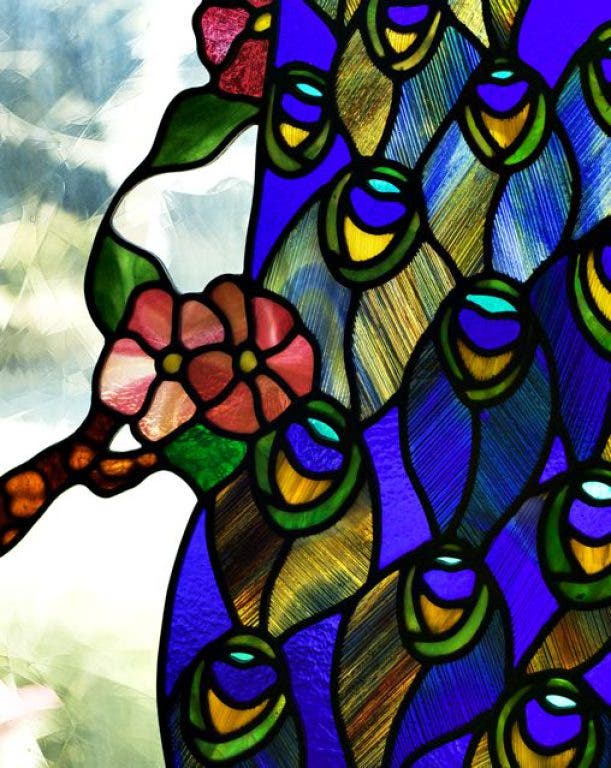


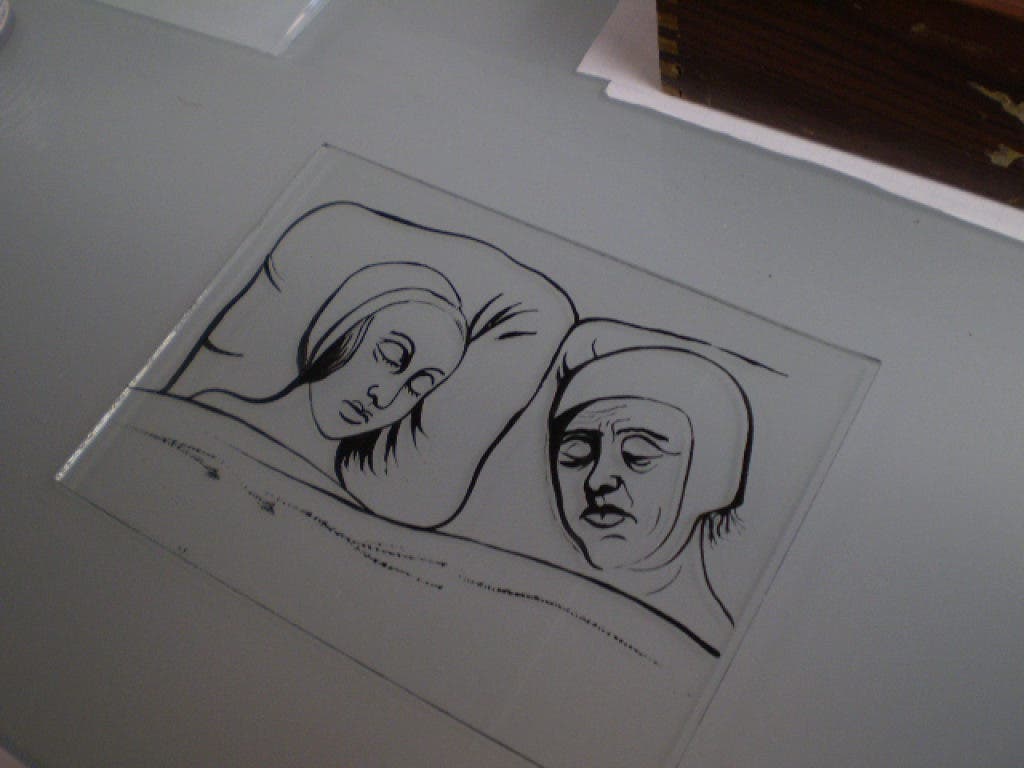


Kate Grady points to two pieces of glass, both seemingly colored black, on one of her two work benches. The first piece comes from a restoration she is working on while the other was a candidate to replace broken portions. She holds both up to the light and reveals the original to be a deep violet, while the newer piece is more a blend of dark blue and brown marbling. Light is the key ingredient in the process of creating and restoring stained glass, but it is a demanding one.
Grady’s Middletown workshop, located just off of Sleepy Hollow Road, houses several projects in varied states of completion, but the one she is studying at the moment seems particularly daunting.
“This comes from a cemetery in Brielle called Greenwood Cemetery," she said. "It’s rather old; this (stained glass pane) is from a mausoleum. I don’t know, some kids or derelicts were coming there late at night and broke into the mausoleum through the stained glass window."
Find out what's happening in Rumson-Fair Havenfor free with the latest updates from Patch.
Grady does a lot of restoration work and she describes how she assesses the damage: “It’s pretty much totaled. I do this with clients a lot; pretend this is your car. To me, this is totaled. This has to be completely rebuilt.” Grady points to the lower portion of the pane and gives it a quick look. “This half isn’t so bad. There’s not a whole lot of damage down here in terms of breaks, but (from the mid-portion up) it has to be completely rebuilt.”
A centerpiece of the window is a portion of glass with a painting of a tent. To the right, the portion is intact and only requires a careful cleaning. The left portion is broken into pieces. Grady has decided the damage is too severe for repair, and if it was to be done, the fixes would be distracting. “I’ve got to repaint that. I’ll do this whole piece. It will look like (the original piece) but it will be new.”
Find out what's happening in Rumson-Fair Havenfor free with the latest updates from Patch.
The materials required in painting glass are unlike simply applying medium to a canvas. Ground colored glass, crushed into a fine powder, is the base for the paint and will be mixed with water and other chemicals depending on the need for more or less viscosity.
Care needs to be taken in the application process because inhaling the glass dust is dangerous and can spur on Silicosis (a respiratory disease caused by breathing in silica (glass). Once applied, the glass is fired in a kiln much in the same way pottery glazing needs to be fired.
For Grady, it wasn’t so much that she came to the art of stained glass work as it was coming to her. “My next-door neighbor taught me when I was young," she said. "We lived in Rumson and I used to babysit for her. In her home, upstairs, she had a little ballet studio, in another room she had stained glass, and in another she had a loom. I was so curious about it. She said, well, pick one and we’ll barter. You can babysit for me and I’ll teach you the loom or stained glass. I chose stained glass.”
Off in a small closet sits a shelving unit with trays full of glass, in various sizes and colors. On the other side, a unit holds larger sheets. Such specific types of glass are not custom-made however. They have to be purchased as large panels and are used bit-by-bit over time.
Grady explains that, while companies do have automated manufacturing, her preference remains with the hand-blown stuff. She points out the color variations within a handmade piece, the natural textures that form on the glass versus machined pieces that are perfectly smooth, flat and uniform in color.
While the hand-blown material is more expensive, she feels the unique qualities and tactile nature of them are superior. Unfortunately, clients might opt not to have such lavish additions included in order to keep the overall price lower.
There are two methods of creating new stained glass frames, one using strips of lead which is bent into shape around the pieces of glass, the other using a copper foil which is wrapped carefully around the pieces. Those pieces are then set into place and soldered together. The soldered lines can appear inconsistent due to the nature of working with metal liquefied by heat.
The lead process, which can be more demanding, is Grady’s preferred method as the framing retains clean lines throughout. “It’s actually very meditative," she said. "You kind of get into a flow.”
Grady’s work, while beautiful, has to deal with a very specific challenge – it’s a luxury item. Referring again to the pane from the mausoleum, she notes, “I took it away and basically said I would start at a very basic, low-ball price of $750 and go from there. In this economy, it’s really hard. For the work I’m doing, it should be a thousand dollars, but I’ll probably keep it about $850.”
Among other restoration projects are two pieces from a homeowner who, due to the financial catastrophe of the times, lost her home. She insisted on taking the glass art however, and Grady intends to frame the pieces for the client after the work is done touching up the actual art.
Another restoration requires less attention, as the damage is primarily only to one portion of glass, which is textured but clear. Grady points to a tiny fracture near the flower design on the pane and says, “That’s so tiny. I told the (owner) not to even worry about it.”
Grady’s “bread-and-butter” work, as she refers to it, is the more functional pieces that might be added into door frames or into cabinets. These tend to consist of geometric patterns or degrees of clarity and in many cases are used to obscure.
Grady pulls up a picture from her laptop computer and points to a design that was used in a bathroom. While decorative, with repeating patterns of red and frosted glass, it is also functional. The window lets in light, as intended, but still offers the privacy required of a bathroom. Because the figures in these pieces are not representational, the panes can be assembled faster than something with more labor-intensive designs.
Grady throws another log into her wood-burning stove which helps take the edge off of the abnormally cold spring afternoon. In a few minutes, she will return to the task at hand: making new art, repairing old pieces and trying to find exactly the right shade of violet to accomplish the task.
For more information about Kate Grady and her work, visit: www.kategradystainedglass.com