Schools
Rutgers Alum One of Country's First Veterans
This Rutgers alum graduated in 1776 and joined the Continental Army that same year.


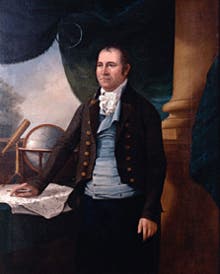
File this one under Did You Know? One of Rutgers’ first graduates was also one of the nation’s first soldiers – a young man who vividly chronicled the pain of war in 1776 America.
Simeon DeWitt graduated from Queens College in New Brunswick in 1776. Queens College would later become RU, but at that time it was a small private men’s college. That same year, he joined the Continental Army.
His letters to his college classmates chronicled what it was like to experience war first-hand.
Find out what's happening in South Brunswickfor free with the latest updates from Patch.
“My apprehensions were alarming indeed,” DeWitt wrote from the edge of the Battle of Saratoga in 1777. “But I resolved rather gloriously to perish in the tempest than ignobly to turn my back or stand an idle spectator … the critical moment big with the fate of my country, myself, when liberty and all seemed to hang in suspense.”
DeWitt’s regiment never actually served in battle, but he still wrote that he heard the artillery “shaking the worlds around us.”
Find out what's happening in South Brunswickfor free with the latest updates from Patch.
“I can assure you never has such a storm threatened our state,” he later wrote. “Every inhabitant sat trembling at its approach till the favor of providence threw the enemy into our hands.”
After the battle, which the British lost and helped turn the tide in America’s favor, DeWitt described the British surrender as “the most glorious, grandest sight America ever beheld or perhaps ever shall see.”
DeWitt, trained as a mathematician, rose to become the chief surveyor in Gen. George Washington’s army. He was present when Lord Cornwallis’ army surrendered to Washington at Yorktown, Virginia, in 1781.
He went on to work as surveyor general of New York, helping to design the streets of New York City and Norfolk, Virginia, as well as determining the route of the Erie Canal.
But before not recording the toll of war across the young country.
“You see where we now are, in a country which bears the melancholy vestiges of war,” he wrote shortly before the Yorktown surrender. “What cruel changes does the destructive hand of war make wherever it approaches.”
Get more local news delivered straight to your inbox. Sign up for free Patch newsletters and alerts.