Community Corner
Glowing ‘Jellyfish’ Seen In NJ Sky After SpaceX Rocket Launch
A SpaceX rocket launched from Florida early Tuesday, creating a glowing spectacle visible across parts of New Jersey.


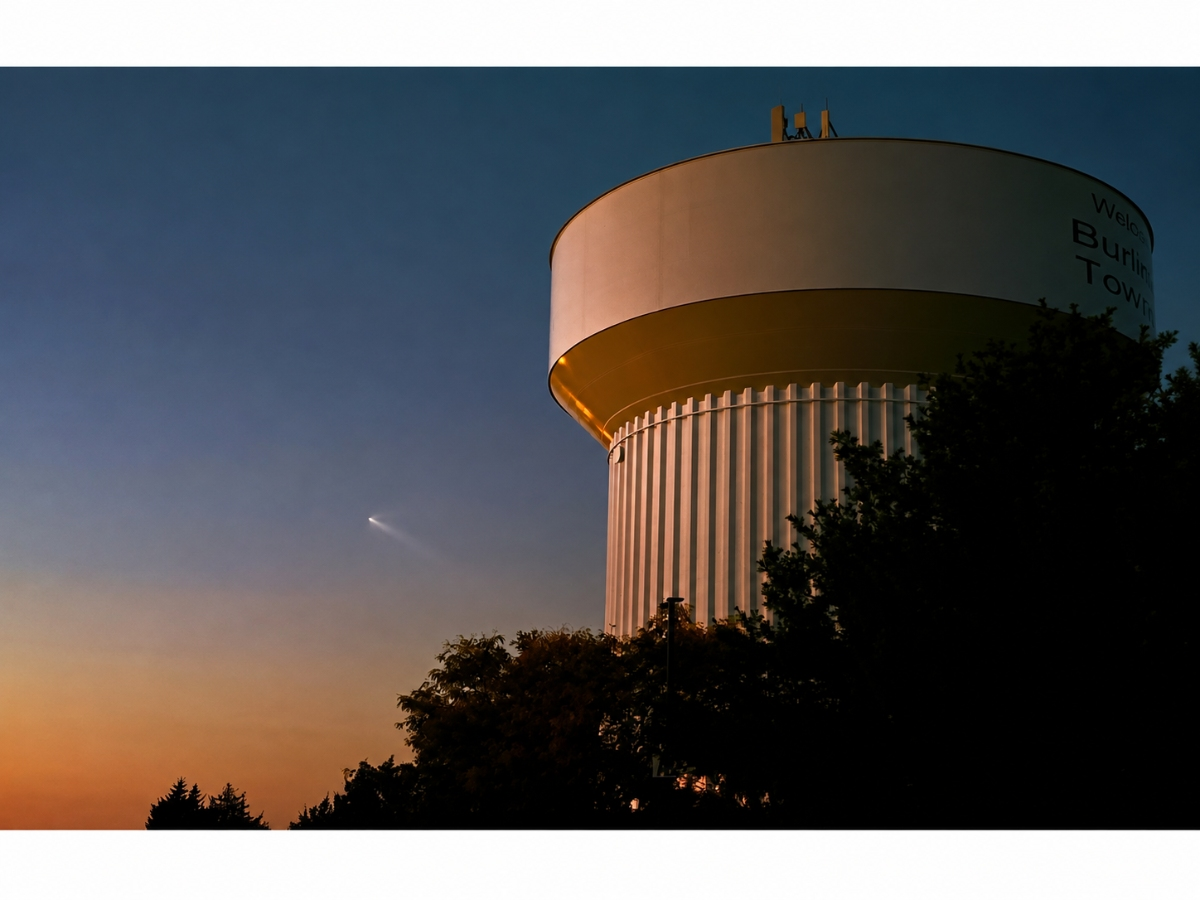

Early risers across New Jersey were treated to an unusual sight Tuesday morning when a SpaceX rocket streaked across the predawn sky, leaving behind a glowing plume resembling a giant jellyfish.
The Falcon 9 lifted off at 6:33 a.m. Tuesday, from Space Launch Complex 40 at Cape Canaveral Space Force Station in Florida, according to NASA. It was hundreds of miles away, but the rocket could still be seen from parts of New Jersey as it climbed. It left a bright streak and a growing cloud of lit-up exhaust.
Residents from several communities, including Burlington Township, Long Beach Island and Bayville in Ocean County, said they spotted the rocker.
Find out what's happening in South Brunswickfor free with the latest updates from Patch.
Cheryl Baldorossi-Painter of Burlington shared a photo with Patch.
What Caused The ‘Space Jellyfish’?
The effect, often called a “space jellyfish,” happens when a rocket launches around sunrise or sunset.
Find out what's happening in South Brunswickfor free with the latest updates from Patch.
The sky can still be dark on the ground while the rocket’s exhaust rises high enough to catch sunlight. As the exhaust spreads out in the thin upper atmosphere, it forms a glowing, cloudlike shape that can look like a jellyfish.
NASA explained the effect in a March 2026 Astronomy Picture of the Day feature. It said sunlight at high altitudes, paired with darker skies below, can make rocket exhaust look like a glowing cloud. The timing of Tuesday’s launch and good viewing conditions made the display visible along parts of the East Coast.
What Was On Board
The launch was SpaceX’s 35th commercial resupply mission for NASA, known as CRS-35. An uncrewed Dragon spacecraft on the rocket is carrying more than 6,300 pounds of science experiments, equipment and supplies to the space station.
The cargo includes the last two International Space Station Roll-Out Solar Arrays, which will give the station more power for research and operations, NASA said. Astronauts are expected to install them during spacewalks later this fall.
The spacecraft is expected to dock on its own with the space-facing port of the station’s Harmony module at about 11 a.m. Thursday.
Have a correction or news tip? Email sarah.salvadore@patch.com
Get more local news delivered straight to your inbox. Sign up for free Patch newsletters and alerts.