Neighbor News
St. Augustine School Wins Innovations in Catholic Education Award
2020 ICE Award Presented by "Today's Catholic Teacher" Magazine Recognizes St. A's in the Area of Technology Integration
Saint Augustine of Canterbury School in Kendall Park, New Jersey has been selected by Today’s Catholic Teacher magazine as the 2020 Innovations in Catholic Education (ICE) Award winner in the area of Technology Integration. Catholic schools may be nominated for the ICE Award in one of four areas: Catholic Identity, Curriculum and Instruction, Technology Integration, and Total Community Involvement. A panel of judges narrows down the list of nominees to three finalists in each area, from which the winner in each area is chosen. The school was previously named a finalist for the 2019 ICE Award in the area of Total Community Involvement and last won the award in 2010 for Innovation Facilitated by Technology.
The innovative program which earned St. A’s the 2020 ICE Award raises the bar for STREAM integration in the classroom by incorporating coding and robotics into curriculum areas where they normally wouldn’t be expected to appear, such as Reading, Language Arts, and Social Studies. This initiative builds upon the success of the school’s participation in Code.org’s annual Hour of Code campaign and seeks to accomplish two primary goals. First, the addition of programmable “micro-bots” such as Ozobot and Sphero to the classroom environment will give digital native and tech-hungry students new ways to engage with the material being taught, especially in non-STEM related subject areas. Second, by exposing students to these concepts and technologies across the learning spectrum before they reach middle school age, they will get a head start on developing the critical thinking and problem solving skills they will need in order to succeed as they progress through high school and college into a workforce where these skills are in ever-increasing demand. The program is being piloted in Grades 3 to 5 by a group of forward-thinking teachers who will leverage the coding being taught to students in Technology class and develop innovative lessons that utilize the ‘bots to illustrate or emphasize key concepts in their own classrooms.
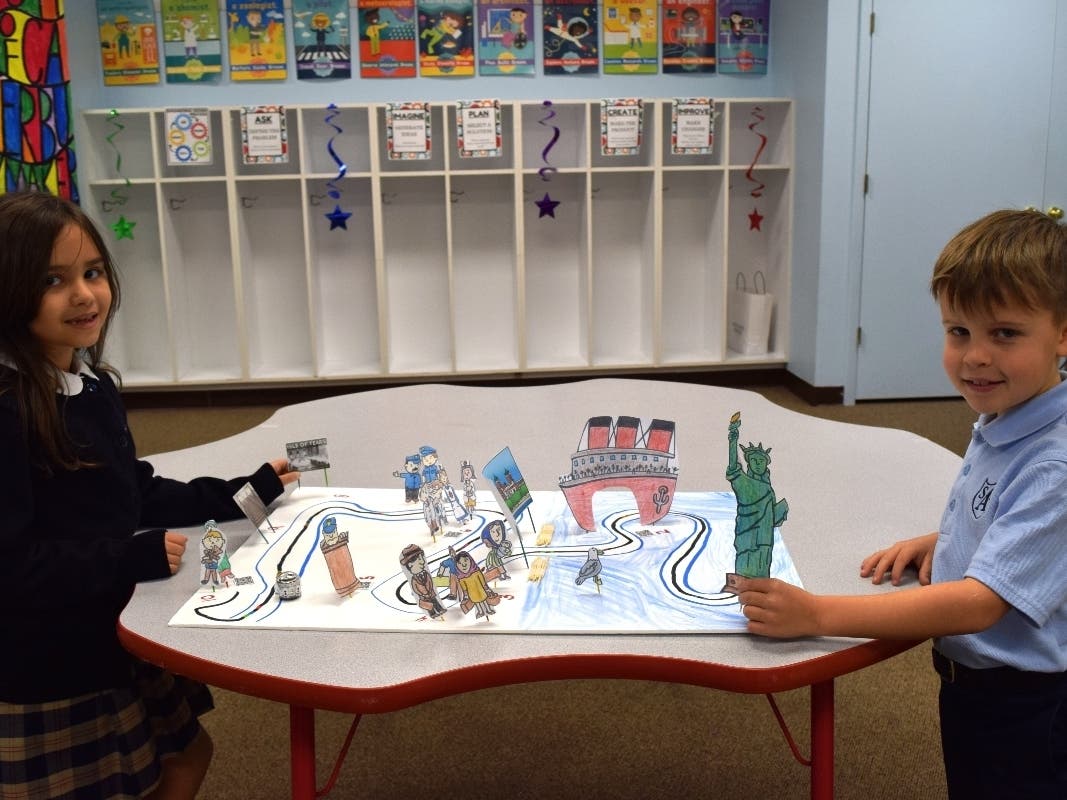
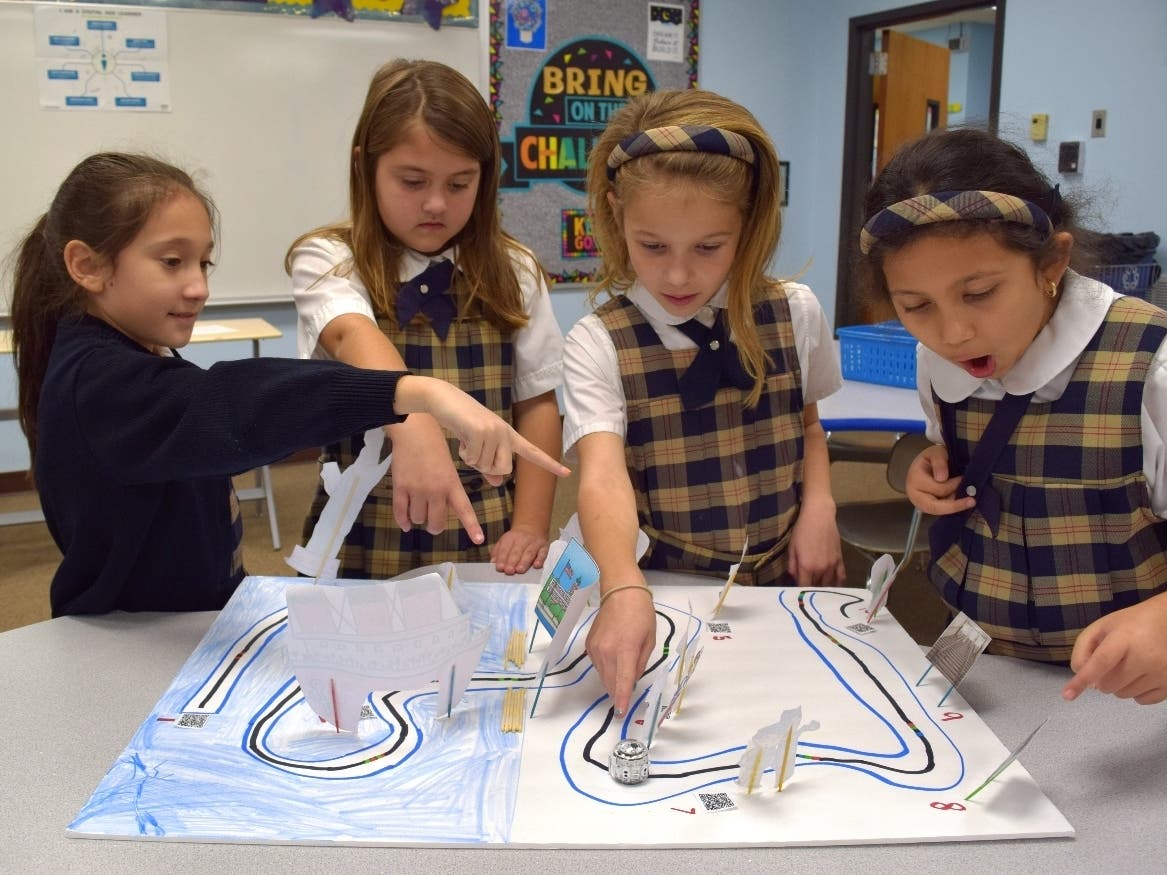
For example, one teacher planned a Social Studies lesson on immigration that includes an activity utilizing Ozobots. In the activity, the ‘bot plays the part of an immigrant crossing the ocean on his way to the United States through Ellis Island. Along the way, the ‘bot stops at the main parts of the immigration process. At each stop is a QR code that links to an on-line resource summarizing that particular stage in the process. Students scanned the QR code with their iPads to access and read the summary, then answered questions about what they read on a webquest packet. The students enjoyed watching the Ozobot “immigrant” travel from place to place and were able to relate the information presented in the lesson to a real-world event. With the help of their robotic avatar, they were able to walk in the shoes of the immigrants, see the trials and hardships they went through when they left their homes to come to this country, and better appreciate the need to treat all people, no matter where they come from, with mercy, dignity and respect. They are really looking forward to their next Ozobot-assisted lesson!
Find out what's happening in South Brunswickfor free with the latest updates from Patch.
Another project, this time in Language Arts, puts control of the Ozobots directly into the hands of the students. In this lesson, students are given the assignment of writing a short story and illustrating it on an illustrated poster board that will act as a sort of stage. Then they must program their Ozobot to play the role of the main character and perform the actions described in the story. Finally, the students present their finished story - complete with their Ozobot actor - to the class. This project engages the students in both procedural thinking (coding the actions of a robot) and creative thinking (writing a story) and merges skills learned in Technology class with those learned in the classroom Language Arts curriculum. The additional task of animating the story with the ‘bots makes the writing process more interactive, allowing struggling writers to better visualize their story by “playing” with the Ozobots while they write and challenging more accomplished writers to turn a simple story into a mini stage play.
Thanks in large part to a fundraising effort initiated by a school parent with contacts in the technology sector, the school was able to secure donations sufficient to acquire the Ozobots classroom kits that will be used by the 3rd, 4th, and 5th grade teachers participating in the pilot. Going forward, the plan is to expand this initiative in both directions. Efforts are currently underway to seek additional donations and grant funding to purchase micro:bit kits for students in 6th to 8th grade and KIBO Robot Kits for the youngest learners in Pre-K, Kindergarten, 1st grade, and 2nd grade. This expansion will give all Saint Augustine School teachers the opportunity to embed coding and robotics into their lesson plans in a grade-appropriate way regardless of what grade or subject they teach. And the students will reap the rewards of this innovative use of technology in the classroom as they gain invaluable 21st century skills that will better prepare them for their continuing education and eventually, to be successful members of the local and global community.