Schools
Tips on Taking the New SAT
Summit Tutor takes the SAT test as an adult to offer students advice, tips


When I walked into the testing room and handed my admissions ticket to the proctor, there was an immediate chorus of laughter. No surprise: I am old (at least to a high schooler), and I am taking the SAT. Why? I could say it’s because I own a tutoring company and thus it’s my job to do so, but I mostly take it because I genuinely enjoy taking the test. Taking the tests also gives me otherwise unavailable insights:
- Content: One question I had before actually taking the new SAT for myself was, “How similar are the practice tests put out by the Collegeboard to the content of the real tests?” The answer: very. If anything, the six official practice tests (four in the official SAT study guide book and two online) are more difficult than the real test I took in October. The math and grammar topics are essentially the same on the practice tests and the real test. Some of the most common grammar topics on the test were transition words, addition/deletion, pronouns, redundancy, and subject-verb agreement. Some of the most common math topics were percentages, slope, averages, medians, quadratics, equation of a line, equation of a circle, imaginary numbers, polynomial division, and manipulating equations.
- Food and Drinks: Collegeboard recommends bringing snacks and a drink, but I want to add some specificity to that recommendation. First of all, definitely bring food and drink (you can read here about good snacks to bring). Eating well and staying hydrated are essential for maintaining energy and focus throughout the test. Additionally, students should not even count on water fountains at the school. I took the October, 2016 SAT at Montclair High School and on both of my breaks (because I left my water bottle in my car), I went hunting for water fountains. Number of fountains found: 4. Number that worked: 0.
- Breaks: Knowing the spacing of the test and the breaks is important so students know how to maximize their break time.
- Check in and fill out Scantron cards (30 minutes)
- Reading section (55 minutes)
- 10 minute break: This is the longest break of the test, so students need to prioritize eating during this break.
- Writing and Language (basically just grammar) section (35 minutes)
- No-calculator Math section (25 minutes)
- 5 minute break: This is really only enough time for a bathroom break.
- Calculator Math section (55 minutes)
- 2 minute break (assuming students are taking the optional essay next): Students are not even allowed to leave the classroom for this one. It’s just enough time to basically drink water, stretch, and then get back to work.
- Optional essay (50 minutes)
- Freedom! (and probably a nap)
The decreasing duration of the breaks makes it important for students to understand how to capitalize on the breaks they have.
- Seating: If a student can pick her own seat, she should sit at the front of the room or on the sides. With fewer students either in front of her or on her sides, she will have fewer distractions and will be less likely to compare her progress to that of those around her. (On the reading section in particular, there is a lot of page flipping – often the questions are on the back page of a passage, so students have to constantly flip back and forth for the answers. Optimal seating can help mitigate the distraction of nearby page turning.)
- Clothing: Wear a sweater and a T-shirt underneath. Who knows what the temperature will be in the classroom, so students should have options to make themselves comfortable.
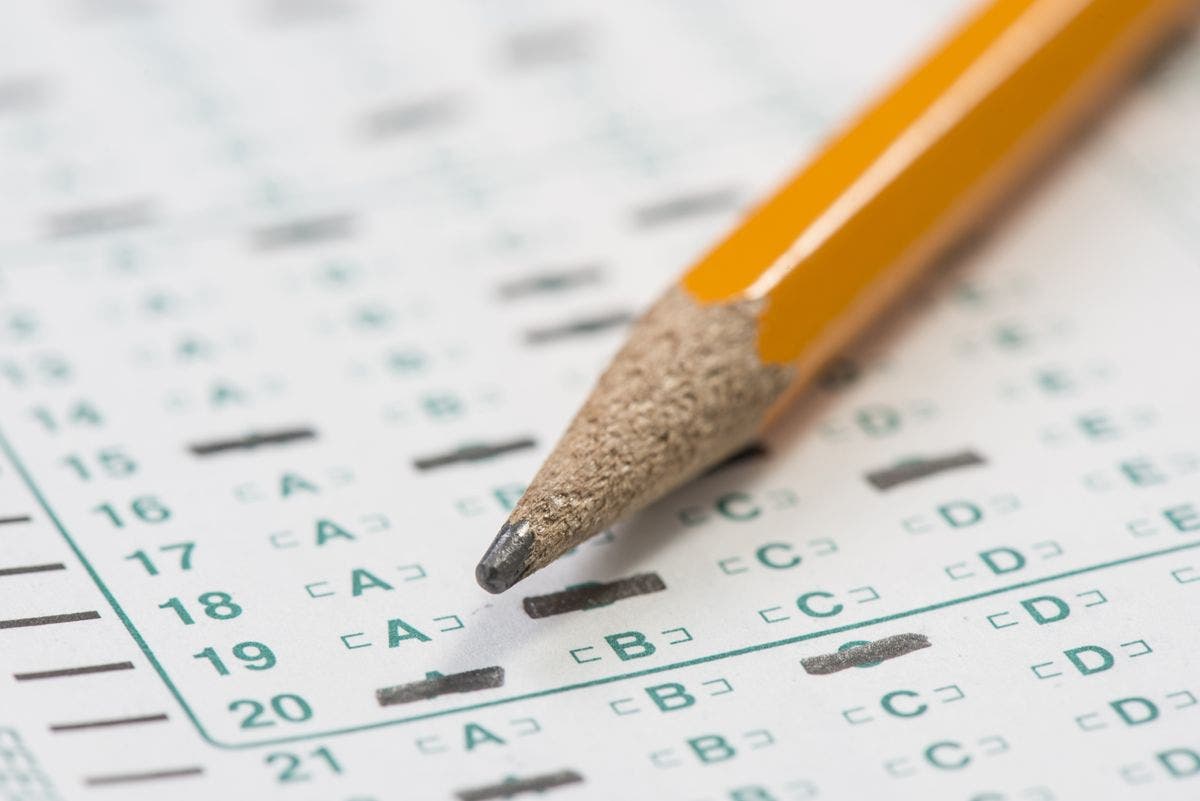
- Pencil: In contrast to ACT proctors, SAT proctors do not tell students that they cannot use a mechanical pencil (though the Collegeboard website advises against using one). Not all mechanical pencils use #2 lead, which is the on ly lead that the Scantron machines read. However, as long as students make sure that they are using a mechanical pencil with #2 lead, then there is no reason not to use one. (Though I would bring a back-up regular pencil or two just in case the proctor does not know that students may use mechanical pencils or in case the proctor manual changes.) I always use mechanical pencils (even on the ACT actually – the proctors have either not seen or cared) because the tips do not dull. This allows me, and others, to write more quickly and with less hand strain, which becomes very helpful when writing the essays on both the SAT and ACT. Students also then do not have to sharpen their pencils on breaks and can use that time to eat, drink, or relax.
- Essays: Although optional, I recommend taking them. It is possible a student will be applying to at least one college that wants to see an essay score. Best trick to the SAT essay: write a lot. Although neither the SATor ACT makers will admit this, the primary determinant of students’ scores (as much as it pains me to say it) is the length of their essays. Students absolutely have to write 2.5 pages or more (ideally three). Of course there are other tips about essay structure, varying sentence structure, using concrete examples, etc, but these are still secondary in importance to length.
Though students may not enjoy taking the test as much as I do, I hope these tips not only provide them some peace of mind about what to expect, but also give them an advantage on test day.
Find out what's happening in Summitfor free with the latest updates from Patch.
— By David Blobaum, Co-Owner of Summit Prep
(Image via Shutterstock)
Find out what's happening in Summitfor free with the latest updates from Patch.
Get more local news delivered straight to your inbox. Sign up for free Patch newsletters and alerts.