Community Corner
Aruba Stranding Shows Gaps In Policies For Disabilities, NJ Mom Of Son With Autism Says
When Jamie Greene's son's uncharacteristic outburst forced her family off a plane in Aruba, vague policies left no options, she says.


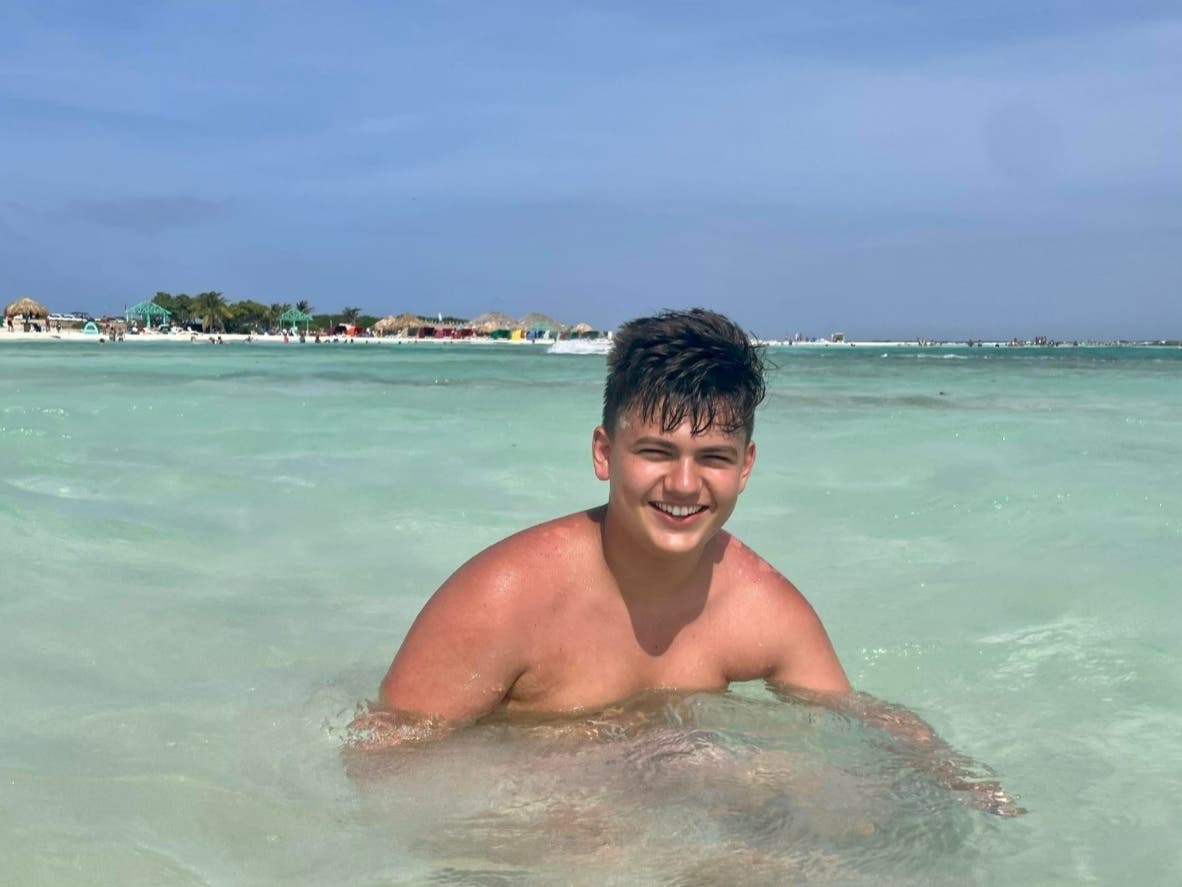
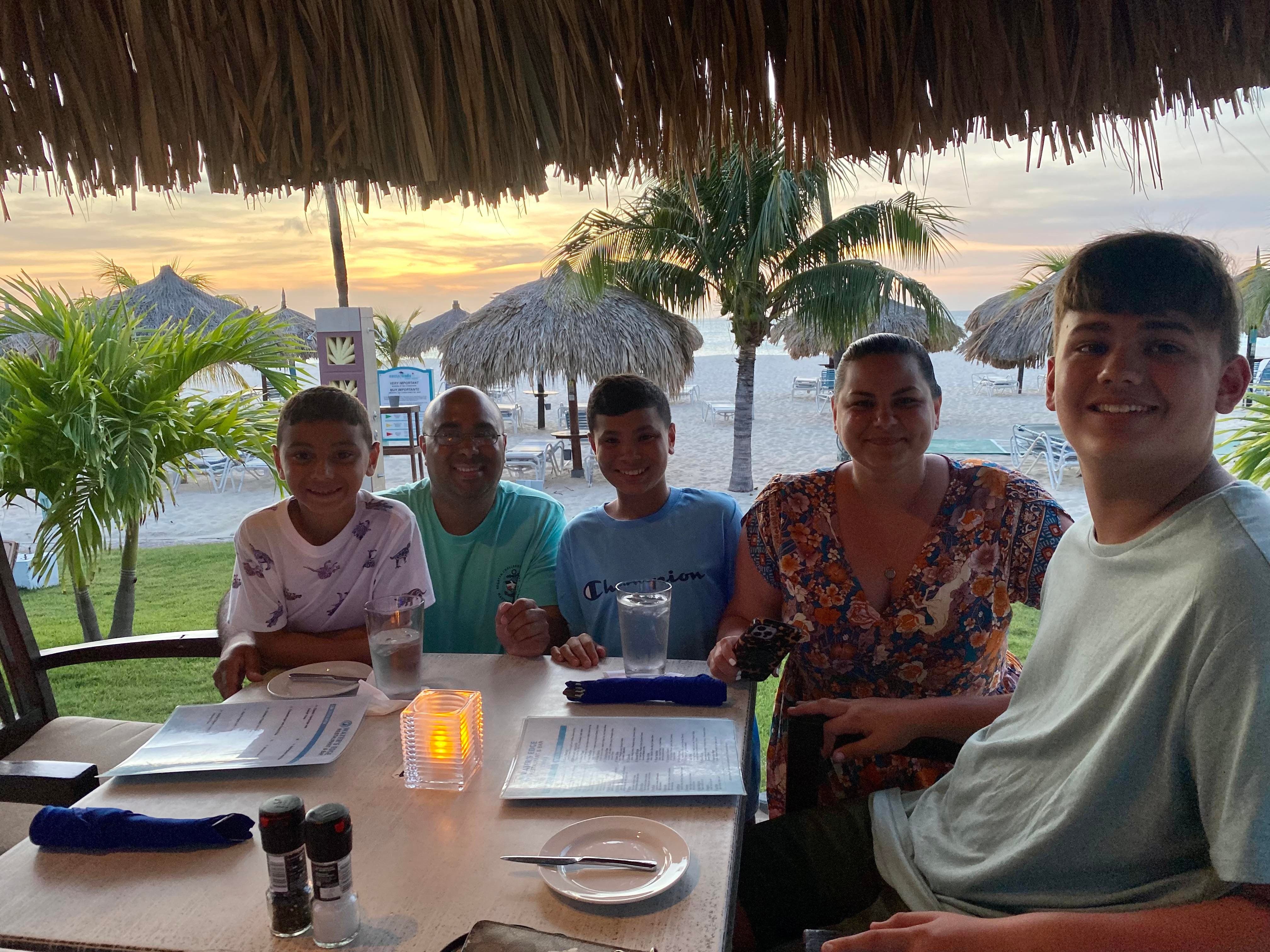
TOMS RIVER, NJ — When Jamie Greene and Carlos Pacheco boarded a flight to Aruba with their three sons on May 10, they were anticipating a nice family getaway from life in Toms River.
After seven days of warmth and sunshine the family headed to the airport for what they anticipated would be an uneventful flight home. Uneventful, however, is the last word Greene would use to describe the last three weeks.
That’s how long it took for Greene and her oldest son, Elijah, to get back to New Jersey after the family was asked to leave the flight when Elijah became terrified and began hitting her as they tried to board the plane May 17. Elijah, 15, is on the autism spectrum; he is nonverbal and, Greene said, is developmentally is the age of a younger child.
Find out what's happening in Toms Riverfor free with the latest updates from Patch.
After they got off the plane – “The last thing we wanted to do was create a disturbance to anyone,” Greene said Thursday – the family found themselves searching for a solution with no real sense of where to turn, because no one could offer clear answers of how she could get herself and her son off the island.
“I never thought I would be in a situation like that,” Greene said. “I can’t imagine another family going through what we did.”
Find out what's happening in Toms Riverfor free with the latest updates from Patch.
Now that she’s home and has had some time to settle in, Greene said she is hoping her family’s story shines a light on the realities of those with “invisible illnesses,” to not only help other families, but also to help update air travel policies so others aren’t faced with the same challenge.
“We just didn’t realize what the lack of policies and procedures were after we got off the plane,” she said.
Fear, out of nowhere
“It’s isolating when you have a child on the spectrum,” Jamie Greene said. People who are not familiar with the possible behaviors will stare or pass judgment on a situation they see in public. The discomfort can be enough for many families to avoid public places for that specific reason.
To see Elijah in public, you would not be able to tell just from a glance that he is on the spectrum. Physically he looks like any other teenage boy.
The trip to Aruba had come with preparation. Elijah had flown twice before without any problems, and Greene was prepared with snacks and crayons and a backpack full of sensory items, along with his iPad, for Elijah. She had Elijah’s medications, too, items he was prescribed in case of an emergency.
Elijah is, for the most part, very easygoing, Greene said. At times when something upsets him, he will stomp his foot or slap his leg; “usually you can calm him down,” she said.
But May 17 was different. Greene says she still hasn’t figured out what spooked Elijah as they started to step onto the plane to fly home.
“He stopped, and started to back up,” she said, but they were able to nudge him forward. It was when the family got to their seats that Elijah melted down, yelling,”toilet,” an indication that he was scared.
This time, they couldn’t calm him down, she said. He was pinching and trying to headbutt Greene, all while crying “toilet.”
“This was not normal,” she said, and while he was reacting so strongly and physically toward her, “he wasn’t going after anyone else. He was scared. He can’t talk. Behavior is his communication.”
The flight attendants tried to help, and told Greene he could go into one of the bathrooms after the flight was in the air.
“He just wanted to sit in the bathroom,” Greene said, because it’s a small, enclosed space and with no windows, where he wouldn’t have been able to see the plane taking off.
One of the flight attendants had worked their flight from the U.S. to Aruba and remembered the family, Greene said, and noted there had been no problems on the way south. But fear is powerful, and Elijah was scared.
The outburst lasted less than 10 minutes before the flight attendants told the family the pilot said they needed to get off the plane, and they did so, Greene said. They gave Elijah the medication they had with them, but instead of calming him down, it had the opposite effect, she said, making him more upset.
Greene said she thought when they got off the plane that United personnel would be able to tell them what the next steps should be. But no one seemed to have answers, which she attributes in part to a lack of policies on how airlines should handle such a situation.
While there are clear accommodations for those with physical disabilities, from reserving bulkhead seating for passengers who use wheelchairs or have a fused leg, for example, the information for those traveling with someone with intellectual disabilities is very limited. There are accommodations for the security screening process, and United has a short section on its website that addresses having a “safety companion” travel with someone who has intellectual disabilities.
The “contract of carriage” describes situations where United will refuse to fly someone, but the language is broad and there is no description of what remedies are available to passengers in Greene’s situation.
Would they be able to board another flight? United personnel told Greene repeatedly that the answer was “no” – and that would apply even if Elijah was heavily sedated.
“Every time I called, they said, no, he couldn’t be heavily sedated, he had to be able to walk on and off the plane and listen to commands,” even though the safety companion description puts that responsibility in the person traveling with the person who has intellectual disabilities.
There was, in short, no do-overs: Elijah was not going to be permitted to fly.
Greene said the family contacted the U.S. Embassy in Curacao, which also provides help to Americans in Aruba, for assistance, and their personnel were just as mystified.
“The airlines were telling him the same thing,” Greene said, that a heavily sedated Elijah could not fly.
“He told me, ‘We fly high-profile criminals all the time. I don’t understand why we can’t get him on a plane,’ “ Greene said.
Strangers to the rescue
While Greene searched for answers from Aruba, her sister-in-law Karen Zickler-Barry took to Facebook with a post on May 21 that described the predicament and asked for assistance and ideas.
By that date, Pacheco and their younger sons were able to fly home, which was necessary because the younger boys needed to get back to school.
The embassy tried to help them explore medical flight options, and after going to the effort to scrape up $33,000 and paying for a flight, the company they chose decided it would not transport Elijah, because they were concerned the sedative would wear off in midflight, and their cockpit was not protected.
Greene said when she got that call on May 27, it was a crushing blow.
“As our most extreme option, it really took my breath away,” she said.
Two hours later, however, Greene got a phone call from a woman she did not know: MaryBeth Emerich, a Pennsylvania mother who has three sons on the spectrum. Emerich, who was featured on the TV show “The Talk” in 2010, was contacted by a friend who had seen Zickler-Barry’s Facebook post shared by on the blog “Autism with a Side of Fries.” The son of the blog’s author attends the same private school where Elijah is a student.
Emerich reached out to Greene, and put her in contact with Kulture City, an organization that is trying to break down barriers and open up experiences to those with sensory issues, a common challenge for those on the autism spectrum.
The organization’s founder, Julian Maha, had just begun a partnership with Carnival Cruise lines, and Maha told Greene he would try to have Carnival pick up her and Elijah from Aruba and get them to Miami.
“I didn’t believe it was real at first,” Greene said. Soon the arrangements were in place, not only for Greene and Elijah, but for her brother, Bill Barry, to fly down and accompany them on the cruise, at no charge to anyone.
“I cannot tell you how great they were to us,” Greene said. “Even while we were still in Aruba they called to check on us.”
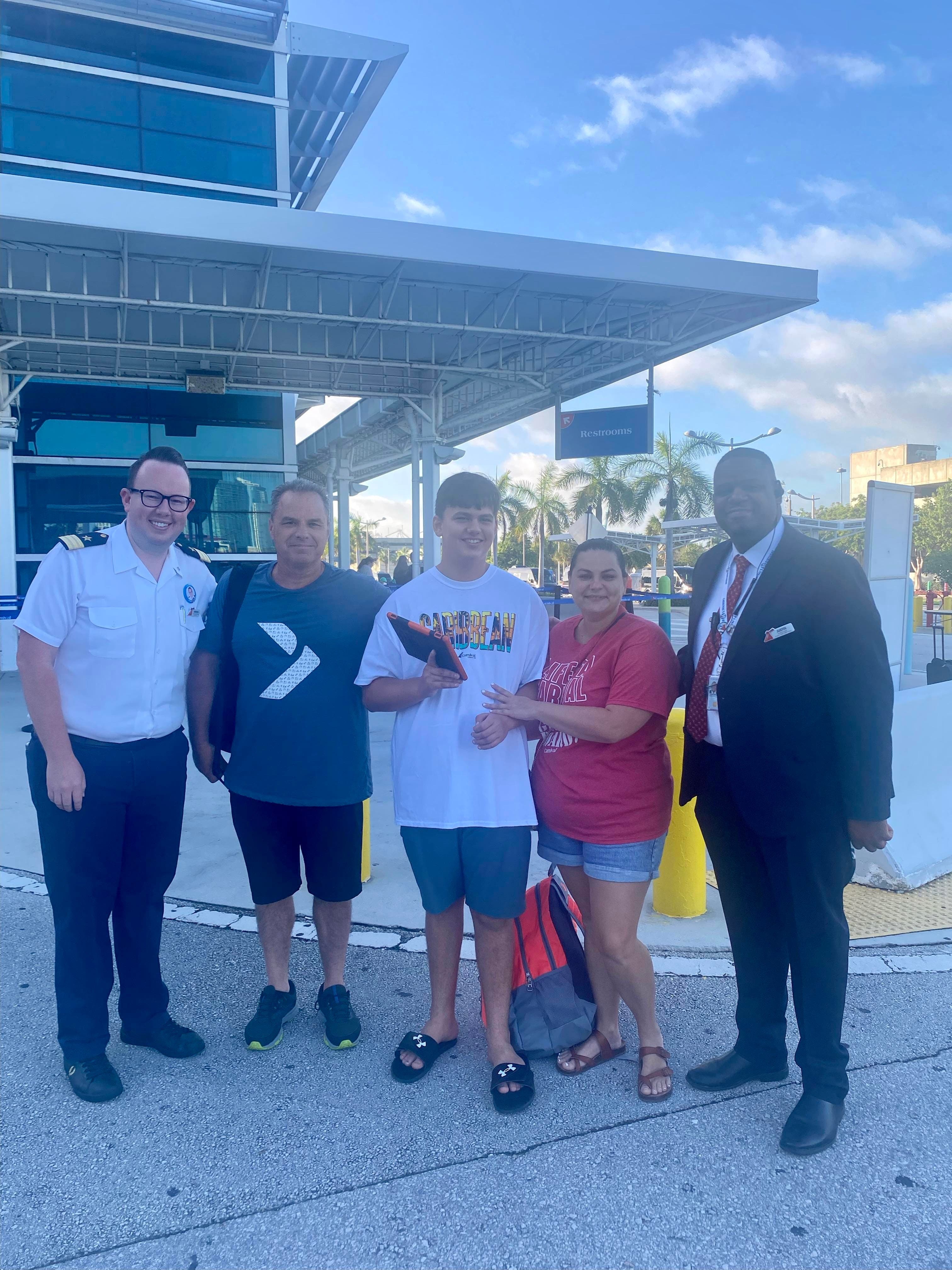
On May 31, Green, Elijah and Bill Barry boarded the Carnival cruiseship in Aruba, which then continued with the remainder of its planned route including stops in Bonaire and Curacao before arriving in Miami on June 5. There, “two amazing women” were waiting to drive them from Miami to New Jersey, with an overnight stay in North Carolina. On Monday, she hugged Pacheco and her younger sons, Brandon, 12, and Bryce, 7, for the first time in more than two weeks.
Even with assurances from Maha and others that the ordeal of getting back to the United States was over, Greene said she didn’t relax until they got to Miami.
“Even on the ship, all of these irrational fears came up,” she said. “As soon as we docked in Miami and I saw we were on U.S. soil I was able to breathe.”
And she’s grateful to everyone who stepped in to help.
“These are strangers who didn’t have to do anything,” Greene said. “Nobody had to do any of this. They were strangers who heard our story and they wanted to help.”
A new direction
Greene said that for the most part, the family has stayed to itself, because of Elijah’s autism. People can be cruel, as was demonstrated on social media during the family’s struggle, she noted.
There were criticisms of every decision the family had made, including that of taking Elijah to Aruba in the first place, but Greene said nothing in the past had remotely suggested a meltdown like what happened on the plane.
“I’m not one to risk anything with him. We had prepared, and he had flown before,” she said. “He deserves to go on vacation like everyone else. He deserves to have experiences like other children.”
The flip side, however, were the comments from other parents of children on the spectrum who had found themselves in similar situations, and were forced to drive home from Florida and California. Hearing their stories made her realize how often people find themselves in a situation where the answers are lacking.
So she’s hoping to help improve policies for how the airline will consider allowing someone to travel after an outburst like Elijah’s, especially in a situation where driving simply isn’t an option.
“It would be a different situation if there was an ongoing problem, but this happened just because of his autism,” Greene said. “When you’re scared of something, you scared. Everyone is scared of something.”
A key to changing the responses, she believes, is for people to have more empathy.
Caring for a child on the spectrum, particularly someone like Elijah who is significantly impacted, “is just all-encompassing,” Greene said. “He needs 24-hour care, even when he’s sleeping. It is very draining.”
“You don’t have to live it to have empathy for people,” she said.
Awareness is how things will change, she said. “The more awareness that’s out there the better.”
“For a long time we just stayed to ourselves,” Greene said. “After seeing this, how strangers stepped in to help, I’m going to do whatever I can do.”
“Things need to change,” she said.
Get more local news delivered straight to your inbox. Sign up for free Patch newsletters and alerts.