Health & Fitness
More New Jerseyans Get These Cancers Than Any Other
A study from the Center for Disease Control and Prevention says New Jerseyans are more likely to get these forms of cancer than any other.


The cancer rate is dropping in New Jersey. But one form of it continues to be on the rise. And it's prompted health advocates to call on the state's residents to be better prepared to prevent the disturbing trend.
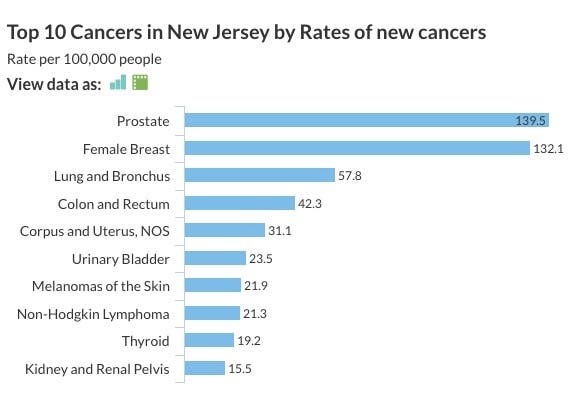
Breast cancer is far and away the most common form of cancer that strikes New Jerseyans, according a newly released report from the Centers for Disease Control and Prevention. The disease struck 134.3 out of 100,000 people in 2014, the most recent year available, according to the CDC.
The next highest is prostate cancer, which struck 115.7 people. Then it's a big drop off until the next highest, lung cancer, which impacted 55.4 people.
Find out what's happening in Toms Riverfor free with the latest updates from Patch.
Here is the complete CDC list for 2014:

The graphic shows that breast cancer maintained its high rate during 2010-2014 while others, such as prostate, dropped. Here are the 2010-2014 rates:
Find out what's happening in Toms Riverfor free with the latest updates from Patch.
While the state continues to have among the highest cancer rates in the nation, New Jersey dropped from fifth place to seventh among states in cancer rates in 2014, according to the most recently available cancer statistics from the CDC. The state's overall cancer rate dropped by 0.1 per 100,000 people from 2010 to 2014.
Breast cancer, however, was one of the few forms of cancer that increased, rising by 0.3 per 100,000 during the same time period, according to the CDC.
Local officials say they continue to spread awareness about the importance of getting checkups and screenings to prevent breast cancer from spreading. Deborah Lue, a doctor at Robert Wood Johnson University Hospital in Somerset, emhasizes the importance of early detection and lifestyle modifications, such as diet and exercise.
“On the national level, the number of deaths attributed to breast cancer continues to decrease. However, in Somerset County, the incidence rate for female breast cancer is higher than on the national level,” said Freeholder Patricia Walsh.
"We all probably know of someone who has had breast cancer and most likely will know someone in the future. That is why we need to spread the word that early detection saves lives and that resources are available despite insurance status or ability to pay. No family should suffer the loss of a loved one because they waited too long to be screened.”
Last month, Drumthwacket, the governor’s Official Residence in Princeton, went "Go Pink" on Friday, October 20 to mark Breast Cancer Awareness Month.
“Breast Cancer Awareness Month provides us with an opportunity to shine a light on the critical role early detection, education and support services play in empowering women about their overallbreast health," said First Lady Mary Pat Christie. “Being diagnosed with breast cancer can be overwhelming. So, it’s important that we offer strength, encouragement and hope to patients and survivors throughout their breast cancer journey.”
The New Jersey Cancer Education and Early Detection Program provides screenings, cancer outreach, education and follow-up services to the uninsured, as well as research and collaboration being done in medical facilities throughout the state. For more information about NJCEED, visit www.nj.gov/health/ces/public/resources/njceed.shtml.
Patch file photo
Get more local news delivered straight to your inbox. Sign up for free Patch newsletters and alerts.