Health & Fitness
N.J. Opioid-Related Hospital Visits Among Highest In America: Report
New Jersey consistently ranks as having among the highest opioid-related hospital visits, according to a new report.



New Jersey consistently ranks as having among the highest opioid-related hospital visits across most patient sex and age groups, according to a new report released Tuesday.
The data came from a report showing that, nationally, hospitalization involving opioids saw a dramatic increase between 2005 and 2014. The increases involved both inpatient stays and opioid-related emergency department visits, according to new data released Tuesday by the Healthcare Cost and Utilization Project.
New Jersey ranks as having among the highest opioid-related inpatient stays across nearly all patient sex and age groups. For opioid-related emergency department visits, New Jersey also ranked as having among the highest rates among males and in the 45-64 age group.
Find out what's happening in Toms Riverfor free with the latest updates from Patch.
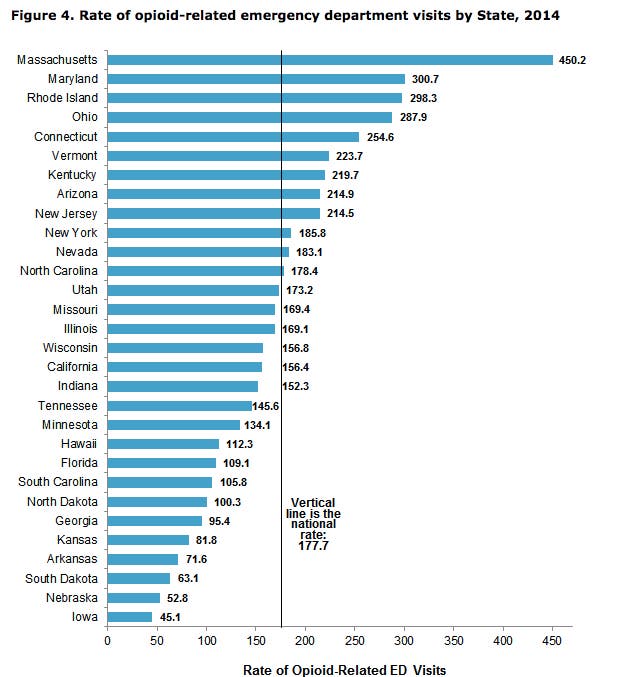
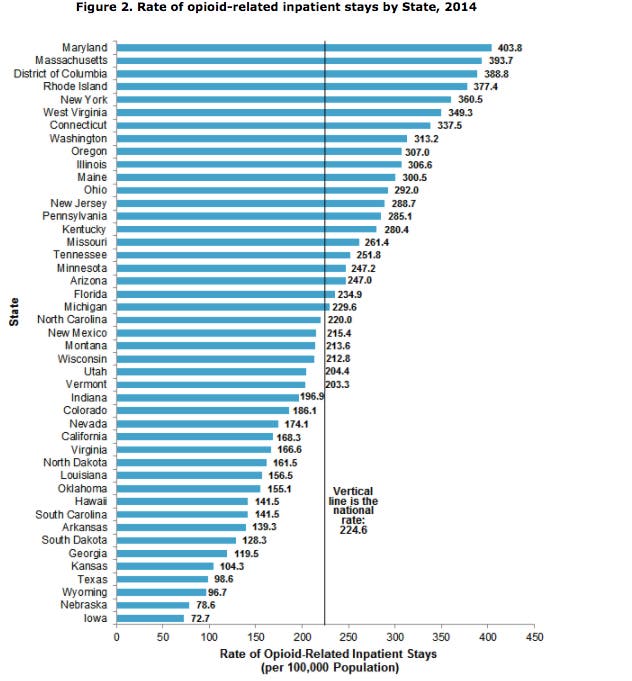
In all states in 2014, patients aged 25-44 had the highest opioid-related emergency department visits.
Opioid-related stays and emergency department visits are identified as all-listed diagnoses and included events associated with prescription opioids or illicit opioids like heroin.
Find out what's happening in Toms Riverfor free with the latest updates from Patch.
The data presents information for the patient, sex and age groups with the highest opioid-related inpatient stay rates for 44 states and the District of Columbia for 2014. Patient sex and age groups with the highest opioid-related emergency department and visit rates are presented for 30 states that provided data in 2014.
Among men, New Jersey's emergency-department visit rate was 265.4 per 100,000 people, which ranked sixth nationally. In the 45-64 age category, the state's rate was 250 per 100,000 people, which ranked fifth nationally.
Nationally, findings from the data show that between 2005 and 2014, opioid-related inpatient stays increased faster for females than males, but by 2014, the rate was virtually the same for both. In terms of emergency department visits, the increase in opioid-related visits was similar for males and females, and males consistently had a higher visit rate than females. For both sexes, the opioid-related emergency department visit rate increased faster than the inpatient stay rate.
Females in nearly three-fourths of the states had a higher rate of opioid-related inpatient states, while males had a higher rate of emergency department visits.
Opioid-related inpatient stays were highest among patients aged 25-44 and 45-64, while the highest rate of emergency department visits was in the age group of 25-44. For all age groups, except those aged 1-24 and 25-44, the rate of opioid-related inpatient stays was consistently higher than the rate of opioid-related emergency department visits. For all age groups, the rate of opioid-related emergency visits increased faster than the rate of opioid-related inpatient stays.
Photo by John Moore/Getty Images
Get more local news delivered straight to your inbox. Sign up for free Patch newsletters and alerts.