Politics & Government
N.J. Has 609 Deficient, Possibly Unsafe Bridges, Study Says
That bridge you drive over frequently may have some serious problems, a new study says. See list below.


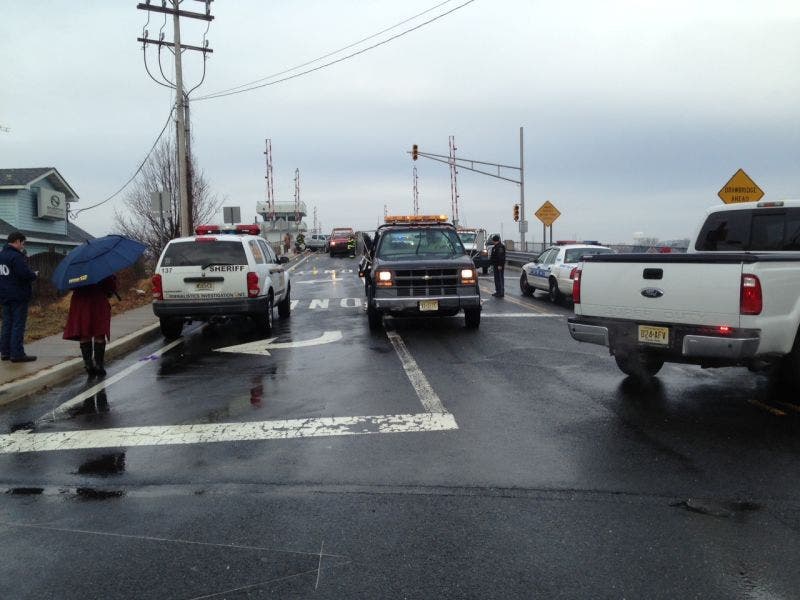
You may not realize it, but that bridge you just drove over may not have been in good shape, let alone safe. That's because many of the bridges in the United States - and 9 percent of the spans in New Jersey - are in serious need of repair or modernization. (see list below)
An analysis of the U.S. Department of Transportation’s recently released 2016 National Bridge Inventory data finds cars, trucks and school buses cross the nation’s 55,710 structurally compromised bridges 185 million times daily.
State transportation departments, in turn, have identified 13,000 interstate bridges that need replacement, widening or major reconstruction. Twenty-five of the most heavily traveled structurally deficient bridges in New Jersey were identified in the study from the American Road & Transportation Builders Association.
Find out what's happening in Toms Riverfor free with the latest updates from Patch.
The group said that the vast number of the New Jersey bridges listed as structurally deficient may not be imminently unsafe, but ARTBA believes the public should be notified about the condition of each span and that they need repair.
According to the report:
Find out what's happening in Toms Riverfor free with the latest updates from Patch.
- Of the 6,730 bridges in New Jersey, 609, or 9 percent, are classified as structurally deficient and possibly unsafe. This means one or more of the key bridge elements, such as the deck, superstructure or substructure, is considered to be in "poor" or worse condition.
- 1,684 bridges, or 25 percent, are classified as functionally obsolete. This means the bridge does not meet design standards in line with current practice.
- 156 bridges are posted for load, which may restrict the size and weight of vehicles crossing the structure.
- Federal investment in New Jersey has supported $3.3 billion for capital improvements on 661 bridges between 2005 and 2014.2
- Over the past 10 years, 471 new bridges have been constructed in the state; 287 have undergone major reconstruction.
- The state has identified needed repairs on 2,250 bridges, which the state estimates will cost $7 billion.
And the structurally deficient bridges are not all the ones that everybody knows about, like the Pulaski Skyway, which has been undergoing a several-year repair and replacement project.
Here is the list of the 25 structurally deficient bridges that are most heavily traveled, including the county, the year it opened, the daily crosses and the location:
- Union: 1953, 197,767, Urban freeway/expressway. GSP NB & SB over Mill Road
- Essex: 1954, 184,240, Urban freeway/expressway. Garden St Parkway over Third River
- Essex: 1954, 179,900, Urban freeway/expressway. GSP over CR509 CR506 Second River
- Bergen: 1931, 156,060, Urban freeway/expressway. NJ 4 over Hackensack Rivr & Road
- Passaic: 1969, 155,035, Urban Interstate. I-80 over Passaic River
- Hudson: 1939, 151,126, Urban freeway/expressway. NJ 495 over US1&9 Paterson Plank Rd
- Passaic: 1939, 134,578, Urban other principal arterial. US 46 over Lower Notch Road
- Bergen: 1932, 121,740, Urban other principal arterial. NJ 17 over NYS & W RR Spur
- Bergen: 1931, 121,740, Urban other principal arterial. NJ 17 over NYS & W RR
- Hudson: 1929, 111,000, Urban freeway/expressway. NJ Rt 3 over Northern Sec. & Ramp A
- Hunterdon: 1941, 110,375, Urban Interstate. I-78 over Beaver Brook
- Bergen: 1931, 108,370, Urban freeway/expressway. NJ 4 over Palsd Av Wndsr Rd & CSX RR
- Bergen: 1931, 106,487, Urban other principal arterial. Route NJ 17 over Central Avenue
- Middlesex: 1960, 105,019, Urban other principal arterial .Route NJ 18 over Route US 1
- Hudson: 1951, 104,377, Urban freeway/expressway. NJ495EB and ramps over NJ 3 EB & US 1 Ramp
- Bergen: 1931, 104,269, Urban freeway/expressway. NJ 4 over Teaneck Road
- Essex: 1954, 94,300, Urban freeway/expressway. Garden St Pkwy NB over Third River
- Essex: 1952, 93,730, Urban Interstate. I-280 over Martin Luther King Blvd.
- Bergen: 1931, 92,000, Urban freeway/expressway. NJ 4 over Grand Ave. (NJ 93 CR501)
- Essex: 1950, 91,880, Urban Interstate. I280 over NJ 21 & Ramps C&D
- Middlesex: 1970, 89,097, Urban freeway/expressway. Route NJ 440 over GSP & Route US 9
- Essex: 1954, 88,943, Urban freeway/expressway. Garden St Pkwy SB over Third River
- Morris: 1970, 87,838, Urban Interstate. Rt I-287 over Morris &Erie RR
- Bergen: 1934, 84,150, Urban freeway/expressway. NJ 3 EB over Hackensackiver R & Meadwlnd Pkw
- Union: 1967, 82,834, Urban Interstate. I78 WB over Quarry Rd.
The inventory of structurally deficient bridges nationally has declined 0.5 percent since the 2015 report. At that pace, it would take more than two decades to replace or repair all of them, according to ARTBA Chief Economist Alison Premo Black, who conducted the analysis.
Black says the data shows 28 percent of bridges (173,919) are more than 50 years old and have never had any major reconstruction work in that time.
“America’s highway network is woefully underperforming. It is outdated, overused, underfunded and in desperate need of modernization,” Black said in a press release. “State and local transportation departments haven’t been provided the resources to keep pace with the nation’s bridge needs.”
To help ensure public safety, bridge decks and support structures are regularly inspected for deterioration and remedial action, according to the report. They are rated on a scale of zero to nine — with nine meaning the bridge is in “excellent” condition. A bridge is classified as structurally deficient and in need of repair if its overall rating is four or below.
While these bridges may not be imminently unsafe, they are in need of attention.
Other key findings in the ARTBA analysis:
- Iowa (4,968), Pennsylvania (4,506), Oklahoma (3,460), Missouri (3,195), Nebraska (2,361), Illinois (2,243), Kansas (2,151), Mississippi (2,098), Ohio (1,942) and New York (1,928) have the most structurally deficient bridges. The District of Columbia (9), Nevada (31), Delaware (43), Hawaii (64) and Utah (95) have the least.
Established in 1902, Washington, D.C.-based ARTBA analyzes the U.S. transportation design and construction industry before Congress, the White House, federal agencies, news media and the general public.
Patch file photo
Get more local news delivered straight to your inbox. Sign up for free Patch newsletters and alerts.