Health & Fitness
Teen Athletes - Opioid Abuse & Heart Health
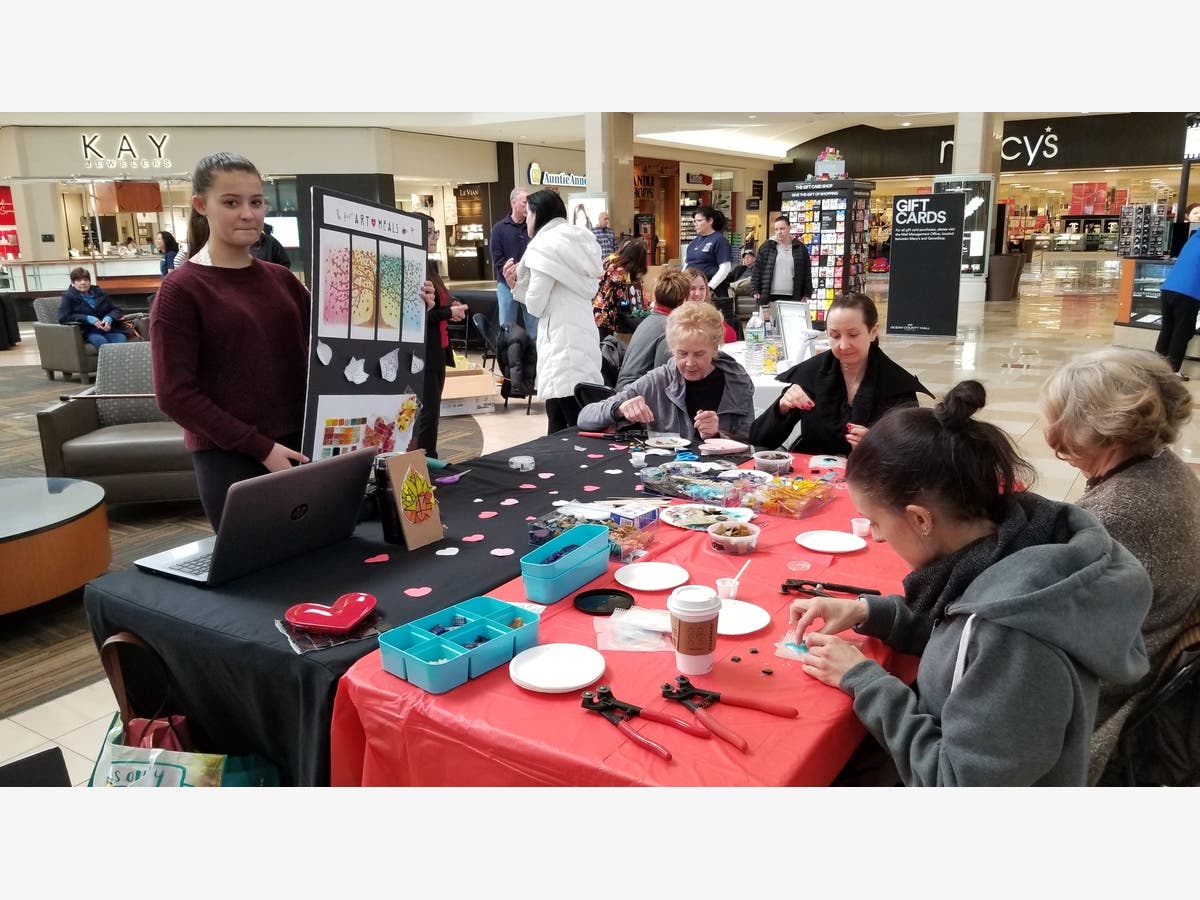
TR Art Heals - Holds Another Glass Mosaic Leaf Making at RWJ Barnabas Health System Dancing for Heart Health Event 2-2-19



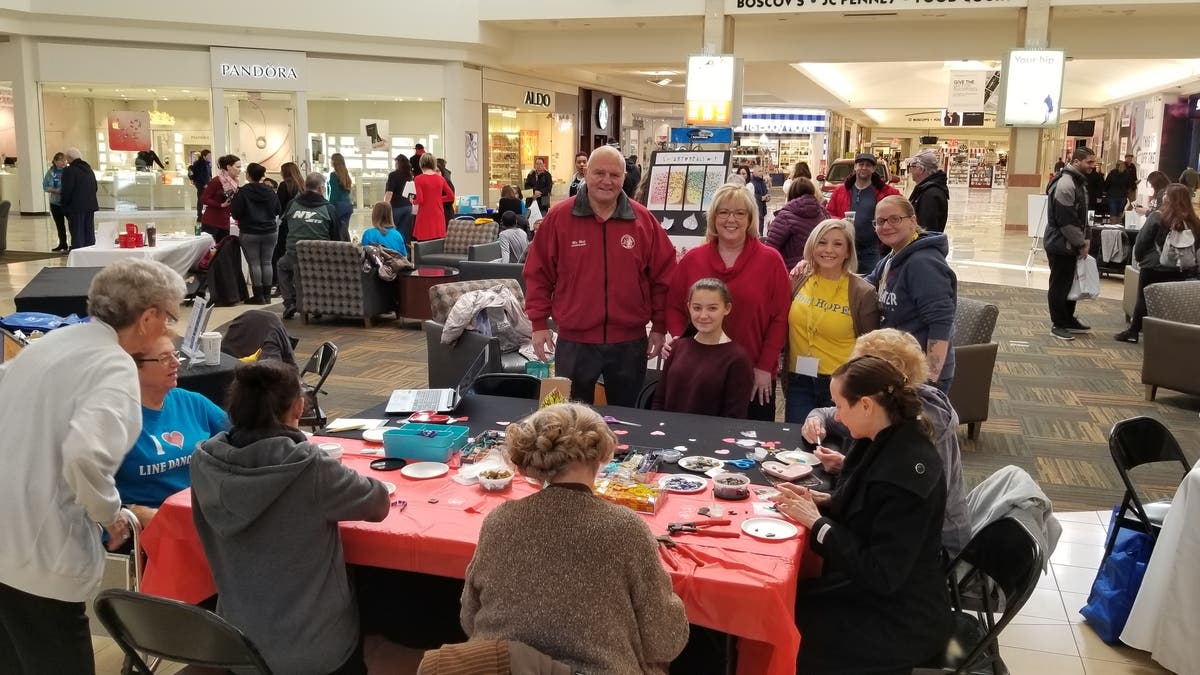
(Inset Councilman Mo Hill, Teri Kubiel - RWJBarnabas Health, Heather & Dara -Hope Sheds Light, and Sophie Regenye front center)
Toms River ART HEALS Community Mural for Healing and Recovery participated in the RWJ Barnabas Dancing for Heart Health event on Saturday, February 2, 2019 where Sophie Regenye along with Hope Sheds Light set up a table for community members to partake in learning how to make their own glass mosaic leaf, which will be included in the final community mural for healing and recovery. The unveiling in Downtown Toms River at Cafe Enigma will take place May 2019 during Mental Health Awareness Month.
Find out what's happening in Toms Riverfor free with the latest updates from Patch.
Thank You to Our Generous Giving Tree Donors:
The Hecht Family Foundation, Hope Sheds Light, Inc., Bisque Imports, & Rainbow Glass Art
And Our Honorary donors
Kubiel Family & The LeBright Family
Teen Athletes - Opioid Abuse & Heart Health
Partnership for a Drug Free New Jersey provides New Jersey with statewide anti-substance use/misuse/abuse advocacy and prevention public service campaigns, which New Jersey residents can see on trains, buses, billboards, radio, television, in print and online. Through its coalition of professionals from the prevention, communications, corporate and government communities, the Partnership’s mission is to reduce substance use and misuse in New Jersey. Some statistics Drug Free New Jersey shares on their website includes:
Find out what's happening in Toms Riverfor free with the latest updates from Patch.
- Enough painkillers are prescribed to medicate every American around-the-clock for a month. #KnockOutOpioidAbuse
- Male youth athletes are twice as likely to be prescribed opioid painkillers and four times more likely to abuse them. #KnockOutOpioidAbuse
- Nearly half of young people who inject heroin, reported abusing prescription opioids before starting to use heroin. #KnockOutOpioidAbuse
- After a tooth extraction, 61% of 14-17 year olds are prescribed opioids. #KnockOutOpioidAbuse
- The percentage of Americans 50 or older who misused opioids more than doubled from 2004 to 2014. #KnockOutOpioidAbuse
______________________________
- On average, 115 Americans die every day from an opioid overdose.3
- Up to 1 out of 4 people receiving long-term opioid therapy in a primary care setting struggles with addiction.1
- People who are addicted to prescription opioids are 40X more likely to be addicted to heroin.4
- Approximately 3 out of 4 new heroin users report having abused prescription opioids in the past.2
There are 300,000 high school student-athletes in NJ and the Partnership for a Drug Free NJ’s (PDFNJ) study found that less than 50% of their parents feel they are knowledgeable about heroin4. Doctor prescribed opioid use before high school graduation increases the risk of future opioid misuse after high school by 33%5.
___________________________
https://coachad.com/articles/which-sports-cause-the-most-injuries-to-high-school-athletes/
With 1,036,842 participants, 11-player football remains the No. 1 participatory sport for boys in high school by a large margin. Outdoor track and field is No. 2 with 600,097 participants, followed by basketball (551,373), baseball (487,097), soccer (456,362), cross country (270,095), wrestling (245,564), tennis (158,151), golf (144,024) and swimming/diving (138,935).
Average Number of Sports Injuries Each Year Between 2002-14
20. Bowling: An average of 764 injuries each year.
19. Rugby: 1,214.
18. Field hockey: 1,825.
17. Tennis: 1,915.
16. Skiing: 4,752.
15. Ice skating: 4,999.
14. Horseback riding: 5,581.
13. Lacrosse: 5,830.
12. Track and field: 8,194.
11. Weight lifting: 8,921.
10. Snowboarding: 9,608.
9. Ice hockey: 12,336.
8. Volleyball: 14,304.
7. Softball: 18,119.
6. Wrestling/boxing/martial arts: 18,174.
5. Gymnastics/cheerleading/dance: 22,671.
4. Baseball: 27,208.
3. Soccer: 45,475.
2. Football: 118,886.
1. Basketball: 119,589.
According to the National Council on Alcoholism and Drug Dependence, 12 percent of male athletes and 8 percent of female athletes had used prescription opioids in the 12-month period studied. 3 In the early stages of abuse, the athlete may exhibit unprovoked nausea and/or vomiting. However, as he or she develops a tolerance to the drug, those signs will diminish. Constipation is not uncommon but may not be reported. One of the most significant indications of a possible opioid addiction is an athlete’s decrease in academic or athletic performance, or a lack of interest in his or her sport. Please see links below for Parents and Coaches.
TOP Toolkit - Tackling Opioids through Prevention for Athletes
Can Opioids Cause Heart Problems?
According to Richard N. Fogoros, MD, “The potential for cardiovascular problems is yet another reason that both doctors and patients should be wary of using these drugs for chronic pain control.” He discusses the cardiac complexities in an article found on https://www.verywellhealth.com/can-opioids-cause-heart-problems-4134144?print.
He lists several ways the cardiac system is impacted by chronic opioid use and abuse, including:
Opioid bradycardia - Vasodilation - Ventricular tachycardia - Atrial fibrillation - Infectious endocarditis - Opioid withdrawal: Opioid withdrawal can affect the cardiovascular system….if rapid opioid withdrawal is induced by giving an opioid reversal drug such as naloxone (Narcan) (which is a life-saving procedure if an overdose has occurred), a sudden surge in adrenaline may produce significant cardiovascular instability. Cardiovascular death: One theory is that chronic opioid use may cause sleep-disordered breathing, a condition which is associated with cardiac arrhythmias, heart attacks, and sudden death.
Sources:
1. turnthetiderx.org/for-patients/#; drugabuse.gov/drugs-abuse/opioids
Sophie is working on her GSJS Girl Scout Cadette Silver Award project, which focuses on Hurricane Sandy victims at the Jersey Shore, particularly in Ocean County; and regarding the emotional impact it has had on our communities with the increase in addiction and mental health since 2012, specifically the Opioid Overdose epidemic.
TR "ART HEALS" Girl Scout Cadette Silver Award project aims to:
1) Raise awareness of the impact of Hurricane Sandy on our communities in terms of mental health and addiction.
2) Raise awareness of the opioid/opiate overdose epidemic
3) Decrease Stigma attached to mental health and addiction
4) Educate the public on facts related to substance abuse
5) Educate the public on the many forms of artistic expression that can be very healing. Art Therapy is often incorporated into treatment programs.
6) Install a community mural that will not only draw the public to the Downtown Toms River area for business but to inspire others to get involved and make their community a better place in some way.
TR Art Heals Facebook page: (https://www.facebook.com/pg/TRArtHeals/posts/)
Hope Sheds Light, Inc. is the sponsoring agency for Toms River ART HEALS. The mission of HOPE Sheds Light is to raise awareness and educate individuals, families and the community about the impact of addiction by having the courage to share personal experiences and offer strength, wisdom, hope and resources that lead to positive community change and long-term recovery.
Please contact Pam Capaci at Hope Sheds Light for more info. or to make a donation please Phone: Phone 732-244-0783 or Email: pam@hopeshedslight.org Address: 253 Chestnut Street, Toms River, NJ 08753 http://www.hopeshedslight.org
(501C3) Hope Sheds Light is now accepting monetary donations on behalf of Toms River ART HEALS Community Mural for Healing and Recovery.