Community Corner
The Unfortunate History of the Klan in Ocean County
Hate group publicly burned crosses, openly paraded in 1920s — and some buildings remain as converted township property


Editor's note: Journalist Don Bennett conducted the following research as part of a recent county event, "What Would Martin Say?," Ocean County Human Relation Commission's forum, explaining the local journey toward civil rights past and present and the unfortunate hurdles that stood in the way.
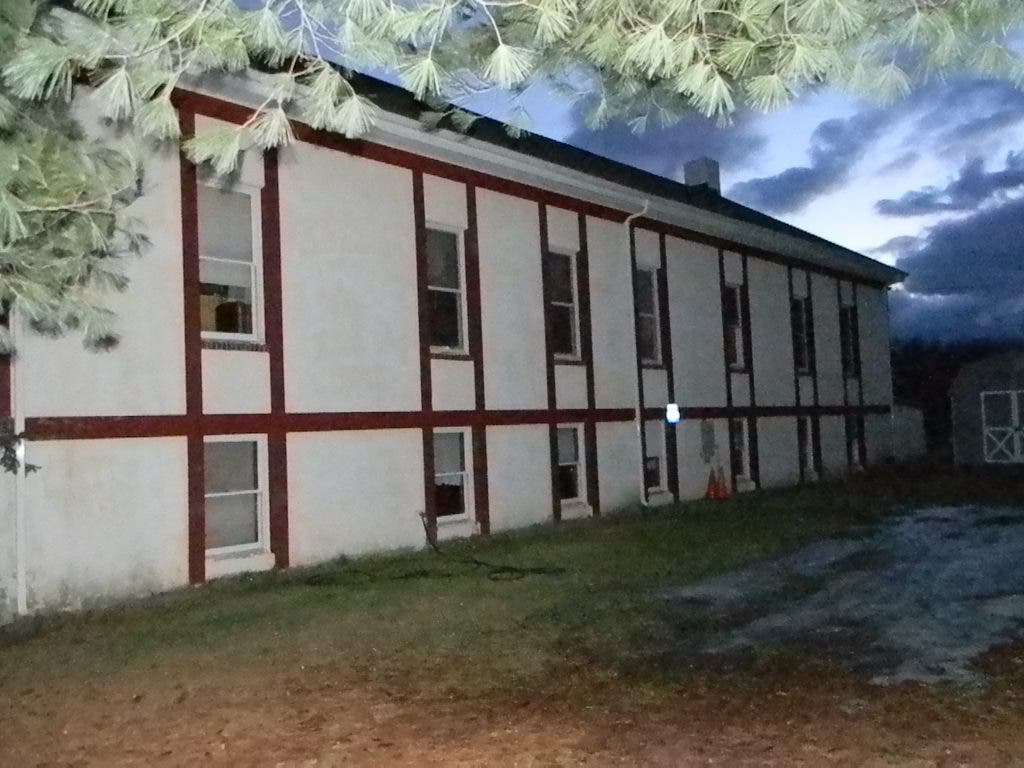
The windows were broken, the building in disrepair, but Dover Township officials were determined to restore it so it could be a recreation building in the center of the new in Pleasant Plains in 1968.
Things had not always been pleasant on the plains. For one thing, the building about to get a facelift was built about 40 years earlier as a meeting hall for the Ku Klux Klan. In New Jersey? In Ocean County? Right here in River City? Yes, the Klan was once a power in many communities around Barnegat Bay.
Find out what's happening in Toms Riverfor free with the latest updates from Patch.
The meeting hall in Pleasant Plains was not the only one built by the Klan. So was one that became the municipal building in Waretown. A third sheltered the Klansmen and women off Route 9 in Parkertown.
The building Dover Township was about to spend $50,000 to turn into a recreation center was built in 1926 by Klansmen from Dover and Lakewood townships.
Find out what's happening in Toms Riverfor free with the latest updates from Patch.
That was three years after the Klan legally organized in New Jersey. Soon it claimed 2,000 members in Ocean County, population 22,155.
Hooded members of the invisible empire took part in parades and public events, attended services at protestant churches, and burned crosses all across the county.
The ink was barely dry on the organizing papers when three carloads of Klansmen burned a church at the railroad station in Lakewood on Feb. 16, 1923.
In March, Grand Titan A. H. Bell of Bloomfield looked out at hooded members of the Klan as he spoke at the Lakewood Baptist Church. That was followed by a Klan appearance at the Central Methodist-Episcopal Church in Point Pleasant in May, and a gathering at Clark’s Landing there where a cross 80 feet high was burned. It was reported that 5,000 people attended that gathering.
On June 17, 1923, members of the Klan got into their robes at Lakewood High School and marched to the First Baptist Church, escorted by state and local police.
The Fourth of July was being celebrated in Huddy Park in Toms River. Hundreds of people gathered there. The Klan burned a 10-foot cross west of the Main Street bridge as its contribution to the celebration.
Klansmen gathered at churches in Osbornville in Brick, Harmony in Jackson, and the Union Chapel on the beach that July. The Laurelton Baptist Church in Brick was host to 33 members of the Klan in August. Rumors that the Klan would appear in Toms River about the same time brought hundreds of people who were disappointed when the Klan failed to appear.
Members of the Klan visited the Bay Head Methodist-Episcopal Church in August of 1923, although there were reports an Ocean County grand jury was probing the organization.
Bell, the leader of the Klan in New Jersey, claimed the group was a secret protestant society similar to those for other faiths, but the hatred of blacks and Jews was difficult to sugarcoat.
A reported 2,000 people turned out for an August Klan gathering at the Toms River Methodist Church, most of them outside in the driving rain. The women’s auxiliary was there in force. The church, which stood at Hooper Avenue and Washington Street, is gone now, its education building converted into courtrooms for state courts.
In December the Klan rallied at Gulick Field in downtown Toms River, before marching through the streets. An estimated 500 people attended.
The Klan and the Ladies of the Invisible Empire appeared at the Silverton Methodist Church in May of 1924. That was about time politicians from both major parties were working to get the Klan’s support in bids for sheriff and the state assembly. The group split its backing, anxious to flex its political muscle for both sides to see.
When the new Bayville School was dedicated on Feb. 22, 1927, 200 members of the Klan were there to see the group’s leader present a Bible and an American flag.
The group put forth an odd political ideology to attract members — racism on one side, women's rights on the other — and catered to the puritanical by opposing alcohol. Klansmen waved the flag grandly and thumped on the Bible. They supported a woman’s right to vote during the suffragists. They fanned anger against the post-war flood of immigrants and worsening economic times. Bootleggers and those who operated speakeasies were also their targets, although most enjoyed the protection of the county’s political leaders.
When the women of the Klan decided to have a state convention, it was held at Redmen’s Hall in Point Pleasant Beach. Down the beach a cross was burned at St. Catherine’s Roman Catholic Church in Seaside Park.
The onset of the Great Depression took a lot of steam out of the Klan, thinning its ranks, but not erasing it from the county.
On Aug. 11, 1979, David Duke of Louisiana attended a Klan rally in Barnegat and announced he would be a candidate for President. It was hosted by a misguided Aaron Morrison, 17, at his parent’s home, although his parents abhorred the Klan.
My most vivid memory of that day was the anger in the face of Joseph Blackwell, a black man whose family felt the weight of discrimination that encircled them and other Barnegat blacks who lived along Gunning River and Rose Hill roads for decades. He was there to protest against the Klan, as were many others. Police kept him from the Klansmen, but could not conceal his rage.
Among the ironies of the Klan at Pleasant Plains was the near encirclement of its meeting hall by hard working and successful egg farmers, mostly Jews, many of them fleeing Hitler’s hatred in Europe.