Politics & Government
Toms River Avoids DOJ Lawsuit, Amends Houses Of Worship Zoning
Council members approved a consent agreement that will potentially save the township millions in legal fees and fines and risky litigation.


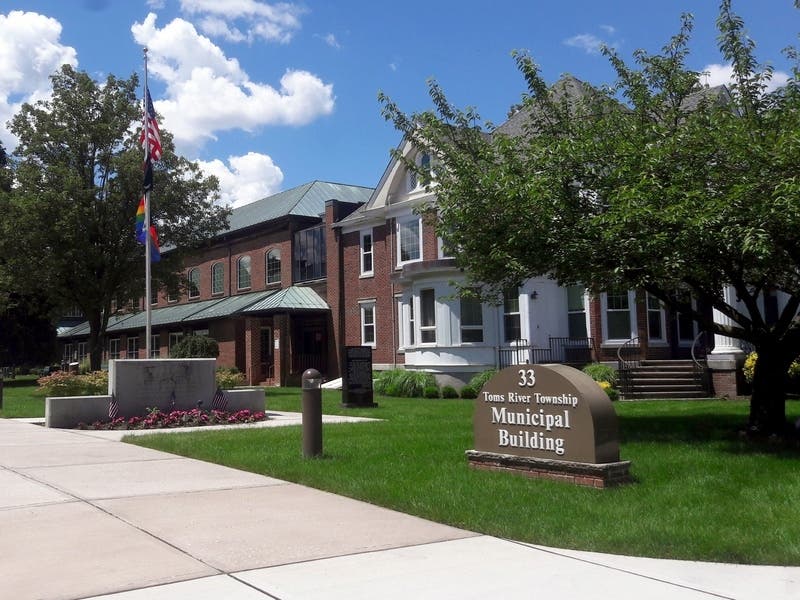
TOMS RIVER, NJ — The Township of Toms River has reached a consent order agreement with the U.S. Department of Justice that will potentially save the township millions of dollars in legal fees and fines and that brings it back into federal compliance with zoning regulations having to do with houses of worship after the Township Council approved the measure Tuesday night.
The 6-1 vote to amend township zoning regulations gained the approval of council members with the exception of Ward 2 Councilman Daniel Rodrick, who claimed Tuesday that federal officials never actually intended to file a lawsuit against the township.
Roderick also said that Anthony Merlino, the township’s assistant attorney, misrepresented the facts of the federal government's intentions and accused Mayor Maurice Hill of lying about the issue and making it political.
Find out what's happening in Toms Riverfor free with the latest updates from Patch.
Rodrick said Tuesday night that Hill has repeatedly attempted to keep him from speaking out in opposition of proposed changes to the zoning ordinances and said the "truth had come out" about Hill's intentions to change township zoning regulations.
However, several other members of the council defended Hill's actions and said the agreement with the Department of Justice protects the well-being of local residents. Officials said during Tuesday's meeting that Toms River residents would have seen tax increases up to between $250-$300 annually had the township not agreed to come into compliance with federal law and faced the lawsuit.
Find out what's happening in Toms Riverfor free with the latest updates from Patch.
Merlino has been involved in negotiations with the Department of Justice since October to stave off the federal lawsuit after the council authorized him to enter the talks in late September. Under the agreement, the township will revert back to pre-2017 zoning ordinances, which were in place before the federal government launched a two-year investigation into the township in 2020.
The township was recently sued by two Orthodox Jewish congregations which claimed that the township and its zoning board "engaged in a orchestrated campaign" to keep the Orthodox Jewish population from growing in Toms River.
In a presentation Tuesday night, Merlino said that the agreement will save the township “potentially millions dollars” and keeps the township out of “lengthy and costly” litigation with the Department of Justice. Merlino cited several recent settlements in New Jersey involving violations of the Religious Land Use And Institutionalized Persons Protection Act which in New Jersey that ranged from $400,000 to $7.75 million.
University of Pennsylvania Law professor and attorney Marci A. Hamilton, who had been consulting with the township in the settlement negotiations, said Tuesday night by entering the agreement with federal officials, the township avoided a lawsuit it would have likely lost.
“The Department of Justice was right — 2017 was not Toms River’s best moment,” Hamilton said of the zoning changes made four years ago. “And the Department of Justice was going to come down with a hammer.”
She added: “Why did we agree (to the settlement)? Because there was an answer that could solve the problem without radically altering the experience of Toms River.”
Hamilton praised both the township and the Department of Justice for their civility in the settlement negotiations. She said that township officials were doing what was in the best interest of local residents while the federal government did not want to come after the township if it could be avoided. Part of the reason for the government's leniency, Hamilton said, is because Toms River has traditionally been repeatedly accommodating to religious liberty.
However, the Toms River Jewish Community Council expressed disappointment in the township's decision. In a statement to the Lakewood Scoop, the TRJCC said the settlement with the Department of Justice re-introduces the inclusion of houses of worship in certain residential zones.
The statement said the proposal "falls short of its stated goal to alleviate the burden on the Orthodox Jewish community's ability to freely exercise its religious freedoms. It said it hopes that the township will continue to meet with the Orthodox Jewish community so to "fully understand the religious needs of the community and "the discriminatory effect" the municipal code has on Orthodox Jewish observance."
The two-year investigation was launched after representatives of the Chabad Jewish Center filed a federal lawsuit in March 2016, alleging that the township’s refusal to allow small weekly prayer services in Rabbi Moshe Gourarie’s home was a civil rights violation that was spurred by a “rising tide of Anti-Semitism” in the community. The lawsuit drew scrutiny from the federal government, which later determined that changes made by the township to its zoning ordinances as they apply to houses of worship. The changes, the government found, violated federal law, which placed Toms River among the list of New Jersey communities that were under investigation for violating RLUIPA guidelines.
The Department of Justice notified township of a pending lawsuit in 2020, which led to the agreement the council approved Tuesday night.
The consent order that came as a result of the settlement, which came after the federal government determined that the township’s current zoning requirement for a 10-acre parcel for a house of worship “unreasonably limits” and “substantially burdens” Orthodox Jews and others that worship in small settings or that “travel on foot to attend houses of worship because of sincerely held religious beliefs and have minimal need for parcels with large acreage."
The consent order changes zoning ordinances in three township areas, where houses of worship will go from not being permitted to being conditionally permitted, Merlino said. The order also restores the two-acre minimum requirement, which existed up until 2017 for houses of worship and allows churches and other houses of worship to operate fully in the rural highway and highway-business areas, Merlino said.
Houses of worship will not be permitted to operate in exclusively residential areas of the township and other areas that are permitted by conservation efforts or is used for industrial purposes.
Hamilton said the changes will not be felt in a way that is discriminatory or that will undermine the neighborhoods of the community.
Changes in Toms River’s zoning laws regarding houses of worship in 2009 when several areas of the township were deemed useable for houses of worship under zoning regulations. Prior to 2009, churches had been conditionally permitted to use the land for worship purposes since 1979, Merlino said, before changes to the regulations reversed 30 years of precedent.
For decades two acres of land had been the precedent for houses of worship before changes to zoning ordinances set to the 10-acre requirement. Those changes, Merlino said, are ultimately what drew the attention of the federal government.
Hill said Tuesday night that the agreement protects the township against future lawsuits and allows township leadership to focus on allowing Toms River to recover from economic hardships caused by the coronavirus pandemic.
After the council voted to approve the consent order, several members took issue with Rodrick’s claims that Hill had schemed to change the zoning laws — even before being elected as Rodrick charged Tuesday night.
“(Hill) goes to work every day to do what’s right for this township,” Ward 4 Councilman Terrance Turnbach said during Tuesday's meeting. "(Hill serves) our township not with a goal to advance (his) own career but with a goal to help our community.”
He added: "To make (this issue) political has the ability to divide this township, to take the unity out of community and why would we do that, Toms River? We’re better than that.”
Get more local news delivered straight to your inbox. Sign up for free Patch newsletters and alerts.