Politics & Government
Toms River Conflict About Legal Issues, Not Religion, Mayor Says
Thomas Kelaher says reference to "invasion" was a recitation of sworn testimony of residents, apologizes that it was found offensive.


TOMS RIVER, NJ -- "This is all a big misunderstanding."
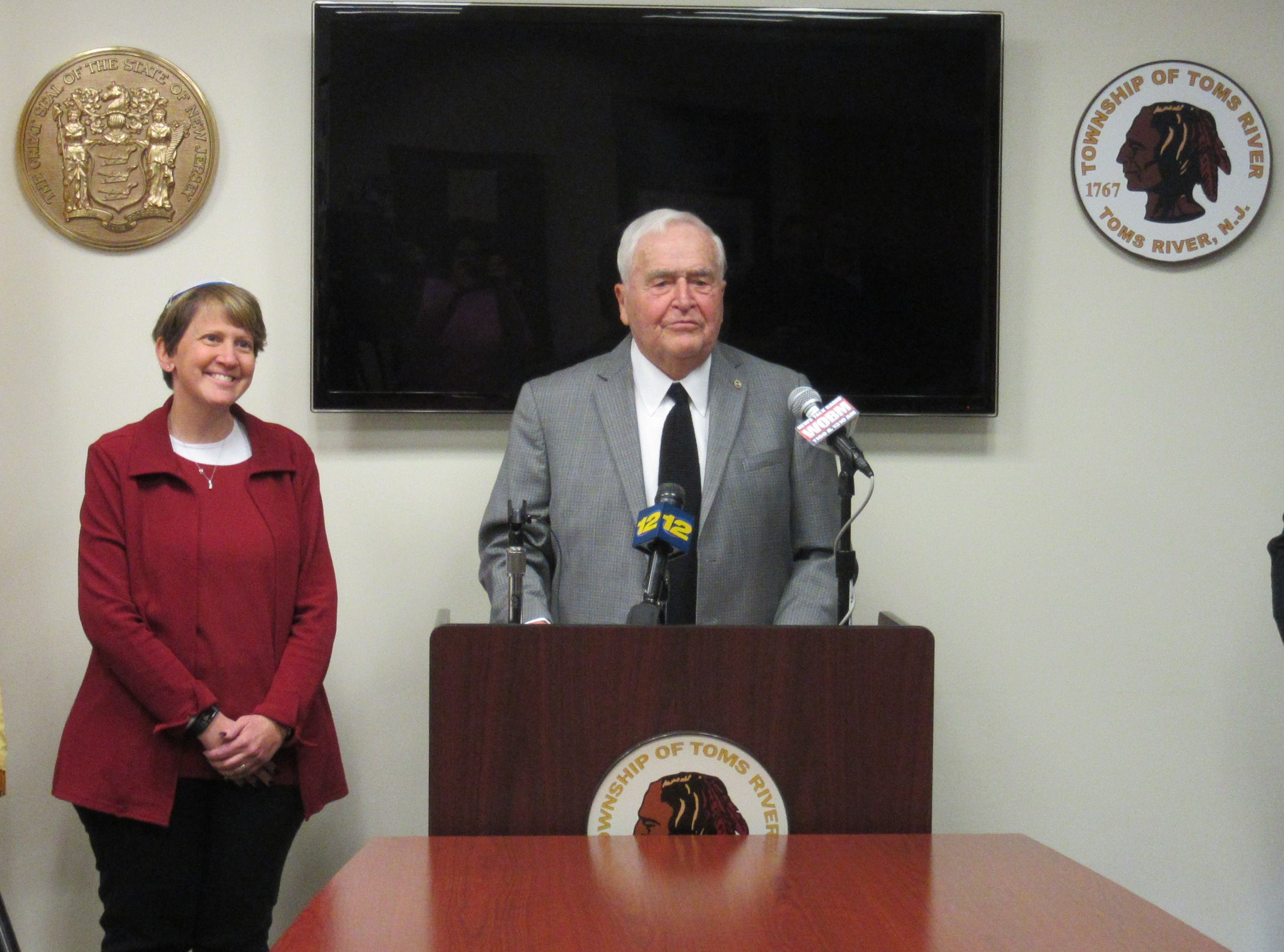
Toms River Mayor Thomas Kelaher said the uproar over a comment he made to Bloomberg about the township's cease-and-desist ordinance was taken out of context, and was just a recitation of sworn testimony given by residents during a hearing leading up to the passage of the town's five-year ban on real estate solicitation.
Kelaher, who spoke for about 20 minutes Wednesday afternoon, addressed remarks by Lakewood Mayor Menashe Miller, who demanded an apology from Kelaher in a letter distributed to the news media. In the letter, Miller takes Kelaher to task, calling the Toms River mayor's statements "pure, unadulterated bigotry" toward the Lakewood Orthodox community.
Find out what's happening in Toms Riverfor free with the latest updates from Patch.
Kelaher's comments appeared in a March 14 Bloomberg article that delved into the recent tensions between Toms River and the Orthodox community in Lakewood that led to Toms River implementing a five-year ban on real estate soliciting in the North Dover section of the township.
That ban takes effect Friday.
Find out what's happening in Toms Riverfor free with the latest updates from Patch.
"It is fundamentally unjust and un-American to compare law abiding U.S. citizens engaging in legal real estate commerce to the hostile entry of a pernicious force," Miller wrote. "To say so, simply due to the fact that the homebuyers are of a different faith and ethnicity than your own, is pure, unadulterated bigotry."
During a news conference at Town Hall, Kelaher said the issue over the real estate conflict has nothing to do with religion.
"This has nothing to do with anti-Semitism," Kelaher said. "It is strictly about the conduct our residents complained about," which included persistent, repeated visits to homes asking residents if they would sell their homes, comments made that implied the neighborhood would be adversely affected and made people fearful.
"The conduct was outrageous," he said. The number of homes on the township's no-knock registry, which was put in place in the 1990s in the wake of the murder of an elderly Toms River woman by a man selling magazines door-to-door, rose from a few hundred at the beginning of 2015 to more than 9,000 as a result of the real estate issues, Kelaher said.
"When someone threatens the stabiity of your home, that's enough to scare anyone." Kelaher said. "This is about folks infringing on folks' privacy."
Kelaher was joined by Police Chief Mitch Little, Rabbi Ellen Wolintz-Fields of Congregation B'nai Israel and Jeremy Grunin, executive director of the Jay and Linda Grunin Foundation, a philanthropic organization that has made it its mission to show the world that Toms River is a desirable place to live and raise a family. Grunin also sits on the board of directors of Congregation B'nai Israel.
Kelaher, who said he did not receive Miller's letter and had not seen it until copies were forwarded to him by members of the media, said he wished Miller had reached out to him directly.
"I wish he would have picked up the phone and called me," Kelaher said. "It's a misunderstanding. If he's offended I am sorry.
Wolintz-Fields, who noted Congregation B'nai Israel has been part of the Toms River community for 65 years, said the fundamental issue is a lack of education and understanding among both the Orthodox population and among Toms River residents. She said she has spoken with representatives of the Yeshivas, but not the political leaders, and said she believes there is a willingess to work together to resolve the conflict.
She said she has known Kelaher for 10 years and said he has always been supportive of the congregation and its members and not merely for show, she said. "He comes and participates in Tashlich," which is the Jewish custom of throwing bread in water as a symbol of repentance for sin."
"We welcome everyone in this town," Kelaher said, pointing out the recent addition of a mosque and the opening of a Hindu temple.
"This is a legal issue, not a religious issue," Grunin said. "This is not about religion."
Get more local news delivered straight to your inbox. Sign up for free Patch newsletters and alerts.