Neighbor News
Menopause Joint Pain & Bone Loss in Women: 7 Natural Ways to Restore Strength & Mobility
Menopause joint pain & bone loss explained. Discover 7 natural ways to restore strength, mobility & hormonal balance in women.


There was a moment when I realized something in my body had shifted.
It wasn’t dramatic at first. Just a little stiffness when I woke up. A subtle ache in my joints that hadn’t been there before. Movements that once felt effortless suddenly required more awareness.
Find out what's happening in Trentonfor free with the latest updates from Patch.
And then I paused and asked myself:
What is my body trying to tell me?
Find out what's happening in Trentonfor free with the latest updates from Patch.
For many women, this moment happens during perimenopause or menopause—and it often shows up in the form of joint discomfort, stiffness, or concerns about bone health.
But here’s the truth:
These changes are not random. They are physiological. And more importantly—they are addressable.
Understanding What’s Happening in Your Body
As women enter menopause, estrogen levels begin to decline.
Estrogen is not just a reproductive hormone—it plays a critical role in:
- maintaining bone density
- supporting collagen production
- regulating inflammation
When estrogen decreases, the body begins to shift.
Bone breakdown can begin to outpace bone rebuilding.
Collagen production declines, affecting joint cushioning.
Inflammation can increase, leading to stiffness and discomfort.
This is why many women begin to notice:
- joint pain or stiffness
- reduced flexibility
- decreased strength
- increased risk of bone loss
In fact, research shows that women can lose up to 20% of their bone density within the first 5–7 years after menopause, and over 60% report joint pain during this transition.
The Body Is Still Rebuilding—But It Needs Support
One of the most important things to understand is this:
Your body is not breaking down—it is responding to change.
Bone is living tissue. It is constantly being remodeled through two types of cells:
- osteoblasts (which build bone)
- osteoclasts (which break down bone)
Joint tissue also relies on:
- collagen
- hydration
- nutrient delivery
With the right support, your body can continue to repair, rebuild, and strengthen itself.
7 Natural Ways to Support Bone & Joint Health
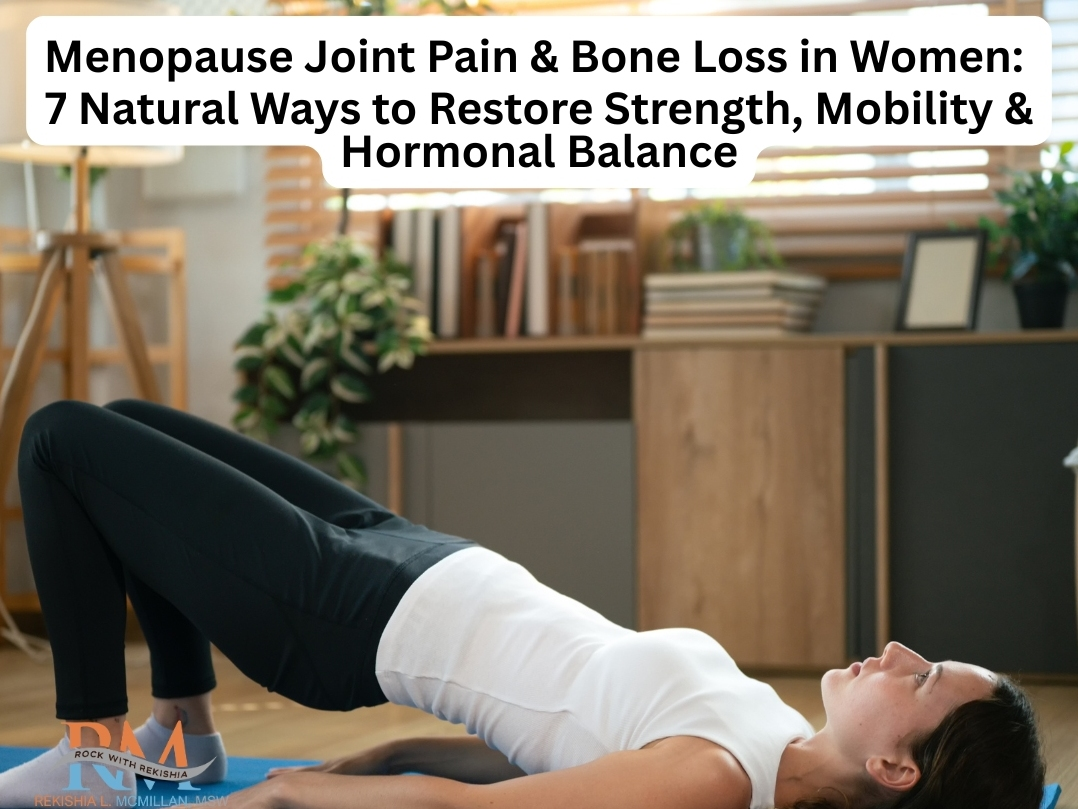
1. Movement & Strength Training
Movement is one of the most powerful tools for bone health.
Weight-bearing and resistance exercises stimulate bone-building cells and improve circulation to joints.
Even simple, consistent movement can help maintain strength and mobility.
2. Nourishing with Bone Broth
Bone broth provides:
- collagen for joint support
- amino acids for tissue repair
- minerals for bone strength
Incorporating it regularly can help support both bone and connective tissue health.
3. Calcium-Rich Foods
Calcium is essential for bone structure—but it must be paired with the right co-factors to be effective.
Focus on foods like:
- leafy greens
- almonds
- seeds
- sardines (with bones)
These provide bio-available nutrients your body can actually use.
4. Vitamin D & Proper Absorption
Vitamin D plays a critical role in helping your body absorb calcium.
Without it, calcium cannot be properly utilized.
Sources include:
- sunlight exposure
- fatty fish
- egg yolks
- mushrooms
- supplementation when needed
5. Hydration
Hydration is often overlooked, but it is essential for joint health.
Water supports:
- synovial fluid (joint lubrication)
- nutrient transport
- cellular function
Even mild dehydration can contribute to stiffness.
6. Red Light Therapy
Light-based therapies are gaining attention for their ability to support healing at the cellular level.
Red light therapy helps:
- reduce inflammation
- improve circulation
- support cellular energy production
This can aid in tissue repair and joint comfort.
7. Anti-Inflammatory Lifestyle
Chronic inflammation accelerates both bone loss and joint discomfort.
Supporting your body means:
- eating whole, nutrient-dense foods
- managing stress
- prioritizing sleep
- reducing toxin exposure
These daily habits create an internal environment where healing can occur.
Going Deeper: Nutrients That Matter
In addition to lifestyle strategies, certain nutrients play a key role:
- Collagen peptides support joint structure and elasticity
- Magnesium supports bone formation and muscle relaxation
- Vitamin K2 helps direct calcium into bones
- Omega-3 fatty acids reduce inflammation and support joint mobility
These work together to create a strong foundation for long-term bone health.
Testing Matters: Don’t Guess—Assess
Two important assessments every woman should consider:
- Vitamin D blood test (25-hydroxyvitamin D)
- Bone density scan (DEXA scan)
These provide valuable insight into your current bone health and help guide your next steps.
Your Body Is Not Failing—It’s Communicating
Joint discomfort and bone changes during menopause are not signs of decline.
They are signals.
Signals that your body needs support.
Signals that your needs have changed.
Signals inviting you to respond with intention.
Final Thoughts
The goal is not just to manage symptoms.
The goal is to support your body in a way that allows it to function at its highest capacity—even during hormonal transitions.
Because when you nourish your body consistently…
When you move intentionally…
When you support it at the cellular level…
It responds.
Strength can be rebuilt.
Mobility can be restored.
And your body can feel supported again.
If you’re ready to take this deeper, this is exactly what we walk through in my Women’s Hormone Health Workshop, where we connect the dots between hormones, lifestyle, and long-term wellness.
✨ Women’s Hormone Health Workshop
🗓 May 9, 2026
📍 In-Person + Virtual Options Available
🤝 In partnership with Healing Grounds Wellness Center
In this workshop, we’ll go beyond surface-level solutions and walk through:
- the root causes of hormone imbalance
- how hormonal changes impact overall health
- practical, holistic strategies you can apply immediately
- how to restore energy, strength, and balance naturally
This is a space designed for women who are ready to move from confusion to clarity—and from frustration to confidence in their health journey.
🎟️ Register now on Eventbrite