Schools
Changes to Verona School District Curriculum Detailed
Changes look to boost test scores, 'maximize academic achievement'



The Office of Curriculum, Instruction and Staff Development continued outlining proposed changes to the Verona School District's curriculum last night, which look to boost academic achievement and challenge students to reach their full potential.
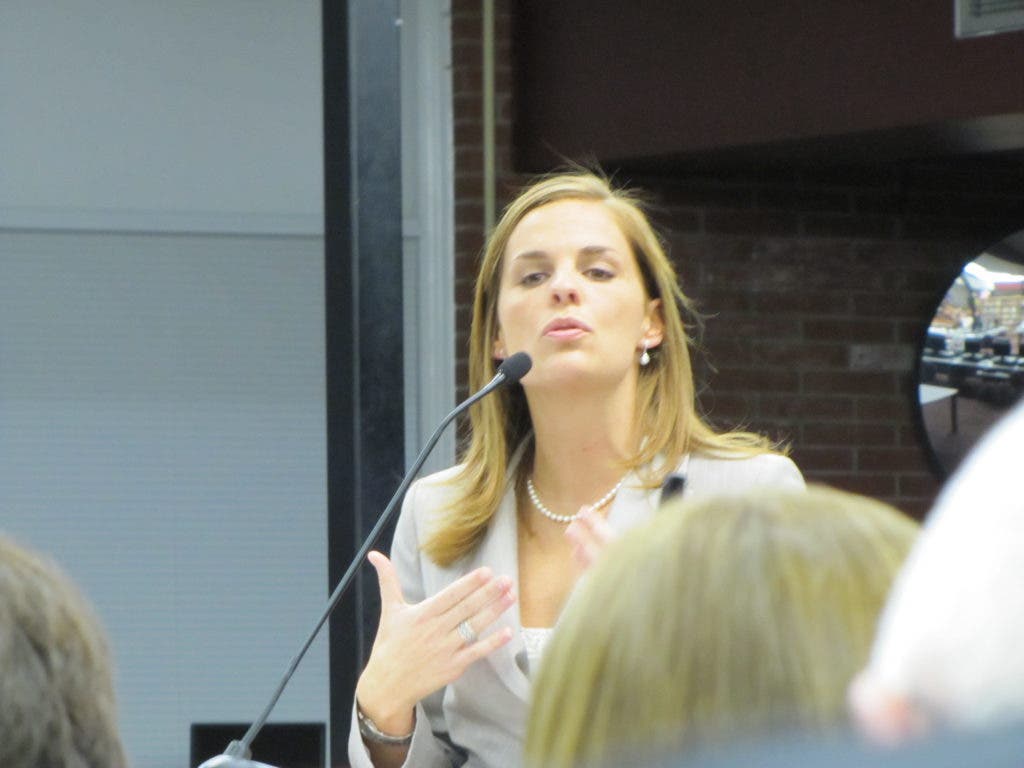
Elizabeth Toriello, Director of Instructional Studies for the district, gave a presentation to the school board with the supervisors of humanities and math and sciences, who detailed the coming changes, and highlighted problem areas for current students.
"The proposed changes are designed to improve the strength of our entire academic program," Verona K-12 Superintendent Charles Sampson said of the new curriculum, which includes expanded Advanced Placement and Honors class offerings at the high school level, more focus on writing and American literature, and a reshuffling of the middle school history curriculum.
Find out what's happening in Verona-Cedar Grovefor free with the latest updates from Patch.
"We're really seeking avenues to allow every student to maximize their individual academic potential whether that student is going to Yale or community college."
Room for Improvement
Find out what's happening in Verona-Cedar Grovefor free with the latest updates from Patch.
The presentation showed statistical data in the district, and compared Verona's achievement test scores to statewide averages as well as comparisons between comparable districts using the District Factor Grouping system, a State Department of Education ranking system which places schools on a scale of A to J based on socioeconomic factors, with A being the lowest tier. The Verona District is an "I" district.
According to the presenters, first-time 11th Graders in Verona lag behind the state average on the writing portion of the High School Proficiency Assessment test (HSPA), a statistic Humanities Supervisor Patrick Higgins called "alarming."
"In the overall writing you can see we are below the state average on HSPA scores, including schools from every DFG district. Those things are cause for concern for us," said Higgins.
"On a positive note, the 8th Grade scores overall for writing are higher than the DFG average, and reading is pretty much right on," he added.
According to Nicole Santora, Supervisor of Math & Science for the district, Verona's 11th Graders lag behind other "I" school districts in math scores, but the gap narrows as the grades get lower.
"In 8th Grade, the gap is less. As grade levels go down it gets smaller and smaller. We seem to drop between 8th and 11th Grade, and we're trying to focus on why we're dropping and how we can improve that."
Changes in the Works
Although many of the changes are not set to take effect until the 2012-2013 school year, teachers are already laying the groundwork through professional development workshops and other collaborations.
Toriello said the district's elementary schools lack a consistent writing program, and said a writing workshop for grades Kindergarten through fourth Grade has been implemented, a change she said "has lead to the realignment of our scope and sequence."
At the middle school level, curriculum changes are being proposed in alignment with revisions to the state's core curriculum standards, which now includes a "Life and Career Education in the 21st Century" component, geared toward civics, citizenship and critical thinking skills in a changing world.
Currently, middle school students are not required to learn United States history after the Civil War. The proposed revisions would change that.
- In Grade 5, the current sequence -- U.S. History - Explorers to Civil War -- will be changed to U.S. History -- Explorers to Constitution, which will pick up in Grade 6, where U.S. History - Constitution to World War I will replace World Cultures, which will be moved to 7th Grade.
- In Grade 7, the U.S. History - Revolution to Civil War sequence will be replaced by World Cultures/Geography. The 8th Grade sequence will not be altered.
Some of the most significant revisions to the courses offered by the district will be at the high school level.
- In Math, new courses are being offered at the 12th Grade level at the College Prep and Advanced Placement level. Algebra III/Trigonometry will be replaced with College Algebra & Trigonometry. FST will be replaced by Pre-Calculus/Trigonometry, and AP Statistics will be offered for the first time.
- In Science, a college prep level physics course has been added to the 11th Grade course offerings.
- In Language Arts, 11th Grade honors students will be offered an AP Language an Composition course.
- In History, the AP/Honors program will be streamlined to a unified Honors sequence beginning with the class of 2014.
Challenging Students to Challenge Themselves
Toriello pointed to data that showed Advanced Placement test scores improved as the number of students taking the exams increased.
Toriello also pointed to the fact that the overall percentage of Verona's 11th and 12th Grade students enrolled in AP courses during the 2008-2009 school year (27.7 percent) exceeded the state average (19 percent), but lagged behind comparable "I" districts (33.8 percent).
She said Glen Ridge has 43 percent AP participation among its 11th and 12th Graders, and that Cresskill has 48% participation, noting that colleges look at the rigors of an applicant's schedule as closely as their grades, and that the percentage of AP classes making up a student's core credits leads to a higher acceptance rate to competitive colleges.
% of Core Credits in AP Courses Total Students % Accepted to Mostly or Highly Competitive Colleges 30-50% 21 95% 10-30% 52 71%Following the presentation, Toriello said the purpose was to give parents a sample of the data the curriculum staff has been poring over as they attempt to figure out how to meet the needs of students and how to make the academic program better to maximize the potential of every student.
Board of Education President John Quattrocchi says the board will vote on the changes at the March 1 board meeting, more than two months before the board by law must approve the curriculum as a whole for the 11-12 school year, to give teachers time to prepare their lesson plans.
"We'll hold a vote on March 1 so the staff is clear on the action items they have to take and can start putting them in place with vigor and confidence," he said.
"By holding the vote, we're saying to teachers and administrators, go ahead and start your action plan, we're committed."
Get more local news delivered straight to your inbox. Sign up for free Patch newsletters and alerts.