Politics & Government
Impending State Environmental Regulations Could Prove Costly for Verona
Waste water Treatment Superintendent Explains to Council Costs Involved to Meet Potential DEP Mandates
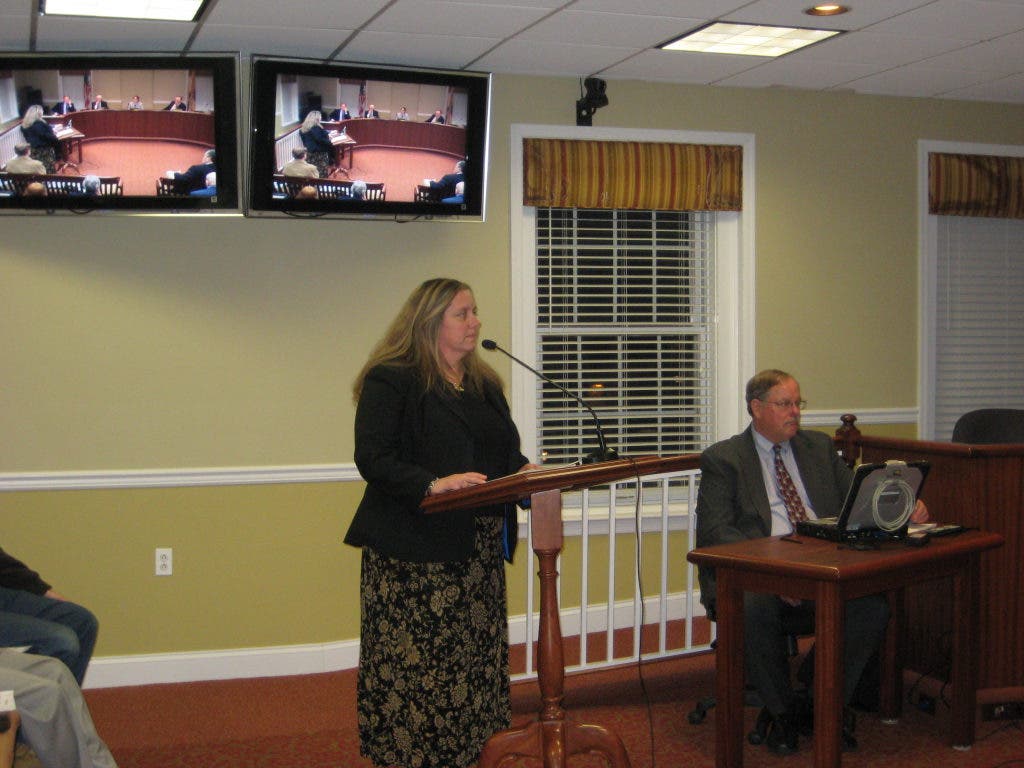

While Verona has already spent $20 million to update its wastewater treatment plant and comply with regulations from the Clean Water Act, new regulations from the Department of Environmental Protection could cost the town millions more.
As explained by Diane Alexander, an attorney working with the town who specializes in environmental law, Verona's current system is "not hurting the environment". However if the new mandates are applied, they will "hurt taxpayers".
The mandates involve levels of phosphorus, copper and nitrates in the output of the sewer treament plant. Timothy Newton, Superintendent of Verona's Wastewater facility, outlined the DEP's regulations and the potential costs to meet these mandated levels at the Council meeting last week.
Find out what's happening in Verona-Cedar Grovefor free with the latest updates from Patch.
Phosphorus
As illustrated in his presentation, Verona operates comfortably below current limits for phosphorus. The state has limits adjusted seasonally, with 3.7 ppm (parts per million) for Nov.-April and 5.4 ppm for May-Oct. Currently, the plant operates at 2.2 ppm and 3.5 ppm, respectively.
Find out what's happening in Verona-Cedar Grovefor free with the latest updates from Patch.
However, if current legislations is approved, the new level will be .79 ppm, a level Verona would exceed.
To lower the facility's phosphorus output, Newton recommended adding aluminum sulfate to the treatment process. While there are biological options, Newton explained they are not always reliable and cannot be counted on every day.
"You can calibrate aluminum sulfate. It is very controllable." When asked why this process has not already been utilized, Newton explained the cost to purchase and install equipment would cost between $3 and $4 million. Furthermore, maintenance and operational costs would average between $30-$40,000 annually.
Mayor Teena Schwartz asked if adding this chemical would create another environmental problem. Newton responded there have debates between scientists about the impact of aluminum sulfate but nothing conclusive to indicate it would be damaging.
Newton added the DEP has been wrestling with the limitation level for phosphorus for about 15 years, but is getting close to making the .79 ppm the new mandate.
Copper
While the state has not had a discharge limit for copper, by 2013 the limit will be 19.2 parts per billion. "We are not talking in the parts per million but billion," Newton remarked.
He added this limit is not based on site specific water quality but on default values. Verona has challenged these levels, and commissioned a study in 2009 which successfully raised copper limits for Verona's permit.
An additional study is currently underway in which a consultant is working with the DEP to collect site specific data. While the 2009 study cost $14,000 and the current study is costing $10,000 Newton said, "This is well invested money."
Fines for violations in copper output cost $5,000 a day, while installing equipment to remove copper is even more expensive than for phosphorus.
Newton has been working with Alexandar to challenge the state. While it is possible to have the copper limits adjusted or removed, "once you accept a copper limit you can't change it. You are stuck," Newton explained.
Nitrates
Newton explained treatment plants are designed to make nitrates. "They take ammonia and are designed too convert it to nitrates," he said. While there had not been previous limits on nitrates, only monitoring, by 2013 the state will establish a monthly limit of 15.2 ppm with a daily maximum level of 21.2 ppm.
Newton said the limits are base on levels for drinking water. However, there are no fresh water intakes downstream from Verona.
'We would violate this permit," Newton said, and similar to phosphorus, the cost for equipment to meet the nitrate requirements would be almost $4 million.
"We have to meet this by 2013. The clock is ticking," Newton stated. Similar to the copper mandate, Verona has challenged the nitrate permit.
While Alexander has requested a state hearing on the nitrate limits, the state has not even assigned a judge yet to hear Verona's case. Since the permit is scheduled to begin in 2013, Alexander has also requested a stay, which will allow Verona to operate without the nitrate mandate until the case is heard. She informed the Council they should hear within a month if their stay is granted.
Good News
After Newton outlined the high costs to implement all these regulations, Environmental Consultant Pat Matarazzo told the Council he has good news: The nitrate permit "could all go away."
Matarazzo explained the state had classified all water sources as "potential drinking water sites", even a drainage ditch. "This is nuts," Matarazzo said. The state had a committee, which Matarazzo was involved with, to reclassify all water sources:
- Tier 1--Stream impacts drinking water
- Tier 2--Potential source of drinking water
- Tier 3--Never going to be a source for drinking water
Matarazzo said Verona's water supply will most likely be labeled a Tier 3 source. "The state has realized the mess they have made, and are trying to fix it," he said.