Community Corner
In Wall, Hundreds Protest Racism In Nation And Neighborhood
Demonstrators marched from Wall High School on Friday in solidarity with the Black Lives Matter movement.


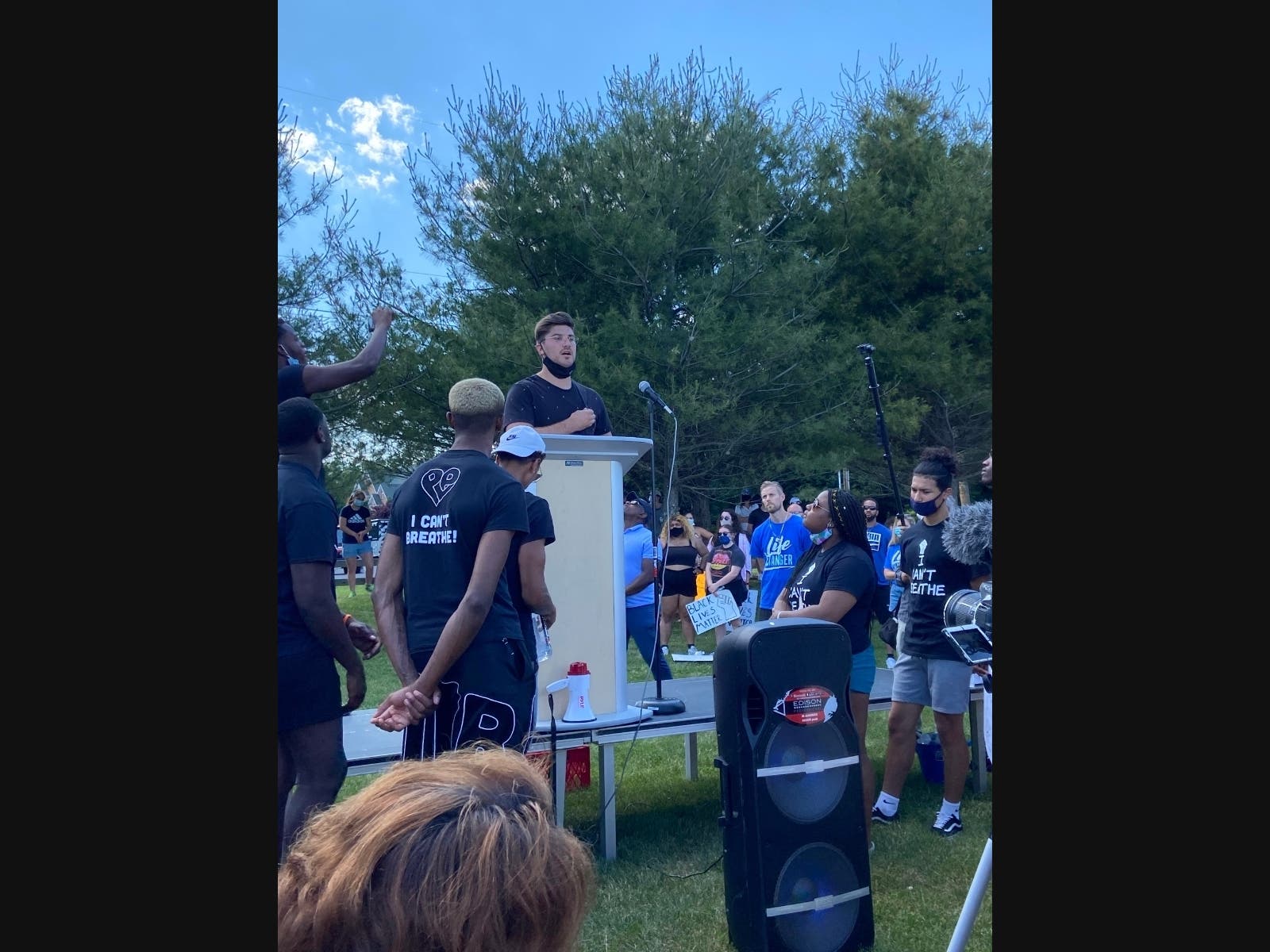


WALL, NJ – Hundreds of demonstrators flocked to Wall Township for a June 12 rally to speak out against racial injustice at both the national and neighborhood level.
The crowd began marching at Wall High School around 4 p.m., proceeding down 18th Avenue towards the municipal area. Speeches were made by Wall Township Mayor Carl Braun, Chief of Police Kenneth Brown Jr., and Wall High School graduates Ben Dziobek, Clarence Celius and Darryin Valme at the athletic field behind the police department.
But while all speeches addressed widespread racial injustice at a national level, the high school graduates delved into their own experiences with racism in Wall.
Find out what's happening in Wallfor free with the latest updates from Patch.
“This has always been an advantage in Wall Township,” said protest organizer Ben Dziobek at the rally, pointing to the white skin on his arm. “A town so deeply rooted in racism that the KKK set up their headquarters here and owned 400 square acres of land. A town so deeply rooted in racism that most people don’t know we have a whole neighborhood called Imperial Park, named after these men and women who hated black people."
Find out what's happening in Wallfor free with the latest updates from Patch.
Over the last few days, news of the march spread through social media like wildfire with organizers anticipating the number of attendees to approach 1,000. Wall resident Monica Ottinger told Patch that she wasn’t planning to attend until her 14-year-old daughter found an ad for the peaceful demonstration on Instagram. The mother of two said she felt compelled to support her daughter in “doing what’s right."
“My husband and I grew up around diversity, and it was something we really almost took for granted,” said Ottinger, who grew up in Philadelphia. “When I got to Wall, it was, for me, the least diverse place I’ve ever lived.”
A lack of diversity in Wall has been an issue for a long time, says Dziobek, pointing to Wall High School’s 91 percent white and 3 percent black demographic breakdown. He recalled a popular moniker for the town: ‘White Wall.'
Ottinger told Patch that her children’s exposure to diversity in the community has been so limited, the first time her 4-year-old son saw a black cashier, he asked his mother why the clerk was “dirty”.
“It was at that point that I was horrified,” said Ottinger. “I realized that I had something I always took for granted, because I had always grown up with such diversity. We moved from Brooklyn when my son was six months old, so all he knew was Wall. I had never started a dialogue because I didn’t know there was one needed, you know, seeing something for the first time brand-new.”
The Wall Township Police Department has also faced several allegations of rampant racism, including one lawsuit filed last week. On June 4, Suresh Madhaven, 43, who has filed a separate discrimination suit against the police department in 2018, sued the department again for defamation. Madhaven was Wall’s first non-white officer and has served since 2003, according to NJ.com.
Another suit, which is still pending, was filed by a former police dispatcher who alleges he was called a ‘monkey’ by officers in the department. The lawsuit also alleges that he was subjected to racial harassment due to the discoloration of his legs from diabetes.
While other officers did not kneel down at the rally when demanded by demonstrators, Police Chief Brown later knelt in a gesture of solidarity with protesters during the Friday protest. In a speech, Brown later assured the crowd that his department “condemns racism, profiling and police violence.”
Much like Ottinger, Dziobek told Patch that he stresses the importance of protesting in a suburb like Wall and creating visibility for the injustices he sees. While the Wall High School graduate did not expect to see the crowds that a protest in New York City or Philadelphia would draw, the activist noted that the suburbs are not exempt from speaking out against these issues.
“Cities have this overt racism that we see in these videos,” Dziobek said, referring to the video of George Floyd's death that sparked international uproar and served as a catalyst for the Wall demonstration. “Suburbs are able to maintain their white racist ordinances and laws without anyone really questioning them. People need to come to these suburb protests. We need to change what happens outside of the cities, too.”
Get more local news delivered straight to your inbox. Sign up for free Patch newsletters and alerts.