Community Corner
Hurricane Irene Brought Near-Record Flooding—and Surprises
Local officials are used to the flooding, but the damage to trees after Hurricane Irene proved surprising.




By the time Hurricane Irene was approaching New Jersey almost a year ago, what had once been a Category 1 hurricane had .
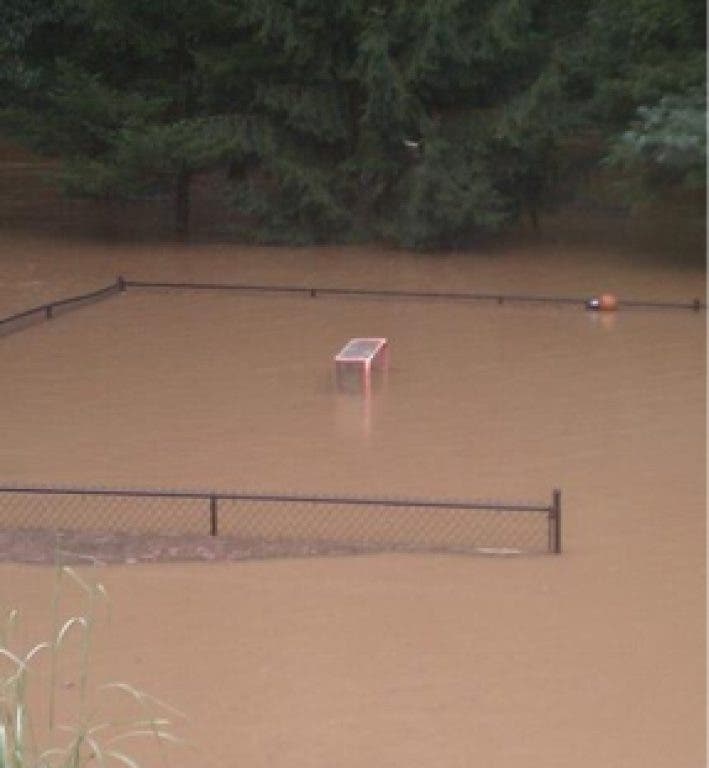
R, but forecasters still warned residents to expect a storm with high winds and lots of rain—and the warning proved precient: the storm produced a torrential rain that caused flooding throughout the area, while high winds toppled trees and snapped limbs—resulting in broken power lines and a massive power outage.
For emergency planners in Watchung and Green Brook, the storm presented some fresh challenges, in addition to the problems always faced here.
Find out what's happening in Watchung-Green Brookfor free with the latest updates from Patch.
"The group (emergency management) would meet every several hours to assess all circumstances accordingly, plan effectively, and move into action," Watchung Borough Administrator Tom Atkins said. "I had been here only about a month, but I was extremely impressed with the efficiency, coordination, compatibility."
"Unfortunately, Irene was not our first flood," Green Brook Office of Emergency Management Coordinator John Richards said. "I believe we have had floods in 1999, 2002, 2007 and 2010 in which I played some role in."
Find out what's happening in Watchung-Green Brookfor free with the latest updates from Patch.
And according to the U.S. Geologic Survey, the Stony Brook in Watchung reached 16.39 feet in depth, nearly matching Hurricane Floyd's depth of 17.19 feet in 1999. The USGS' monitoring station on the Green Brook at Rock Avenue captured a maximum depth of 10.76 feet after Hurricane Irene, compared to Floyd's 12.17 feet.
It was during the flooding after Floyd that Green Brook's municipal building was lifted from its foundation and nearly washed away—the building is now raised like a beach house to prevent a repeat.
With the Stony Brook and Green Brook both regularly flooding, officials are well prepared for the storms.
"With each flood we are more proactive with early notification of the residents, typically using the Police Department to go door-to-door and make telephone contact with the residents that are typically impacted," Richards said.
Green Brook Township Administrator Kelly Cupit and Richards both noted the township's planning for floods now reaches into more neighborhoods, with more residents being impacted because, as Richards noted, the flooding in recent years has been worse.
"This past flood, the water did rise higher than before and we have expanded the area we will focus on," he said.
But they point out no one can do much to stop rain and flooding waters, and residents need to be prepared to evacuate when floods threaten.
In addition to warning residents, the township's emergency plans included placing barricades on low-lying streets, and getting emergency personnel prepared for what could be a long weekend.
When the storm slammed into New Jersey during the night of Aug. 27, however, the storm took a turn no one expected: winds snapped trees and limbs, causing them to fall on power lines.
The resulting cleanup and power outage proved more problematic than anyone in the area expected.
"The biggest challenge we had was the amount of trees that were down and the wide spread loss of power," Richards said. Atkins said some streets in the borough were impassable because of downed trees, and police and public works crews worked to clear them as quickly as possible to make sure any residents needing supplies, such as bottle water, could get it.
But the loss of power meant officials couldn't easily communicate with residents—people didn't know what was going on in terms of power restoration, or when roads that had been closed would be opened. Cupit said officials used the police Nixle service to send alerts to residents, and if they had working cell phones, reverse 9-1-1 calls were sent.
But too many didn't, and township officials walked neighborhoods to spread information and check on residents, Cupit said.
The storm's lessons were tested just two months later, when a nor-easter dumped snow and caused more widespread power outages. Officials in Watchung faced a massive cleanup after the snowstorm, but Richards noted Green Brook may have gotten a break in that storm.
"We were fortunate in a backwards fashion," he said. "I believe we lost most of the trees during Irene that would have impacted power during the October storm."
Other lessons learned during Irene involved setting staging areas for the fire and EMS away from their headquarters building, which like the municipal building, is prone to flooding.
But residents can look for officials to be more aggressive about warning residents before big storms hit—Richards said it would be great if people would "self-evacuate" when floods are possible, but knows that will not happen for many.
So, the crews are always called to be prepared.
"We monitor the weather, and when we see an unusally large storm approaching we have our emergency services on standby," he said.
Get more local news delivered straight to your inbox. Sign up for free Patch newsletters and alerts.