Crime & Safety
Passaic Wildfire Almost Totally Contained, NJ Forest Fire Service Says
The 972-acre fire in West Milford is now 95 percent contained, the state forest fire service said in its latest update.


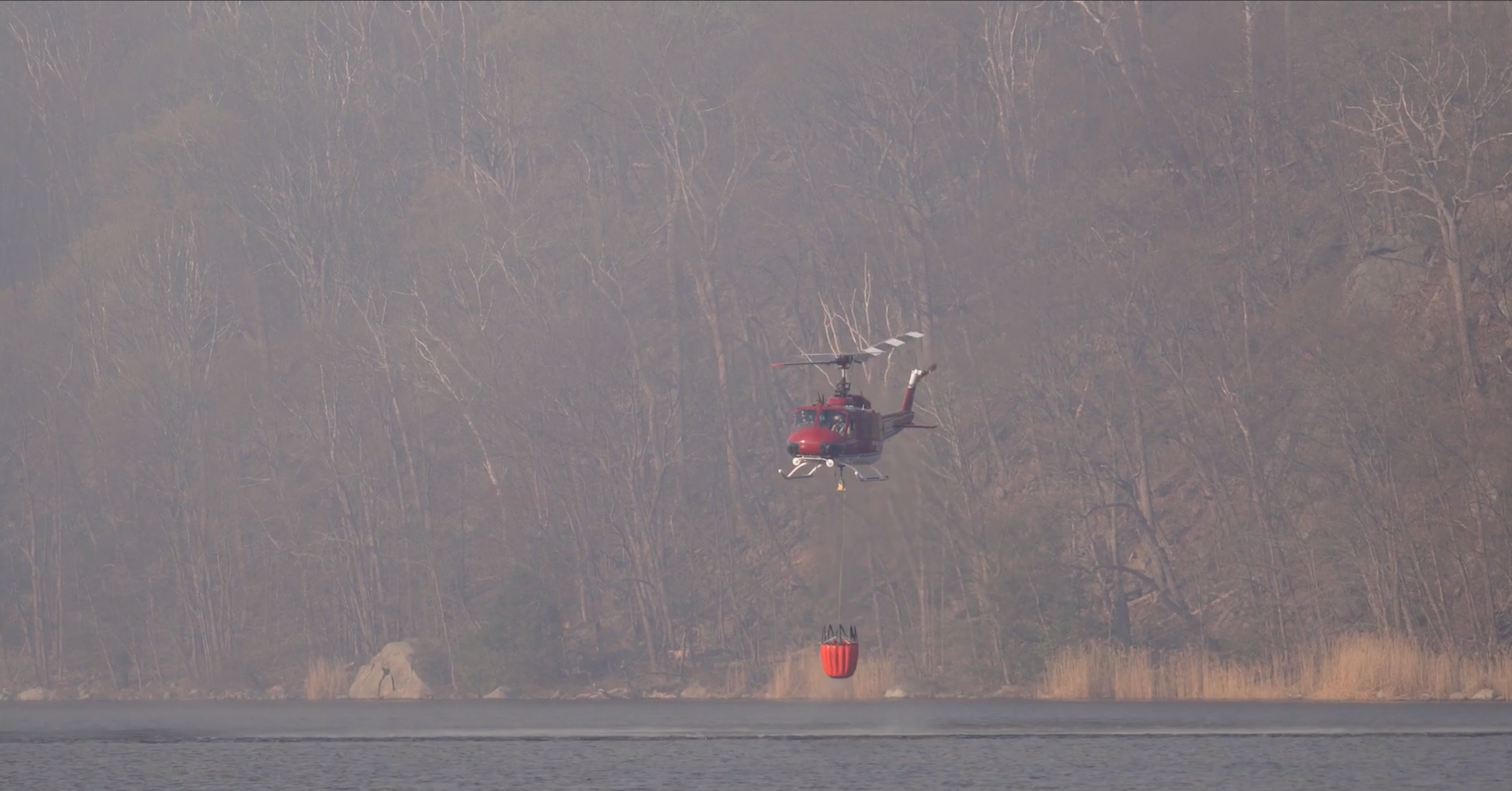
WEST MILFORD, NJ — Aerial firefighting efforts and containment lines on the ground have kept the wildfire in western Passaic County from destroying any homes or buildings, and the fire is 95 percent contained as of Friday evening.
The Kanouse Wildfire in West Milford appears to be the biggest wildlands blaze in North Jersey in recorded history, state Department of Environmental Protection records show.
Firefighters held the fire to 972 acres on Friday, and state and local firefighters are still working on containment overnight. No homes or other structures are under threat from the fire any longer, said officials in their latest update.
Find out what's happening in Waynefor free with the latest updates from Patch.
Gould Road is now open, and Echo Lake Road remains closed as of Friday at 8:33 p.m. There are a number of fire-weakened and dead trees creating a hazard along Echo Lake Road, said fire officials.
"(Friday), crews continued to reinforce containment lines on the ground and by air," said the NJ Forest Fire Service. "Ground crews made excellent progress addressing burning dead trees threatening containment lines across the area of the fire."
Find out what's happening in Waynefor free with the latest updates from Patch.
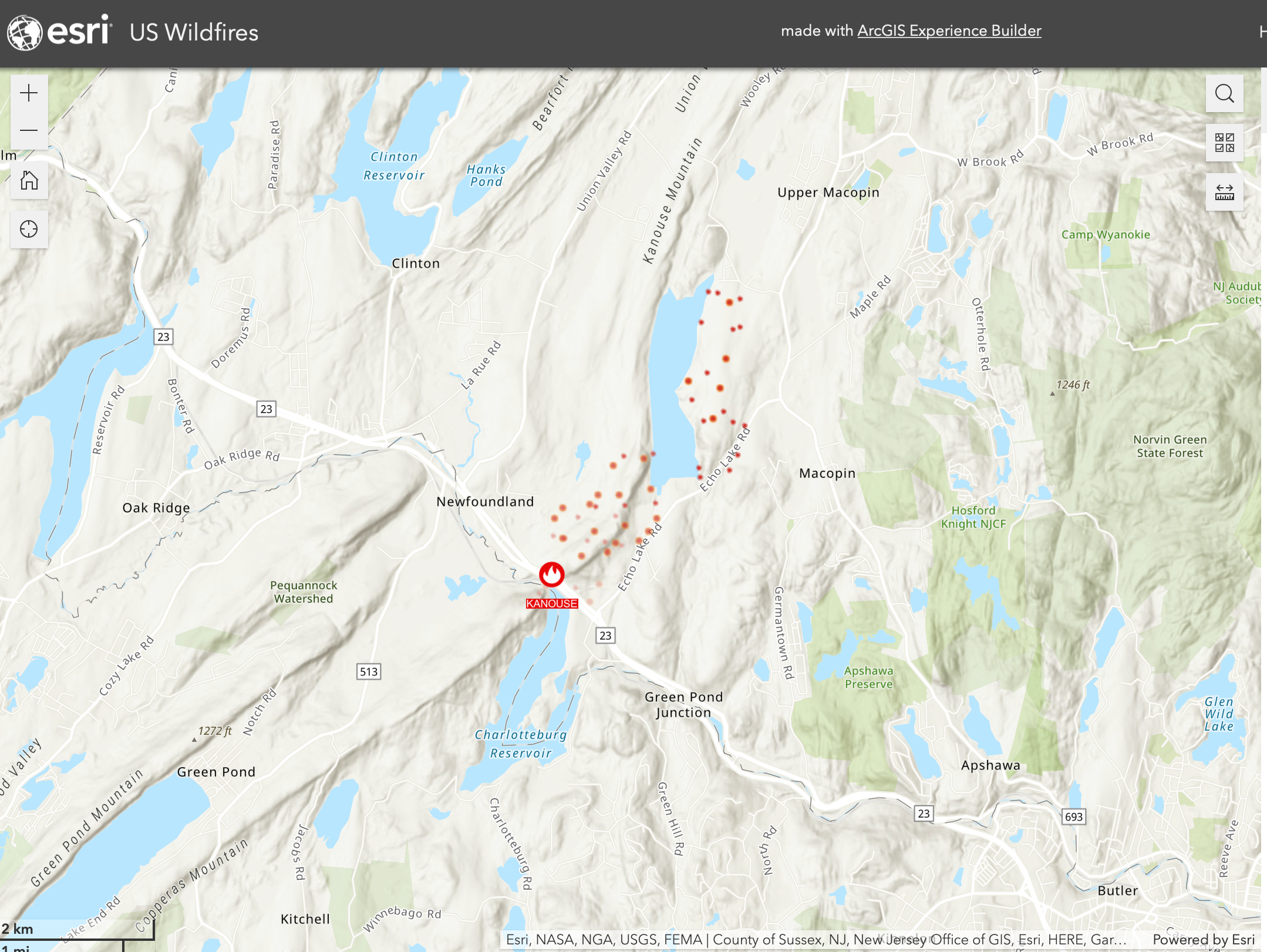
The fire began Wednesday evening in a wooded area off of Route 23 and affected the forested area near Kanouse Mountain and Echo Lake.
West Milford Police and Mayor Michele Dale acknowledged all the crews who have been doing "a great deal of very hard and dangerous work" to keep township residents safe and informed.
Local people have been so generous in donating to firefighters and other responders that officials put out an alert Friday thanking everyone, but saying no more food and water/beverages needed at the time.
West Milford Mayor Michele Dale added that firefighters could still use "baby wipes, Visine or saline for their eyes, plates, cups, and Tylenol." Donations may be made at Macopin Fire Company #4, 1362 Macopin Rd.
Residents in this area can find updates about road closures and any evacuations through the NJ Forest Fire Service, West Milford Police, and the Nixle alert system for the West Milford OEM.
A wildfire is considered a “major wildfire” after it exceeds 100 acres in size, according to the state forest service.
State data shows the last major wildfire in North Jersey was in Warren County in August 2010, when a wildfire in the Worthington State Forest consumed 250 acres of scrub and hardwood. There was a 750-acre wildfire in Warren County in late August of 1995, but there is not much more information on that fire available in state records.
This latest wildfire was named the "Kanouse Wildfire" after the mountain peak in West Milford Township.
Township Mayor Michele Dale, who has been updating the public on social media since Wednesday, asked the public not to call police dispatch to ask if roads are open. Dale and police officers have been advising people to check the police Facebook page for updates instead of calling in.
Dale said Gov. Phil Murphy and the Department of Environmental Protection commissioner, Shawn LaTourette, coordinated with local officials to send additional state resources to West Milford.
Murphy said he was grateful to the state forest fire service "for their tireless work to contain back-to-back wildfires across the state" in a Tweet on Friday morning. The blaze in West Milford began as crews were still on the scene of a wildfire in Ocean County that consumed 3,859 acres of the Pine Barrens.
John Cecil, who oversees the state Forest Fire Service and Forest Service, said he did not anticipate increased black bear activity in neighborhoods as a result of the wildfire.
"It's been warm for over a week now, bears are up and about by and large I would expect," said Cecil, who is Assistant Commissioner of State Parks, Forests, and Historic Sites for the Department of Environmental Protection.
"Those animals are typically perceiving the fire and getting out ahead of it, and moving out of the way of it as it moves through the forest," he said.
Cecil also said that state officials do not expect the fire to majorly impact the wildlife in the area where the Kanouse fire burned.
"Certainly this changes their habitat for a moment in time, but once this fire is fully out and we get the opportunity for it to start to green up, it actually will be helpful in the long run to the forest," he said Friday morning.
1,500 wildfires damage or destroy 7,000 acres of New Jersey forests on an average year, according to the DEP.
The worst year for wildfires in state history, according to the Department of Environmental Protection, was 1905: across the state, 267,547 total acres burned that year.
A major fire in May 1905 "destroyed the town of Forked River," wildfire records show. Also, a 58,000-acre forest fire near Bass River that April claimed the lives of five firefighters from the Civilian Conservation Corps.
Mid-March through May serves as peak wildfire season in the Garden State due to expected humidity increases and stronger winds, according to the New Jersey Forest Fire Service.
The springtime also presents a greater risk of wildfires as trees don’t yet have full leaves, prompting more sun to hit the forest floor and dry out fallen brush.
While 99 percent of wildfires in the state are attributed to human carelessness, accidents or arson, the riskier peak wildfire season may actually be extended due to changing climate patterns, state officials said.
“The continuing impacts of climate change mean our state is experiencing more severe weather conditions, storms, wind and drought that can result in a longer wildfire season, which is why it is more important than ever that the public exercise caution and take steps to help protect their homes and property,” New Jersey Environmental Protection Commissioner Shawn M. LaTourette said in a statement. “Preventing wildfires also helps avoid catastrophic releases of carbon that contribute to and exacerbate climate change.”
The New Jersey Forest Fire Service recommends the following to reduce the risk of wildfires:
- Don’t discard matches, cigarettes or smoking materials on the ground
- Obtain a campfire permit from the Forest Fire Service office
- Don’t leave fires unattended, and douse them completely to put them out
- Keep matches and lighters out of the reach of children
- Ensure fire trucks can access driveways
- Report suspicious vehicles and individuals
- Use wood stoves and fireplaces carefully; fully douse ashes with water before disposal
This story contains reporting by Patch's Nicole Rosenthal.
Get more local news delivered straight to your inbox. Sign up for free Patch newsletters and alerts.