The 2009-10 School Report Cards were issued by the New Jersey Department of Education last week. The reports contain information including class size, standardized test performance, per pupil spending and more.
Students in Wayne public elementary schools received, on average, 12 fewer minutes of instructional time each day, 5 hours and 30 minutes, compared to the state average of 5 hours and 42 minutes.
The district spent slightly more than $7,900, on total classroom instruction per student; the state average was more than $8,100.
Find out what's happening in Waynefor free with the latest updates from Patch.
The total comparative cost per pupil, which represents comparisons with districts of similar budget types, is virtually the same for the district, $13,700, than the state’s, $13,800.
In total, the district spent about $600 less per pupil, $14,900, than the state average of $15,500; those numbers include costs such as transportation.
Find out what's happening in Waynefor free with the latest updates from Patch.
RYERSON ELEMENTARY SCHOOL
The average classes size was significantly smaller, 15.4 students, than the state average of 18.2.
Of the school's 338 students, approximately 85, 25 percent, needed an Individualized Education Program (IEP). IEPs require the school district to provide support services for students with an identified disability.
English was the first language spoken in only 55 percent of homes. Spanish was spoken first in 17.5 percent of homes. Albanian was next with 7.4 percent and Arabic and Turkish came next with 4.1 and 2.7 percent, respectively. More than 7 percent of students were deemed to possess a limited proficiency of English.
Language Arts Partial Proficient Advanced School 46.5 53.5 0 State 40.2 54.2 5.6 NJASK3
Mathematics Partial Proficient Advanced School 20.9 44.2 34.9 State 21.7 41.1 37.2 NJASK4
Language Arts Partial Proficient Advanced School 47.9 47.9 4.2 State 40.2 50.4 9.3 NJASK4
Mathematics Partial Proficient Advanced School 18.8 47.9 33.3 State 22.8 42.3 34.9 NJASK4
Science Partial Proficient Advanced School 0 47.9 52.1 State 6.5 49.2 44.3 NJASK5
Language Arts Partial Proficient Advanced School 48 50 2 State 36.7 54.5 8.8 NJASK5
Mathematics Partial Proficient Advanced School 28 42 30 State 21 42.1 36.9
RANDALL CARTER ELEMENTARY SCHOOL
The average class size, 17.2, was one student below the state average.
Of the school’s 343 students, nearly 68, or 19.8 percent, needed Individualized Education Programs. IEPs require the school district to provide support services for students with an identified disability.
More than 84 percent of children spoke English first at home. Spanish was the next most popularly spoken first language in 3.5 percent of homes; Arabic and Tagalong were the next most popular, spoken first in 1.7 percent of homes each.
The percent of students who had limited English proficiency was not given.
The school had a 9.3 student to teacher ration, more than a full student less than the state average of 10.6.
More than 60 percent of the school’s faculty possessed a master’s degree.
Student Performance Indicators by percentage
Language Arts Partial Proficient Advanced School 29.5 67.2 3.3 State 40.2 54.2 5.6 NJASK3
Mathematics Partial Proficient Advanced School 13.1 50.8 36.1 State 21.7 41.1 37.2 NJASK4
Language Arts Partial Proficient Advanced School 37.9 58.6 3.4 State 40.2 50.4 9.3 NJASK4
Mathematics Partial Proficient Advanced School 20.7 39.7 39.7 State 22.8 42.3 34.9 NJASK4
Science Partial Proficient Advanced School 5.2 41.4 53.4 State 6.5 49.2 44.3 NJASK5
Language Arts Partial Proficient Advanced School 46.7 50 3.3 State 36.7 54.5 8.8 NJASK5
Mathematics Partial Proficient Advanced School 23.3 46.7 30 State 21 42.1 36.9
PACKANACK ELEMENTARY SCHOOL
The school's average class size, 18.2, is the same as the state average.
Of the school’s 510 students, nearly 73, or 14.3 percent, needed Individualized Education Programs. IEPs require the school district to provide support services for students with an identified disability.
Almost 90 percent of children spoke English first at home. Spanish was the next most popularly spoken first language in 2.9 percent of homes; Arabic and Korean were next with 1.2 and 1.6 percent, respectively.
The percent of students who had limited English proficiency was not given. The school had 12.7 students for every teacher. The state average was 10.6.
Approximately 79 percent of the school’s faculty possessed a master’s degree.
Student Performance Indicators by percentage
NJASK3Language Arts Partial Proficient Advanced School 19.7 73.7 6.6 State 40.2 54.2 5.6 NJASK3
Mathematics Partial Proficient Advanced School 3.9 42.1 53.9 State 21.7 41.1 37.2 NJASK4
Language Arts Partial Proficient Advanced School 18.6 64.9 16.5 State 40.2 50.4 9.3 NJASK4
Mathematics Partial Proficient Advanced School 6.2 40.2 53.6 State 22.8 42.3 34.9 NJASK4
Science Partial Proficient Advanced School 2.1 38.1 59.8 State 6.5 49.2 44.3 NJASK5
Language Arts Partial Proficient Advanced School 13.2 67.9 18.9 State 36.7 54.5 8.8 NJASK5
Mathematics Partial Proficient Advanced School 6.6 29.2 64.2 State 21 42.1 36.9
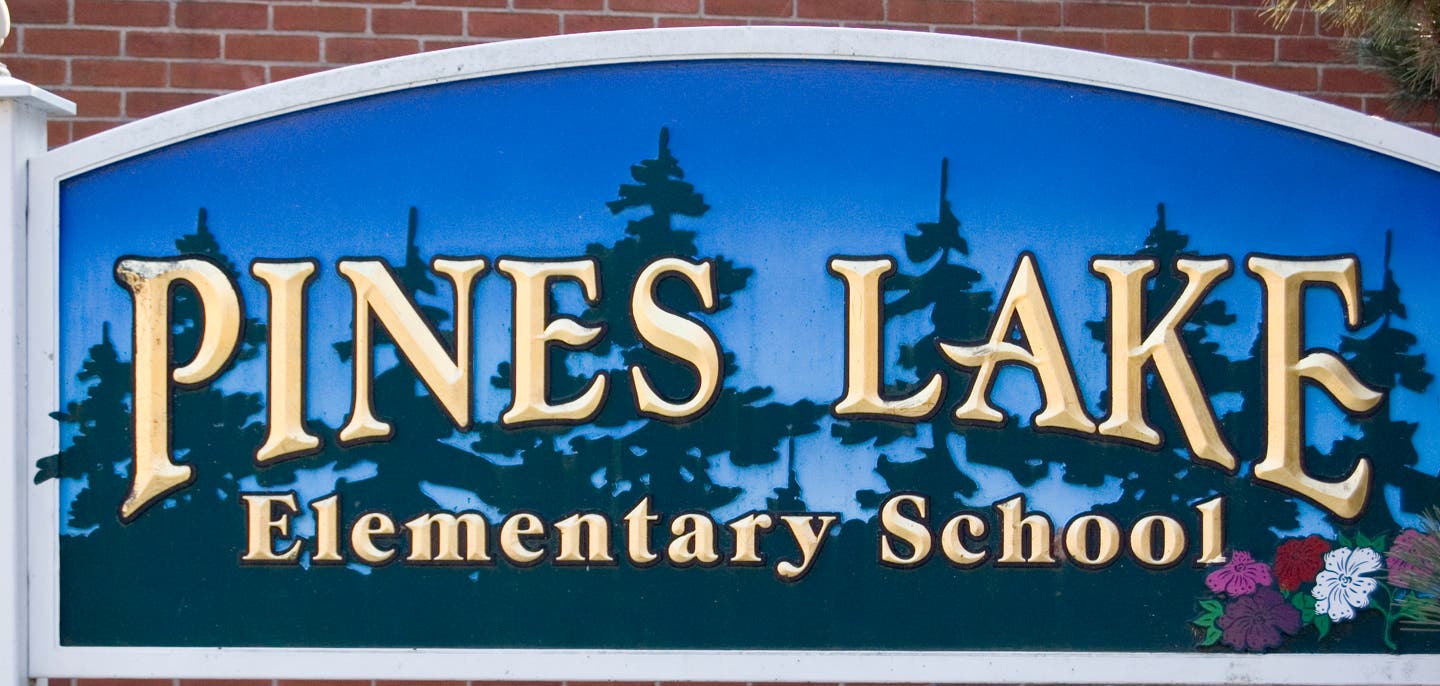
PINES LAKE ELEMENTARY SCHOOL
The school had an almost identical average class size, 18.5 students, to the state average of 18.2.
Nearly 67 students were classified as needing an IEP. IEPs require the school district to provide support services for students with an identified disability.
English was the first language spoken in order of frequency in nearly 81 percent of homes. Spanish was the first language spoken in 3.1 percent of homes. Korean was next with 2.7 percent. Arabic and Mandarin Chinese were next with 1.7 percent each. Thirty-five children were classified having limited English proficiency.
There were 12.2 students for every faculty member. The state average was 10.6. More than 60 percent of faculty members possessed a master's degree, nearly a 10 percent increase from 2008-2009.
Student Performance Indicators by percentage
NJASK3Language Arts Partial Proficient Advanced School 37.2 59.3 3.5 State 40.2 54.2 5.6 NJASK3
Mathematics Partial Proficient Advanced School 17.4 46.5 36 State 21.7 41.1 37.2 NJASK4
Language Arts Partial Proficient Advanced School 30.1 63 6.8 State 40.2 50.4 9.3 NJASK4
Mathematics Partial Proficient Advanced School 16 57.3 26.7 State 22.8 42.3 34.9 NJASK4
Science Partial Proficient Advanced School 5.3 48 46.7 State 6.5 49.2 44.3 NJASK5
Language Arts Partial Proficient Advanced School 23.9 69.3 6.8 State 36.7 54.5 8.8 NJASK5
Mathematics Partial Proficient Advanced School 10 51.1 38.9 State 21 42.1 36.9
THEUNIS DEY ELEMENTARY SCHOOL
The school's average class size, 19.5, was slightly larger than the state average of 18.2.
Of the school's 468 students, 77, 19.8 percent of the population needed an Individualized Education Program. IEPs require the school district to provide support services for students with an identified disability.
More than 88 percent of students spoke English as their primary language at home. Spanish was next with 2.4 percent. Arabic and Korean were next with 1.9 percent and 1.7 percent, respectively. The number of students with limited proficiency in English was not given.
The school's student to faculty ratio was 14 to 1. Approximately 74 percent of teachers possessed a master's degree, a slight increase from 2008-2009.
Student Performance Indicators by percentage
Language Arts Partial Proficient Advanced School 43.3 56.7 0 State 40.2 54.2 5.6 NJASK3
Mathematics Partial Proficient Advanced School 13.3 51.7 35 State 21.7 41.1 37.2 NJASK4
Language Arts Partial Proficient Advanced School 39.8 52.7 7.5 State 40.2 50.4 9.3 NJASK4
Mathematics Partial Proficient Advanced School 15.1 53.8 31.2 State 22.8 42.3 34.9 NJASK4
Science Partial Proficient Advanced School 1.1 46.2 52.7 State 6.5 49.2 44.3 NJASK5
Language Arts Partial Proficient Advanced School 37.5 61.1 1.4 State 36.7 54.5 8.8 NJASK5
Mathematics Partial Proficient Advanced School 11.1 56.9 31.9 State 21 42.1 36.9
To view all the report cards for the district, click here.
Get more local news delivered straight to your inbox. Sign up for free Patch newsletters and alerts.